
Welcome to the Sociology Group Interview Series!
Today, we are happy to have Liz Colvin, author of Moodshine, with us.
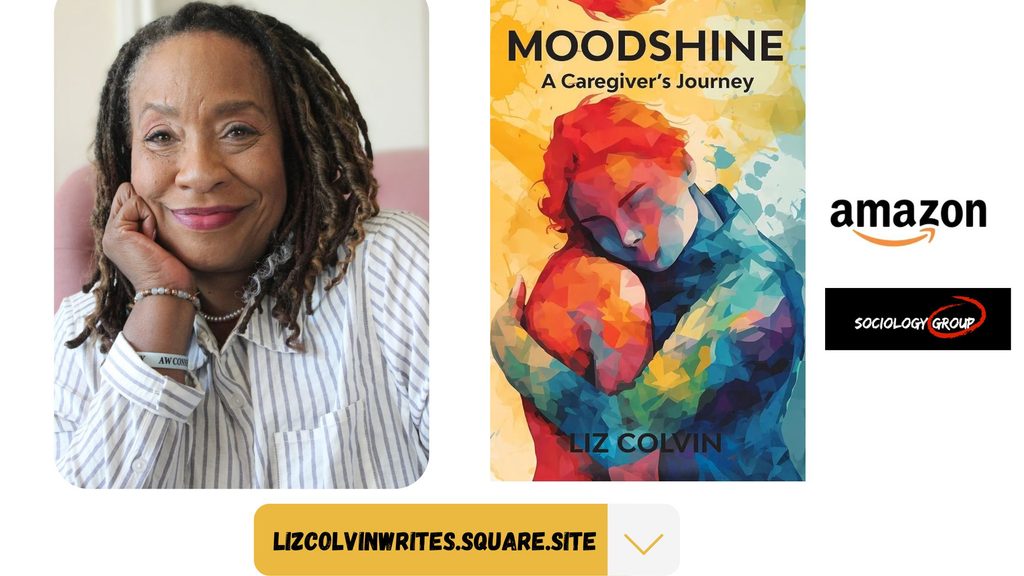
Moodshine is a very personal story about Liz’s journey as a mother and caregiver, her daughter Maggie’s experience with mental health, and the many changes their family went through along the way. The book talks about family, stigma, treatment, faith, friendship, self-care, and learning how to keep living your own life while caring for someone you love.
Liz, it’s wonderful to have you with us. Thank you for taking the time to talk with us.
Let’s begin…
1. Liz, before we talk about the book, how would you describe yourself in three words?
Liz Colvin:
Resourceful, Resilient, and Funny.
2. What is something about you that readers might not know from reading Moodshine?
Liz Colvin:
That I am deathly afraid of scorpions. I volunteer as a family support facilitator for NAMI TX (National Alliance on Mental Illness).
3. What made you feel that this was the right time to share your story?
Liz Colvin:
After my mother, Arlena, died in 2019, I saw a void and a lack of remembrance for those whom she cared for. I saw a crumbling society literally drown after the news of celebrity deaths, but many failed to recognize caregivers struggling to keep their loved ones safe and viable.
4. Your journey with Maggie has had many ups and downs. What is one thing this experience has taught you about being a mother?
Liz Colvin:
Never take yourself so seriously – life changes in a blink.
5. Was there a moment when you realised that you were not only Maggie’s mother, but also her caregiver?
Liz Colvin:
Yes, during her massive weight gain, from size 4 to size 16, I had to see her as a sufferer instead of my petite angel.
6. How did you learn when to help Maggie and when to give her some space to handle things on her own?
Liz Colvin:
The National Alliance on Mental Illness (NAMI) Family-to-Family class taught me about therapy types; therefore, the therapist gave good examples of coping skills to give her space to manage on her own.
For example, a coping skill is discussing with them: “Since your medication affects your appetite, let’s select a simple recipe for you to cook.” Take him/her grocery shopping, let them pick out the ingredients, and share a meal with them.
This coping skill helps them think about consequences in relation to the condition and gives discussion points for the medical provider regarding allergies or side effects.
7. You have included Maggie’s own words in the book. How did you feel about giving her that space to tell her side of the story?
Liz Colvin:
It felt good to allow her to vent. I knew that finding a mate was a difficult task for others through my interaction with NAMI.
8. Mental-health stigma comes up several times in the book. What do you wish people understood better about families dealing with mental illness?
Liz Colvin:
Stigma is real – be more aware and compassionate.
9. Your family’s story also includes different backgrounds and experiences. Did this change the way you think about family and support?
Liz Colvin:
Yes, my family structure changed after my father’s death, but my family rallied around my sister and me. They did not allow us to become buried in sadness.
My grandmother saw the need to create a strong sense of connection among all her 120+ grandchildren. We celebrated birthdays, holidays, and had massive family reunions.
That structure, along with the community, taught me to be resilient, and this specific trait taught me how to share with others, even when they lived a different life experience.
10. Simi has his own perspective in the book, and Lolly also plays an important role. What did they each bring into Maggie’s journey?
Liz Colvin:
Simi highlighted the fact that Maggie could receive unconditional love regardless of the condition.
Lolly, her dog, gave Maggie and me the push we needed to get back outside and to not shut out the world. She helped us live again.
11. Therapy, medication, doctors, insurance, and teletherapy were all part of your experience. What was the biggest learning experience for you while trying to find the right support?
Liz Colvin:
Insurance was the most important element of my search to find support. Maggie had medical coverage years before her diagnosis. But because I had a kind and family-oriented insurance agent, who explained the importance of medical and life insurance, I signed her up for continuous care.
I later learned that it was almost impossible to be insured after a mental health diagnosis for life insurance. Also, support was more available under private coverage.
12. You also talk about faith, friendship, church, and community. Was there a person or a simple moment that gave you strength when you really needed it?
Liz Colvin:
Yes, my aunt and uncle, the Autrys, prayed for me and did not judge me, but stayed in contact with me. They were the listening ear I needed while I was investigating medicinal and therapeutic options.
13. At one point, you realised that you also needed to take care of yourself. What does self-care look like for you today?
Liz Colvin:
I live with my family as an integrated unit, and self-care is always on my mind. You realize how short life is, especially when I see my granddaughter growing taller daily.
I walk regularly around my nearby park, meditate, and look for new hobbies that get me out of the house. I enjoy painting, photography, and now – rock hunting.
14. After writing Moodshine and looking back on everything, is there anything you would do differently or something you wish you had known earlier?
Liz Colvin:
I wished I’d asked my maternal grandmother Susie more about my Cherokee and Seminole ancestors.
15. And finally, what is coming next for you? Are you working on another book, a new project, or something you are excited about?
Liz Colvin:
Yes, I am working on a historical fiction novel, am a facilitator for a writing group called “The Textans,” and working on a film collaboration on a documentary called “Seven Voices,” a movement geared toward improving mental health and displacement (homeless) awareness, and I welcome engagements.
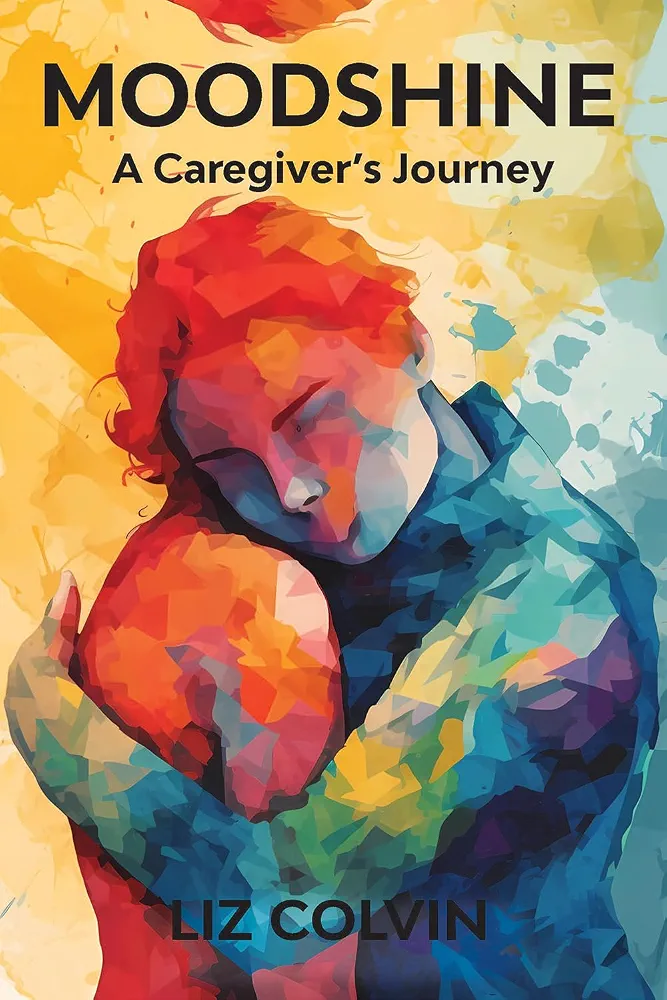
Moodshine: A Caregiver’s Journey by Liz Colvin is a heartfelt story of caregiving, mental health, family, and resilience, available now on Amazon.

We believe in sharing knowledge with everyone and making a positive change in society through our work and contributions. If you are interested in joining us, please check our ‘About’ page for more information