
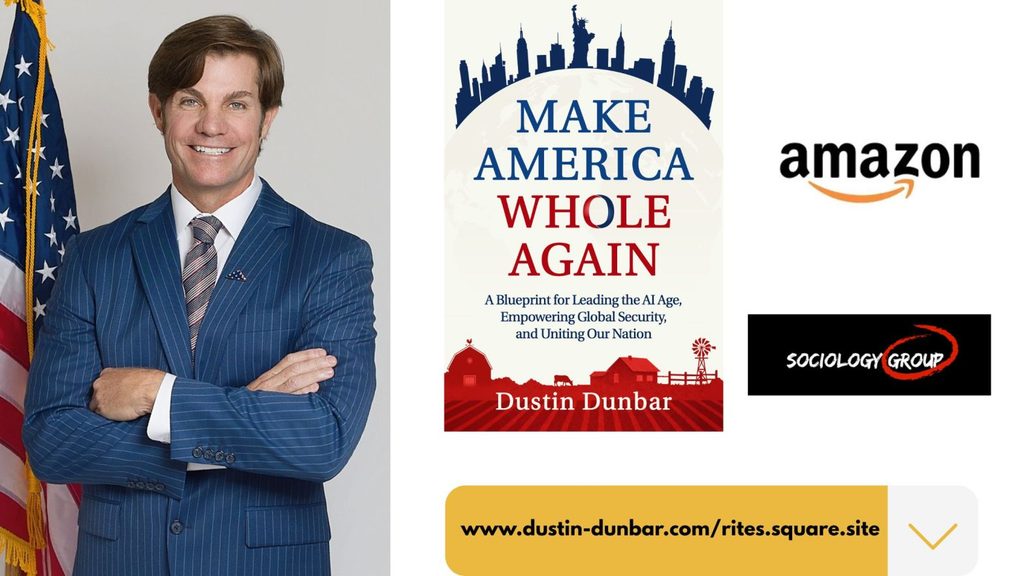
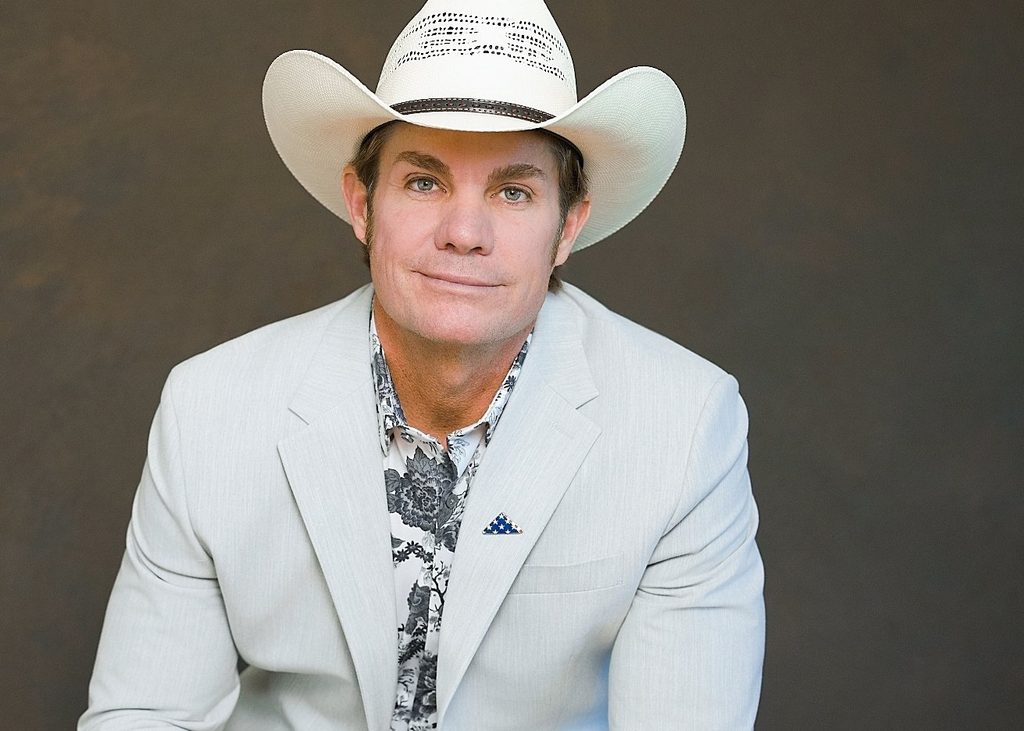
About Author: Dustin Dunbar, an Independent, is running for U.S. presidency. As founder/CEO of FreeHealthInsuranceHelp.com (since 2009) and division manager for HealthMarkets before that, he’s assisted tens of thousands of Americans. He founded the wellness non-profit AlcoholFreeRevolution.org, is a real estate entrepreneur, was an appraiser for First Alliance Mortgage, and modeled for Ford Model Agency. He holds a PhD in psychology from Saybrook University. His new book is Make America Whole Again: A Blueprint for Leading the AI Age, Empowering Global Security, and Reuniting the Nation. Learn more at Dustin-Dunbar.com.
1. Dustin, if you had to describe yourself in three words, what would you say?
Healer. Integrator. Independent.
I don’t just mean “Independent” as in my ballot status. I mean it as a way of thinking. I don’t identify as any label except what George Washington and all of our forefathers begged us to be: free-thinking Americans with no party affiliation. John Adams saw this coming 250 years ago when he wrote, “There is nothing I dread so much as a division of the republic into two great parties, each arranged under its leader, and concerting measures in opposition to each other. This… is to be dreaded as the greatest political evil under our Constitution.” He named our broken government before it even existed, and it breaks my heart that we didn’t listen. It is crucial that we get out of this two-party trap. My whole life has been about taking two things that seem opposed and finding the wholeness underneath them. The awesome news is that Americans are already ahead of their politicians and the media. 45% of us now identify as Independent, while only 27% call themselves Republican and 27% Democrat, and that Independent number keeps growing every day. People are finally seeing clearly that the two party system is broken.
2. When you look back at your life, what do you think changed you the most?
It was growing up between two completely different worlds at the same dinner table. My parents were educators and yellow dog Democrats. My grandparents were farmers and proud Republicans. I didn’t experience those as “sides” — I experienced them as people I loved. That taught me something most of Washington has forgotten: we’re not enemies, we’re family who happen to disagree. That single truth shaped everything that came after — my career, my spiritual work, and now this campaign.
3. You’ve been through some very difficult personal experiences. Do you think those experiences changed the way you see other people?
Completely. I committed to Malcolm Gladwell’s 10,000 hour principle of mastery, and for 7 years I did the hard, uncomfortable work of healing, not just reading about psychology, but living through my own challenges and rebuilding. That changes how you see people. You stop judging someone’s politics, their anger, or their fear from a distance, because you’ve met those same things in yourself. I don’t look at the country and see red states and blue states, winners and losers. I see a lot of people in pain who’ve been taught to blame each other for it instead of healing it within themselves and together.
4. In your book, you talk a lot about the “inner war.” What do you mean by that?
The inner war is the conflict most of us carry before we ever vote, argue, or pick a side, the war between the part of us that wants to protect ourselves and the part that wants to connect with others. I believe our national division is really just millions of individual inner wars being projected outward onto politics. We fight “the other side” because it’s easier than facing the conflict inside ourselves. My message is simple: if we want to heal the country, we have to be honest that it starts person by person, heart by heart, not just with a new law or a new leader.
5. You grew up around both Republican and Democratic influences. Did that make it difficult for you to choose a side, or did it actually help you see things differently?
It made it impossible to choose a side, and I think that was the gift. I couldn’t demonize either party because I loved people on both sides too much. What it gave me instead was the ability to see the heart behind each view, even when I disagreed with the conclusion. That’s exactly why I’m running as a true Independent. Not “Independent” as a marketing label both parties now slap on to seem moderate, but Independent because I genuinely don’t have a side, I have a country. I am fully integrated, half Republican, half Democrat, and 100% American. I think it’s time someone led this country that way again, like George Washington did as our only Independent president.
6. At some point you decided that being Independent was the right path for you. What made you feel that way?
It wasn’t really a decision so much as an admission. I kept trying to force myself into one party or the other, and every time, I felt like I was cutting off half of who I am. Both sides have pieces of the truth, and both sides have blind spots. Staying inside a party means defending the blind spots too. I’d rather be free to say “that feels right (or wrong)” based on the actual issue, not based on which team said it. Independent isn’t a protest vote for me, it’s the only honest place I could stand.
7. One thing I found interesting in your book is the idea of bringing people together without asking them to think exactly alike. Do you think America has forgotten how to do that?
Completely. We’ve confused unity with uniformity. Real unity was never about everyone agreeing, it was about everyone having a seat at the table even when we disagree. Somewhere along the way, “you disagree with me” turned into “you’re my enemy,” and that’s not unity, that’s just two bubbles shouting past each other. I think most Americans, if you actually sit down with them, still know how to disagree with someone over coffee and still like them afterward. We haven’t forgotten it as people, we’ve just stopped practicing it as a country.
8. You use the phrase “love with boundaries.” I really liked that idea. What does that mean to you in real life?
Love with boundaries means caring about someone enough to be honest with them, even when honesty is uncomfortable. It’s not love that lets everything slide, and it’s not control that crushes someone into compliance. It’s the middle place, the parent who sets a curfew because they love their kid, the friend who tells you the truth because they respect you too much to lie. I think our country needs that same posture. We can care deeply about people and still hold the line on what’s right. Compassion and accountability were never supposed to be opposites.
9. Your latest book talks about AI quite a lot. Are you more excited about AI, or more worried about where it could take us?
Both, and I think anyone who tells you they’re only one or the other doesn’t understand the full power of AI and how it cuts deep both ways. I’m excited because AI has the potential to cure diseases faster, personalize education for every kid, and free people from the kind of mind-numbing labor that drains a life. I’m worried because if we let the wealth and power from that technology pool into the hands of a few companies, we’ll have built the most unequal society in human history with the most powerful tool ever created. Just as it has the power to cure major diseases, it also has the power to create pathogens worse than Covid and attack our utility grids. The technology itself isn’t good or evil, it’s a mirror. The real question is whether we have the wisdom to build international guardrails for a borderless technology before it reshapes everything, not after.
10. You have this idea of an American Equity Fund, so ordinary people can benefit from the wealth created by AI. How did you come up with that?
It came from a simple question: if AI is going to replace a huge amount of human labor, who should own the profits from that labor? Right now, the answer is a small number of shareholders and tech companies. That seems backwards to me. The American Equity Fund is built on the idea that if AI is trained on the collective data, creativity, and economic activity of the American people, then the American people deserve a stake in the wealth it generates, similar to how a sovereign wealth fund works, but built for citizens instead of a government treasury. It’s not a handout, it’s ownership. Every American holding a piece of the future they helped create instead of watching it get concentrated at the top. The other part of it is job reskilling funds to teach people how to fish in a new AI boat and not just hand them a fish each month.
11. Your healthcare proposal is also quite different from the usual Democrat-versus-Republican debate. What would you like people to understand about your idea?
I spent 26 years in the brutal trenches of the health insurance industry. I’ve seen the system from the inside, not from a policy briefing or a campaign talking point, but from the actual machinery of how premiums and drug prices skyrocket, claims get processed, how coverage gets denied, and how both patients and doctors get caught in the middle. My AmeriCare plan is hybrid healthcare with a base major medical plan as the public floor with the Democrat ideal of no one gets left behind and private plans for those who want the Republican ideal of individual choice. My plan isn’t about picking a side in that old argument. It’s about fixing the actual mechanics of a broken system, using what I know firsthand, not theory. We already spend 5.1 trillion dollars on healthcare, which comes out to about 15,000 dollars per person. That’s more than enough money to fix a broken system, we just haven’t chosen to spend it wisely. The blueprint is in the book showing exactly how we can do this without raising taxes. Americans deserve both community coverage and the individual choice to opt for more when they want it. We can’t keep drowning in medical debt and bankruptcy while also getting crushed by ridiculous monthly premiums, deductibles, and prescription costs.
12. You’ve written about addiction, recovery, psychology, spirituality, and now politics. When you look at all your books together, do you see one common message running through them?
Yes, every single one. It’s the idea that healing never happens by rejecting part of yourself. Not the parts of your past you’re ashamed of, not the people you disagree with, not the sides of your own personality you’d rather hide. Real healing, for a person or for a country, comes from vulnerable integration, not elimination. Every book I’ve written, whether it was about addiction, women’s equal spiritual rights or now about politics, is really the same message in a different setting.
13. You’ve lived in different countries and experienced very different cultures. Did that change your understanding of America?
It did, in a big way. 6 different countries for a year at a time. Mark Twain said, “Don’t tell me what books you have read, tell me where you have been.” When you live outside your own country, you stop seeing it as “normal” and start seeing it clearly, both the parts worth protecting and the parts that need work. I came back with a deeper appreciation for the freedoms we take for granted here, and also a clearer eye for how far we’ve drifted from the unity that used to define us. I didn’t just read about global conflict; I lived it. I spoke the languages, went to the churches and temples, and shared meals. This gave me the unique ability to lead America with a deep global understanding, solve deep-rooted problems, and restore our leadership abroad.
14. If you had the chance to sit down with Americans who are completely exhausted by political fighting, what would you say to them?
I’d say I understand, because I’m exhausted too. I’d tell them their exhaustion isn’t weakness, it’s wisdom. It means some part of them already knows the fighting isn’t working and never was designed to. I would ask them to research what our forefathers said about two big political parties. Then I’d tell them they’re not powerless. They don’t have to pick a side in a fight that was never really about them in the first place. There’s another option, stepping out of the drama triangle and demanding something better, a politics built on healing instead of combat.
15. And Dustin, after everything you’ve experienced and everything you’ve written, what does “Make America Whole Again” really mean to you personally?
It means exactly what it sounds like. Not making America like it used to be, and not making it like one side wants it to be, but making it whole, bringing the pieces we’ve torn apart back together. The right and the left, the individual strength of the Republican, the compassionate community of the Democrat, the parts of ourselves we’ve hidden and the parts we’re proud of. I’ve spent my whole life learning that wholeness, not perfection and not uniformity, is what real strength looks like. That’s what I want for this country. Not a winner and a loser, but a nation that finally feels whole again.
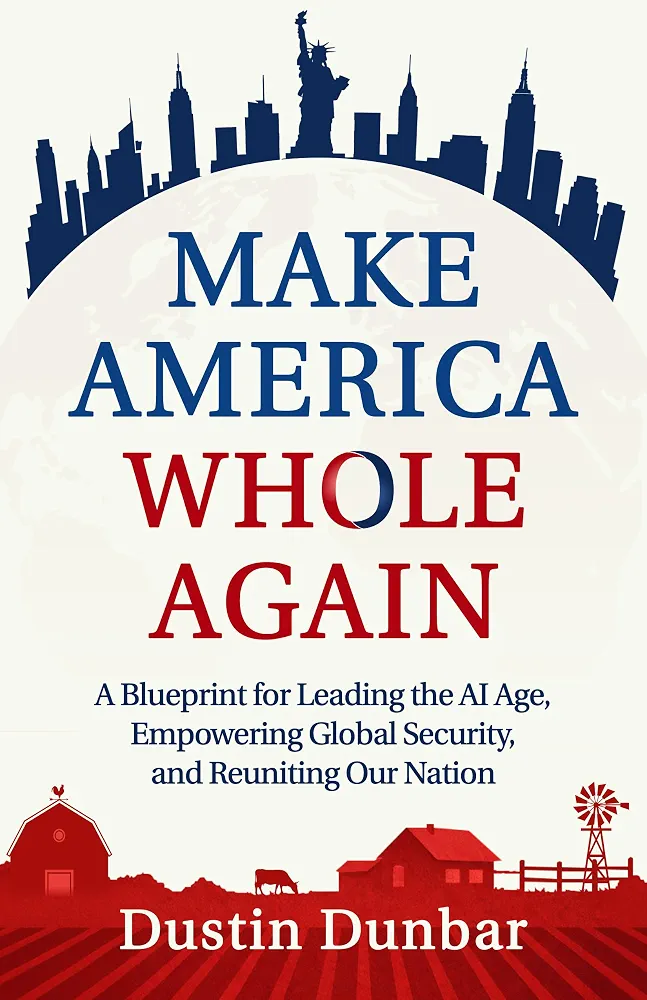
Available on Amazon: Make America Whole Again: A Blueprint for Leading the AI Age, Empowering Global Security, and Reuniting our Nation

We believe in sharing knowledge with everyone and making a positive change in society through our work and contributions. If you are interested in joining us, please check our ‘About’ page for more information