
Welcome to our interview series, Jean. To begin, please share a small introduction in your own words so our readers can get to know you better.
Bio: Jean Widner is the best-selling author of the award-winning book, The Adoption Paradox: Putting Adoption in Perspective. She is a US, domestic adoptee born in 1965 with a largely positive adoption experience. In writing the book she amassed extensive research on adoption law and practices and interviewed nearly 100 people from all sides of the constellation. Jean is a marketing consultant who along with her husband has built and sold two e-commerce companies. Jean is also a Rotarian and volunteers with the Adoption Knowledge Affiliates organization. See her work https://adoptionparadox.com/about-h/about-jean-kelly-widner/
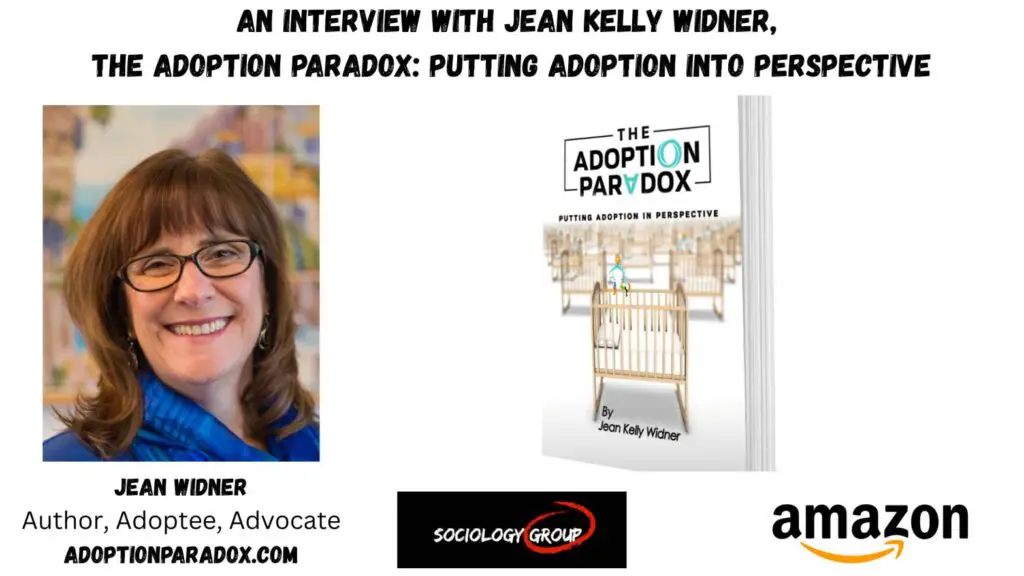
What inspired you to finally write The Adoption Paradox after years of living as an adoptee?
I was like many adopted adults who believed my having been adopted never affected me. After both of my adoptive parents were gone, I finally allowed myself to entertain more complexity behind it all. I started the search for my biological family in 2020. It was that deep awakening within myself that sent me seeking to write about it.
Your book talks about “peeling back the glossy exterior” of adoption. What does that mean from your perspective?
There’s the simplified version of adoption, which is the narrative most of us know: a child needs a home, people adopt them and give them a loving home, presumably something they would not have had otherwise. But the truth is the whole process is much more complex. And because the US has privatized systems surrounding adoption, people get lost in them. I absolutely did not understand all of that when I began this book and the research. Coming to see how we are serving families (or failing to) within both the foster care and then the private infant adoption industry, and it is sadly, and industry, is painful to face.
You spoke with almost a hundred people for your book. Was there one conversation that changed you or made you see adoption differently?
There is no “one” story of adoption. What I realized in all of them is that no one owns this story. We all do. Each perspective is different and equally valid.
How did listening to stories from adoptees, birth parents, and adoptive parents help you understand adoption in a deeper way?
It is impossible to underestimate the duality and complexity of these lived experiences. They are humbling, maddening, heartbreaking, and inspiring. Often all at the same time.
What do you hope readers will understand about adoption after reading the collection of stories in your book?
Listen first, please, to adoptees. Not the white-washed version of our lives you want to hear but allow us the space to stretch our emotional legs, if you will, and share what we’re really feeling, if we’re able to express that. I want people to stand with us, to see us and realize a deeper nuance is in play, always, in every adopted family whether you’re aware of that or not. Also, live in truth. Always. If our culture could please stop needing to put a pretty bow onto every situation but instead sit with complexity that sometimes defies the easy answers, we would all be better for it.
You mention being “out of the fog.” Can you share what that moment of clarity felt like for you as an adoptee?
For me, it was coming to realize that this systemic machine had normalized something built on shame and secrecy. When adopted, I was issued a new birth certificate because of the way the first “modern” adoption law was written in Minnesota back in 1917. Then my original birth certificate was sealed away, and in fact declared an “unofficial document”. It’s stamped with that on top. We’ve never evolved beyond that crappy solution created back then to hide that an adoption occurred.
That along with the realization of how trapped my natural mother really was. It is one thing to become an adult woman in the 1980’s as I grew up and know she didn’t have the same choices I did. It was something else to come to terms with how badly our culture treated young women like her, and the fact that this is still going on today.
How did your experience of being born in a Salvation Army hospital shape your emotional journey while writing this book?
I’m angry at the way my first mother was treated, and it makes me sad for her and the millions of other women world-wide who were also railroaded into not being allowed to keep and parent their babies.
What part of writing The Adoption Paradox felt the most healing or meaningful for you personally?
Being able to better see, understand, and touch my own wounds was profoundly healing. Growing up I always felt so alone, and even as I say in the book, my parents got a lot right, I still have so many of the same struggles my fellow adoptees share. That through-line of understanding how my internal pieces fit together, seeing the patterns within myself and knowing my feelings are in fact, normal. Plus, that I now have a community of friends to support me in that process. It’s huge.
What was the hardest or most emotional part of putting these stories together?
These stories are incredible in both their ordinary aspects and their extremes, and often, both. The anguish is alive and ongoing, and these men and women were so vulnerable and trusted me so deeply with their words and their pain. Feeling the weight of respecting them, and getting that “right”, (assuming I did OK on that front) was the toughest for certain.
Your research shows that adoption is especially common in the United States. Why do you think adoption plays such a big role here?
That’s almost impossible to answer without getting a bit political, so here it goes. In much of the world a few things are true:
If a woman does not wish to be pregnant, she can choose not to be, and access to that process is not under threat in Europe and elsewhere, Much of the world also has a stronger safety net and that often includes some sort of universal health care
There is also the cultural idea that adoption is a solution to infertility. That’s still prevalent in the US and it’s less so elsewhere. Our rates of infertility are the same, roughly, as other developed countries, but we adopt, and they do so far less.
Lastly, we have the influences of poverty and its impact on child welfare overall. Most Americans have no idea as to the state of foster care and how driven that is by the lack of resources. Also, it’s a business in the US. We are the only nation by far that has allowed the system to be so privatized and, in many ways, influenced by profit-driven companies affecting the motives of an entire industry. And sadly, we have not only normalized that but created a narrative which celebrates adoption.
If you could change one major thing about the adoption system to make it more ethical and compassionate, what would it be?
Hands down, we must culturally disconnect the idea that another family with better financial circumstances are always what’s “better” for a child. They can be but are not always. And we know that stuff, or education and opportunities don’t automatically create happiness. But everyone working within child welfare and adoption needs to understand that separating an infant from its mother has consequences. Some placements are needed but too many are not, and keeping children with their natural mothers and families must always be the highest priority.
You’ve highlighted problems with oversight in adoption. What better protections do you think families need?
That’s a gigantic question, and there are some great activists in the space working on that. Follow and listen to them too. (The Family Preservation Project, Saving our Sisters) We must address the adoption and child welfare industry and either remove the privatized aspect of it (unlikely) or at the very least create much stronger guardrails around adoption laws and practices. Right now, it really is a free-for-all. Adoption is practiced 50 different ways in 50 different states. With roughly 20,000 infant adoptions done annually there is little to no regulation about what gets said or explained in advance to expectant couples. “Open adoptions” are recommended now as being what is better for the adoptive child but in most states (40) those arrangements have no legal standing to be enforced. Relinquishing parents never see the termination paperwork prior to being asked to sign it, usually in a hospital, only 24-72 hours after giving birth. Very few states require independent legal counsel be provided to expectant parents. And most state statutes don’t even spell out that any rights bestowed to these birth parents be disclosed to them in advance. And don’t even get me started on birth father’s rights, or the lack thereof.
When adoptees begin searching for birth family, what emotional or practical advice would you give them before they start?
In general, everyone needs to do their own work. Deep, emotional work about their motivations, expectations, their fantasies – all of it. Air it out and do their best to understand it will almost always contain some uncomfortable surprises along the way. Also, the reminder this is not happening in a vacuum. There are likely other family members who will be impacted by any potential reunion or revelations. We are not owed a relationship with our birth families. But I believe all adoptees are entitled to basic information: their familial heritage, medical history, and some idea of how they came to be placed.
From your interviews, why did you find adoption-competent therapy and support groups so important for long-term healing?
If reforms are on the table, my fantasy would be that every wanting or prospective adoptive parent would first themselves be in therapy with someone who sincerely understands adoptive issues to help prepare them. I hear this is a requirement in Canada, but I have not verified that. Adoptive parents need to understand and have time to address their underlying grief if coming to this place due to infertility. They need to also have brave conversations about how important biology is to them. They need to enter this process understanding that there will be inherent grief present within their child, and how to parent them and help them heal.
Then as a family and children grow and however that manifests, if parents are educated and have an adoption competent therapist beside them, so many things can be made easier and more emotionally and mentally healthy for the whole family.
Lastly, I cannot emphasize the value of support groups. For younger adoptees there are great mentoring programs (Adoptee Mentoring Society and AdoptMent) and then a great many free or low donation support groups for adult adoptees and various subgroups for international or transracially adopted folks.
All of this is so important because trauma or often multi-generational trauma is present for all the parties involved. This shows up in such a wide variety of ways for youngsters, and if the right help is available then those needs can be properly identified and addressed sooner. Adoptees connecting with each other is always valuable because it can help them feel less isolated which can help them develop stronger feelings around their identity and belonging.
After hearing stories from domestic, international, foster care, and transracial adoptions, what common themes stood out to you?
So many adoptees from all backgrounds said to me,” I felt loved, I just didn’t feel like I belonged.” Identity and belonging are big issues recognized for decades among adoptee therapists, writers, and experts in the space.
Belonging is different than just love – it’s a true sense of not only felt safety, but also that they have a tribe around them that truly sees them and isn’t just providing for them. Which is challenging when there are no genetic mirrors around. Many adoptees, even when they are the same race as their family, feel this lack deeply, as did I. This becomes even more important to reinforce when the family is from varying races and cultures.
Identity is especially challenging for those adoptees such as myself from the closed era of adoption where records are sealed and we have little to no idea where we come from. It’s as though you’re picking up a book with the whole prologue and first chapter torn out. You’ll keep reading, and piecing together the plot and key characters as best you can, but something is always missing. There’s a missing foundation that everyone else doesn’t see, because as kids we don’t know how to explain it. Which then for adopted children, it’s very isolating. I felt that a lot. We’re left to fill in the blanks ourselves, which can become this imaginary place known as the “ghost kingdom” for adoptees. Many of us without answers continue that wondering into our adulthoods. We chuckle at it, but please do not underestimate the wound behind it.
What do you feel people understand better when they hear stories from all sides of the adoption triad together?
Sharing and listening to all sides of this triad, or constellation and we prefer to call it, is essential. In my opinion, you can’t say you understand adoption until you have. What comes across when you do that, is people realize these simplified tropes and one-sided rhetoric or assumptions people have about adoption are no longer valid ways of viewing the practice.
What do you wish more people knew about the feelings and experiences of birth parents?
Some placements are necessary, but currently, the number one reason why a birth parent has relinquished their child is financial. That’s the solo reason in 80% of placements based on my research. The modern demographics don’t fit people’s assumptions either. The average age a woman is placing her child, is 26. What is more is that 58% of them are already parenting one child. 20% of these women/couples, are married.
So, if the driving force is financial rather than other considerations, that’s a different narrative. Then parents are talking about feelings of failure, desolation, shame, and desperation. They are presented with a “solution” with other people being better equipped to raise their child than they are. They see pictures on websites of hopeful adoptive parents with nice houses and neighborhoods with good schools. They convince themselves this is a better choice, the right choice, but most women interviewed don’t feel like it was. It was the last option after all other roads had been exhausted.
Most people think of any child placed for adoption as being unwanted. And sometimes that is true. But more often it is a lack of resources driving their actions, and that is stunning for most people, I think, to encounter.
You include historical information on your website. Why is it important for people to understand the history of adoption today?
Because it’s never been, until recent times, about the “welfare of the child”. A statute in 1951 is the first time you see that written into the consideration behind the law. Adoption was created to manage wealth and the labor of children. That perspective is needed because the sad truth is we’re still commodifying children by the current practices.
You’ve received a lot of heartfelt messages from readers. What has been the most meaningful or surprising feedback so far?
Definitely when someone tells me they feel “seen” or say they didn’t know other people also felt this way. When families have had conversations because now they have words they didn’t have before. When a birth parent or adoptive parent has presented me with a book that’s been dog-eared, underlined, highlighted and basically beat to death. That tells me I’ve done something that matters.
For anyone wanting to share their story on your website, whether adoptee, birth parent, or adoptive parent, what message of encouragement would you like to give them?
No matter your story or what you went through or why – you are not alone. And also, to never give up and that community is here, open-armed and ready to help and embrace you. Really.
Amazon Book: Adoption Paradox: Putting Adoption in Perspective

We believe in sharing knowledge with everyone and making a positive change in society through our work and contributions. If you are interested in joining us, please check our ‘About’ page for more information