
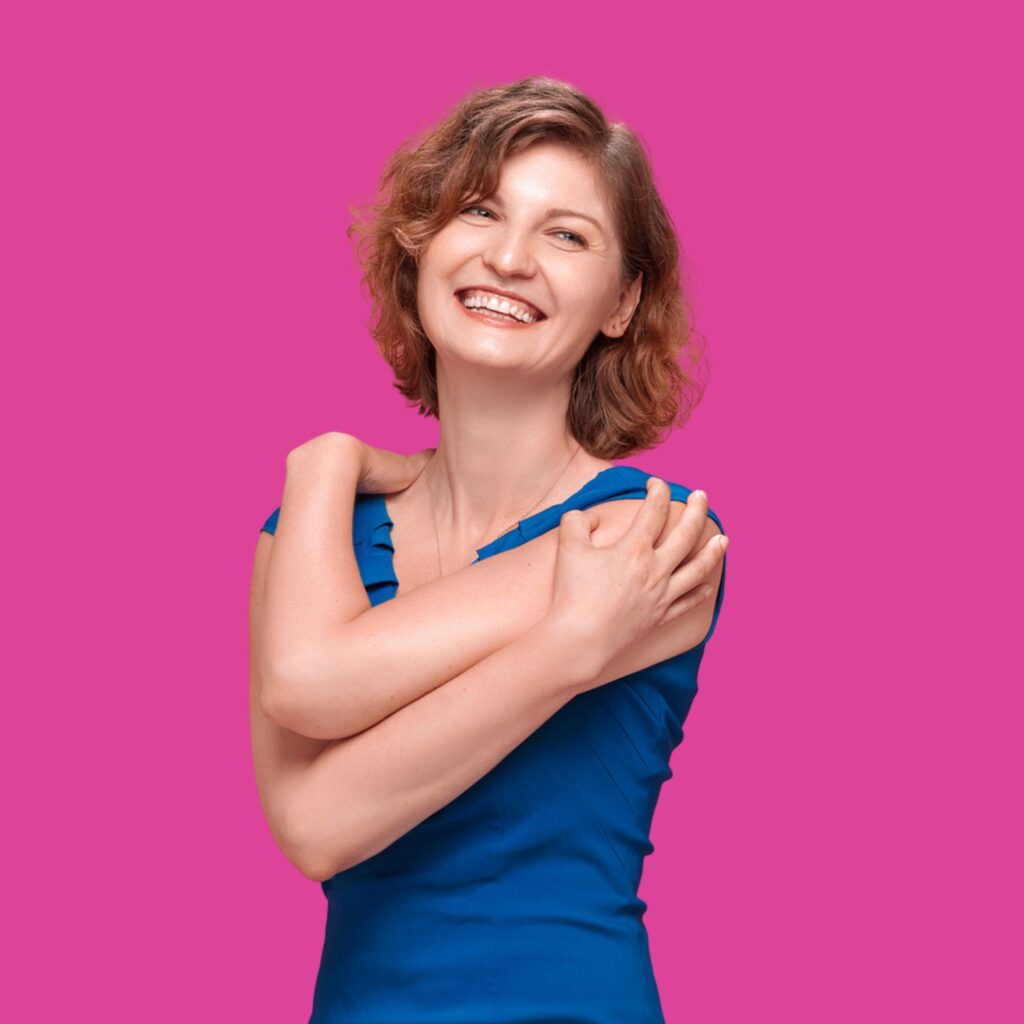
1. Welcome to our interview series, Anna. We’re glad to have you with us. To begin, could you tell us a little about yourself and what brought you to build your life in Shenyang, China?
Hello, I’m Anna and I help women who’ve quietly lost themselves in love find their way back to who they were always meant to be.
I’m also a wife, a stepmom, a proud dog mum to two fur babies, a friend, a daughter, and the annoying little sister…
What brought me to Shenyang? Love.
My partner received a job offer here six years ago. Moving meant leaving my career, my friends, my support system and I made the decision very consciously.
That part matters to me as I had seen people resent their partners for choices they themselves had made. I didn’t want that story. I didn’t want to wake up one day and think, “You did this to me.” If I was going to move across the world, it had to be my choice. My responsibility. My freedom.
Was there fear in that? Probably. Maybe fear of resentment. Maybe fear of dependency. But mostly it was about owning whatever would happened next.
If it’s still too polished, we roughen it.
2. Living abroad with your partner and building a new routine can shape perspective in unique ways. How has this environment influenced your outlook on life and work?
Before I came to China, I read a book written by someone describing his internship in Beijing. What struck me wasn’t the “difference” but how normal everything was once you were inside it.
We humans love to compare. Romania vs. Germany. Germany vs. England. England vs. China and I’ve never liked that. It reduces people and the country to culture labels.
The thing is, you find assholes everywhere. You also find the most heartwarming people everywhere and China isn’t an exception.
But what impressed me deeply was something else: the unapologetic self-priority I witnessed here. When I was about to set up my business, my coach told me to read The 36 stratagems or “The 36 Rules of War.” It was confronting. Strategic. Very clear about one thing: people act in their own interest. Protect your circle. Strengthen your position. Move forward. And I remember thinking uhhh, there is no pretending here.
What fascinated me most wasn’t strategy but the attitude. An an energy I see here often, especially in older women, that says: “I come first. I’m doing what I’m doing. You don’t like it? That’s fine.”
There’s very little obsession with “what will the neighbours think?” and that, for me, was freeing.
Over 15 years ago I read advice from a 92 year old lady in a magazine and one was “What other people think about you is none of your business.” I loved that sentence as it spoke from my heart. But in Europe, I didn’t see it lived. There was always that subtle pressure of image and approval. So, here, I see people just… go. In traffic. In business. In daily life.
China didn’t create that in me but somehow it gave me permission to embody it without getting weird looks and being shut down for it.
3. You collaborate with clinics and support emotional well-being in different settings. What drew you toward this kind of work?
I remember being 18, out with friends, loud music, people everywhere and there was this one guy standing in the corner looking completely crushed. I went over and stood with him while he was telling me about his heartbreak and his belief no-one would ever love him again as he’s just not enough. For the next hour or so I tried to make him see that he IS enough and if she couldn’t see that she wasn’t the right one for him. I wanted him to understand that he was okay as a human being.
I’ve done that many times – sitting with strangers, listening to their heartbreak and their petty party and trying to make them see how amazing they are just the way they are.
And no, I wasn’t trying to convince myself of that. I genuinely believed it. I’ve never doubted that I’m okay as a human being. I wasn’t the best at sports or school and that was fine. I just wanted to be happy. That was always the goal – even though many people, throughout my life, have told me otherwise.
Fast forward to my early 30s, when I was living in England, my manager suggested I involve the company apprentices in a project. I worked with them, helped them shape their ideas, encouraged them to present to senior leadership, helped them find their voice.
And I loved it! After the project ended, I walked into my manager’s office and said, “I know what I want to be when I grow up.” I didn’t have the word coaching yet. But I knew I wanted to help people trust themselves.
So I started studying. Psychology first. Then NLP. Then other modalities. I coached colleagues for free just to practice. Eventually I left corporate and coached apprentices full-time at a college.
I remember one day after eight hours of coaching straight, walking back from the garage area where the mechanics were based, calling my partner. He said, “You sound exhausted.” And I said, “Physically, yes. But I feel like I’m walking on clouds.”
And when I moved to China and couldn’t get a visa as a coach, so I became an English teacher. Six months in, I told my partner, “I miss coaching too much.” Months later I set up my business and eventually I walked into clinics and said, “This is what I do. Is there a need?” And they said yes.
I wouldn’t call it a grand life purpose. It simply fills me and makes me feel alive.
4. You’ve also shared your expertise in a refugee camp context. How did that experience deepen your understanding of resilience and human connection?
And still am. Before I was involved, I never really thought about relationship problems in refugee camps.
When I heard “refugee camp,” I thought survival, food, safety, housing. I didn’t immediately think identity loss, heartbreak, couples struggling, people feeling unseen in their marriage. Even though I work with relationships professionally, it simply hadn’t crossed my mind deeply.
When I was approached by someone from Uganda’s second-largest refugee camp and asked if I would support people there, my first thought was, “Of course.” Because once you pause and think about it, it’s obvious. Humans don’t stop being humans just because their circumstances are extreme.
And what struck me over the years is this: it doesn’t matter if someone is a refugee, a factory worker, or a high-level executive. When it comes to relationships, we fall into the same patterns. We want to feel chosen. We want to feel valued. We want to feel loved. Others had once held high status in their home countries. Homes. Careers. Identity. Then suddenly – gone. Reduced to a number among thousands.
And I remember thinking, quietly: If this happened to me… who would I be? How would I cope? Would I rise? Would I collapse?
The truth is, we don’t know until we know.
What amazed me was their desire for connection. Even after losing almost everything, people still wanted love. Still wanted partnership. Still wanted belonging.
That taught me something very simple: resilience isn’t about being untouched by pain. It’s about still wanting connection despite it. Love prevails.
5. Your work centers on helping women accept themselves without shame or judgment. What first led you to see this as an important focus?
I think I’ve been surrounded by shame conversations my whole life.
Friends apologising for their bodies. Classmates doubting if they were good enough. Women shrinking themselves in rooms before they even opened their mouths.
And I remember thinking, almost impatiently, “Why are you apologising? You’re fine. Stop it.” Later in my life, I fell into that hole myself.
Not in a dramatic way. There wasn’t a big moment. It was quieter than that. I started listening to the voices that said I should be different. That I should change. That I should be more like someone else. I’d heard those messages throughout my life, but suddenly they landed differently.
And somewhere inside, there was this quiet thought:
“Can someone save me please?”
After ending that relationship, the clearest thought I had was:
“I want time with myself. I want to be happy with myself again.” Not to improve. Not to optimise. Not to become better. Just to feel at ease in my own skin again.
Writing Beyond Dependence helped me understand that more deeply. It wasn’t about blaming anyone else. It was about noticing how easy it is to start believing you should be someone different.
When I first set up my business in China and had to choose a focus, “self-love coach” was the first phrase that came to mind. It evolved later but the core stayed the same.
Because when someone says something about themselves that isn’t true, when they call themselves broken, too much, not enough, I get that urge to shake them and say, “Wake up. You’re okay.”
You might not love every part of yourself. You might even be an occasional asshole. But accepting that without shame? That’s freedom and that’s where real connection begins.
6. You went through a deeply difficult chapter involving loss, isolation, and financial dependence. Looking back, what helped you begin moving out of self-blame and toward healing?
In 2019, everything collapsed at once.
The fifth miscarriage.
Moving to China.
Not speaking the language.
Not knowing anyone.
New job. New system. New everything.
Then COVID hit. I was a new teacher, so I had no students which meant no income. For the first time in my adult life, I was financially dependent.
All of that happened within about three months.
Six months later, I was sitting on my balcony feeling completely numb. Empty. I remember thinking, I just want to feel again. I just want to be happy again. When will this stop? What else do I have to do?
None of the tools I knew worked. I was drinking too much, smoking too much, eating badly, not moving. Angry. Annoyed. Disconnected from myself.
And then this thought came:
“It will hurt for the rest of your life. And that is okay.”
And strangely, that was the most relieving thing my brain had come up with in months.
It felt like I had been holding my breath for half a year trying to fix myself, trying to speed it up, trying to stop the pain. And suddenly I could exhale.
I gave myself permission to grieve.
Not dramatically. Not endlessly. Just… without deadline. And without rules and restrictions.
If in ten years something triggers me and I miss my babies, that’s okay.
If tears come, that’s okay.
If the pain sits in my chest, that’s okay.
Not because I like it or because I accept it with joy. No. Because it is what it is.
And in that moment of permission, the desperation dropped. The numbness started to dissolve. The self-destruction lost its grip.
No fireworks and no futuristic light beams from the sky – just relief.
7. Many people cope in ways they later regret when facing pain or uncertainty. How has reflecting on your own coping strategies shaped your empathy toward others?
I don’t regret how I coped. And I also don’t feel ashamed of it.
When I look back at the drinking, the smoking, the anger, the numbness, I don’t see weakness. I see overwhelm. I see someone trying to survive something she didn’t yet know how to process.
And that perspective shapes everything in my work.
When someone sits in front of me and says, “I know this isn’t healthy, but I can’t stop,” my first thought isn’t judgment. It’s curiosity.
What happened to you that made this feel necessary? Even when someone’s coping behaviour affects me personally, even when I’ve been on the receiving end of someone else’s insecurity or overwhelm, I don’t shame them for it. It’s more like, “Okay… this is how you deal with your pain.”
And that was true for me even before I studied human behaviour or understood the brain mechanisms behind it.
For me, it’s simple: when you don’t shame yourself, you don’t feel the urge to shame others.
When you accept the good, the bad, and the ugly parts of who you are, your inner war stops and you relax. And when that relaxes inside you, you don’t need to attack it in someone else.
8. Experiencing multiple miscarriages can be emotionally complex and often remains unspoken. What conversations do you wish society had more openly around grief and healing?
Some of my close girlfriends quietly told me they had experienced miscarriages too – before I ever had my first. And I hadn’t known. They hadn’t spoken about it – to anyone.
It was almost like there’s this silent rule: you don’t really talk about it. It’s “just biology.” It’s “natural selection.” It’s unfortunate, but you move on.
And yes, maybe biologically that’s true. But emotionally? It’s a loss.
What frustrates me isn’t just that miscarriage is minimised. It’s that we minimise loss in general.
We act like grief only counts when someone dies. But grief also happens when a relationship ends. When you lose your job. When your pet dies. When your body changes. When you get sick on injure yourself. …when your imagined future disappears.
That’s still loss.
And yet culturally, we rank grief. If you lose a parent, you get time off. If your partner leaves you, you’re expected to function. If your pet dies, “it was just a pet.”
We don’t give people space to process the loss of what they thought their life would be.
And then on the other side, there’s this obsession with healing. Heal faster. Heal properly. Heal fully. As if healing is some finish line.
I used to think I’d know I was healed when I could talk about it without emotions. When it didn’t affect me physically or mentally anymore. But now? I don’t think that’s how it works.
I don’t know if “healed” is even the right word.
It’s not like breaking a leg and then being able to run again. You can function long before something is integrated. You can cope. You can survive. But coping isn’t the same as being at peace.
I wish we talked more openly about grief as part of being alive and not as something to rush through or fix. Loss doesn’t mean your life is over. It means something has changed.
And instead of asking, “When will I be healed?” Maybe the better question is, “Can I allow this to exist without fighting it?”
9. The pandemic intensified isolation for many. How did that period influence your understanding of independence, vulnerability, and support?
For me, the pandemic started about two months after we moved to China.
We barely knew anyone. We had just landed in a completely new life. And suddenly – lockdown and, interestingly, I didn’t experience it as a loss of independence.
In many ways, it made me feel safer.
It was just the two of us. No social obligations. No travelling back and forth. No distractions. We had to face what had just happened – the miscarriages, the move, the identity shifts. It forced us to sit with each other and with ourselves.
And on the the other hand, when we were in Harbin during Chinese New Year, we got the message: “Go home.” That was it. No debate. No confusion. Within days, systems were in place. Testing centres set up. An app launched. Green codes, red codes. Clear rules.
You might agree or disagree with how different countries handled it but the clarity here made me feel safe.
There was no chaos in communication. No endless discussion about what should or shouldn’t be done. People just did what was required.
And physically, we were supported. We could order food and have it delivered within hours. Colleagues dropped off fruit and instant noodles. People helped us understand announcements when we didn’t understand what was said.
We even travelled within China. To Sanya for warmth, to Inner Mongolia in a camper van, to the North-West for exploration. Sometimes we didn’t get in to cities due to being foreigners but we were allowed in small villages where locals were very friendly and open towards us – even invited us into their homes.
So no, I didn’t feel that my independence had been taken away, that my vulnerability had been exposed, or a lack of support.
If anything, it reshaped my understanding of independence. Independence isn’t about doing everything alone. It’s about feeling stable inside clear boundaries.
And during that time, despite the restrictions, I felt supported by the system, by the people, and by our relationship.
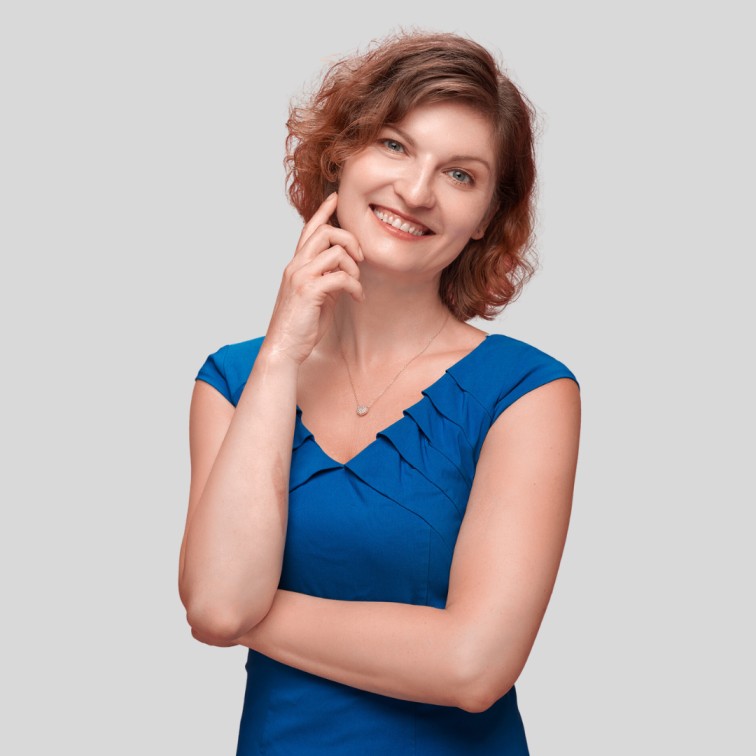
10. You bring women together through your BACK TO ME program. What meaningful reflections or realizations often emerge in shared spaces like this?
The biggest one – “I’m not alone.”
It sounds almost too simple. But that moment when one woman shares something she thought was shameful or strange or uniquely hers, and another woman immediately says, “Oh my God, I thought it was just me” that’s everything.
There’s this visible relief in the room because so many women secretly believe they are the only ones overthinking, over-giving, doubting themselves, feeling invisible, wanting more but feeling guilty for it.
And when they realise, “Wait… it’s not just me. The “perfect mother” from next door struggles as well,” something shifts.
It’s funny, really. There are billions of people in the world, and yet we often feel uniquely flawed.
Shared space breaks that illusion and in that relief, in that “me too” moment, shame loses power and the inner war can stop – and that’s when real transformation can take place.
11. You also guide individuals more personally through coaching. How do private conversations differ from group exploration?
The biggest difference is depth.
In one-on-one coaching, it’s just you. We begin by asking, “What do you actually want?” Not what sounds good. Not what your partner wants. Not what society expects. What do you want to get out of this? And then we go deep into that. It’s personalised. The pace, the questions, the exercises – everything is shaped around that one person sitting in front of me.
In a group program like BACK TO ME, you come with your idea of what’s going on. You get the workbook, the framework, the live calls. You’re supported, you’re seen but it’s not the same as having one full hour every week where the spotlight is only on you. And where your thoughts and beliefs get questioned.
And interestingly, some of my 1:1 clients have said that’s the hardest part.
It’s hard to focus on yourself for an hour. Sometimes they don’t want to look at what’s coming up. They don’t want to talk about it. They don’t want to accept certain things.
In a group program, if you don’t feel ready one week, you can pause. You can skip an exercise. You can step back quietly.
In one-on-one coaching, you can’t hide in the same way. I’m there. I’ll ask, “What’s going on? What are you avoiding?”
In short – it’s deeper, it’s more precise, and it’s more confronting.
12. For those not ready to step fully into structured support, you provide self-guided resources. Why is it important to meet people where they are emotionally?
I actually think it’s less about meeting people emotionally and more about meeting them at their level of awareness.
When I was in that relationship with the alcoholic partner, I had no idea that I was losing myself. None. I thought I had a relationship problem. So naturally, I wanted to fix the relationship.
That’s a level of awareness.
Only later did I realise it wasn’t just about him or the relationship dynamic. It was about me and my boundaries, my patterns, my silence, my need to be chosen.
But you can’t jump from “We have problems” to “I need to look at myself” overnight.
So self-guided resources matter because they allow people to explore without pressure. A podcast episode. A downloadable guide. A live class. A social media post that makes them pause and think, “Oh… that sounds like me.”
Especially on platforms like Insight Timer, I’ve had people say to me, “I came here because I thought my partner was the issue. And I just realised that I’m the issue. Or I’m living in my head. Or I’m projecting.”
That shift in awareness is huge.
And it rarely happens because someone forces it. It happens because something resonates quietly.
So I try to offer different entry points for different stages. Some women are ready for deep coaching. Others just need a small mirror held up.
You can’t push awareness. You can only invite it.
13. Without sharing private details, is there a story from your work that reaffirmed why you chose this path?
It’s not one story.
It’s the moment in almost every session where I realise how endlessly fascinating human beings are.
I’m deeply curious. When someone sits in front of me and starts talking, I’m genuinely interested. Not in a polite way but in a real way. I want to know what’s going on in your head. I want to see how you built your logic. I want to understand why this hurts the way it does.
Sometimes I sit there and ask, “How did you arrive at that conclusion about yourself?” And then we unpack it. And suddenly something shifts.
That moment, that unraveling, lights me up because it feels good when clients grow. It’s beautiful to witness change. But what really keeps me here is the curiosity. The intensity of listening. The privilege of entering someone’s internal world for an hour and seeing it reorganise in real time.
It’s fascinating.
And I think when something continues to fascinate you after all these years, that’s a sign you’re exactly where you’re meant to be.
14. Through mentoring and guiding others, what have you learned about identity within relationships?
I’ve learned that identity isn’t fixed.
It’s layered.
In the right circumstances – with the right emotional, mental, and physical resources – you can be incredibly generous, patient, loving. Mother Teresa times ten.
In other right circumstances – with different emotional, mental, and physical resources (like pressure, fear, insecurity) – you can be reactive, harsh, selfish. Jack the Ripper times ten.
All of that lives inside us. You have the capacity for both and everything in between.
What I see often is people reducing themselves to labels. “I’m this personality type.” “I have this attachment style.” “That’s just how I am.” It’s like we put ourselves in a drawer, close it, label on, and say, “That’s my identity.”
But identity is nuanced. It shifts depending on resources, stress levels, environment, and relationship dynamics.
And especially in romantic relationships, women often say, “I don’t know who I am anymore.”
Usually, it’s not that they don’t know who they are. It’s that they don’t like the version of themselves that showed up under those circumstances.
When I lost myself in that relationship, that version of me was still me. When I coped badly during grief, that was still me. It wasn’t someone else hijacking my body. It was a part of me under pressure.
We don’t like that idea. We want to go back to the “better” version. The calm one. The confident one. The pre-relationship one.
But the moment you stop fighting the version that’s here – the anxious one, the jealous one, the overwhelmed one – and say, “This is what is right now,” something shifts.
Not because you suddenly love it and definitely not because you approve of it.
But because the inner war stops. And when the war stops, you have space to be.
15. Looking ahead, what social or emotional conversations do you hope become more normalized for women globally?
What I see often is that women either empower each other wholeheartedly or drag each other down wholeheartedly.
It’s almost like there’s no middle ground.
Either she’s a threat or she’s a sister we must cheer on loudly and publicly.
And I sometimes wonder – why can’t we just let each other be?
Why does another woman have to be competition?
And why does she automatically have to be a project?
What if empowerment wasn’t performative? What if it wasn’t about slogans and group chants and “You’ve got this!” under every complaint?
Because here’s the uncomfortable part: sometimes what looks like empowerment is just collective avoidance. It’s women sitting together reinforcing the same story without anyone saying, “Have you looked at your part in this? What did you do to get here” – taking responsibility for your behaviour.
Real empowerment isn’t endless validation. It’s honesty. It’s self-responsibility. It’s someone saying, “You have the power – use it.”
And the reason this is hard is because we judge ourselves constantly. When you’re at war with yourself, you either project that onto other women or you overcompensate by trying to save them.
I’d love to see a shift where women focus first on regulating their own inner world. Where we become okay with who we are – the strengths and the insecurities without explanation, justification, and excuses – before we rush to fixing, judging, rescuing, or competing.
Empower when it’s genuine.
Support when it’s honest.
But stop the performance.
That’s the conversation I’d love us to have more openly.
16. Finally, what message would you like to share with someone quietly struggling with shame, disconnection, or self-doubt today?
First – you’re not alone.
Every single one of us carries shame at some point. Disconnection at some point. Self-doubt at some point. Maybe today it’s shame. Tomorrow it’s insecurity. The next day it’s feeling lost.
That doesn’t mean something is wrong with you. It means you’re human.
The real question isn’t, “Why is this happening?”
The real question is: What do you want to make it mean?
I often tell my clients something that sounds slightly brutal at first: your life is meaningless.
Not in a dark way. In a freeing way.
Everything that happens is neutral until you assign meaning to it. A breakup. A failure. A miscarriage. A mistake. Self-doubt.
You decide what it means.
And I’m not talking about forced positivity. I’m not saying, “Just think happy thoughts.” I’m talking about acceptance. About neutrality.
Like putting your car in neutral. It’s not driving forward. It’s not crashing backward. It’s just… not fighting.
Can you allow shame to exist without turning it into a life sentence?
Can you allow self-doubt without deciding it defines you?
Your thoughts create your reality. If you lean more into energetic language, your thoughts create your vibration. Either way – you’ve got the power to create.
You may not control what happened.
But you always have a say in what you make it mean.
And that choice – even if it feels small – is where your power lives.
Anna Thellmann is a Conscious Relationship Designer who helps women rediscover themselves, build healthy relationships, and live with authenticity and self-trust. Through her BACK2ME approach, she encourages women to love fully, live authentically, and choose themselves unapologetically. More information about her work and programs is available at www.annathellmann.com.

We believe in sharing knowledge with everyone and making a positive change in society through our work and contributions. If you are interested in joining us, please check our ‘About’ page for more information