
About: Candice Suarez, Hailing from Pennsylvania, Candice Suarez is an alumna of Millersville University, holding a Bachelors Degree in English Education and a Masters of Education Degree in School Counseling. Her dedication to the helping professions unfolded during nine years as a School Counselor before transitioning to roles as a Mobile Therapist, Behavior Specialist, and ultimately, Director of Community and School Based Behavioral Health. Candice’s expertise lies in counseling, supervision, and collaborative efforts with school administrators to empower students.
A lifelong learner, Candice was a regular at the Pennsylvania School Counselors Association Conference, presenting workshops on behavior analysis and her Behavioral Health program. Relocating to Richmond, she added Real Estate to her skill set, supporting families in her new Southern home. Candice, a National Certified Counselor, resides in Moseley with her husband and teenage son.

Welcome to our interview series, Candice Suarez. When did you first notice that young people were feeling more confused than curious about their future?
I have been working with high schoolers for about five and a half years now, and I find that most say they have no idea what they want to do. I feel like they have a pressure placed on them to choose the “right” career path–one that maybe parents and the media see as a measure of success. They honestly have SO many options that they are overwhelmed.
You introduced the idea of life drafting. What problem were you trying to solve with that idea?
My intention when creating the concept of life drafting is that we can’t predict the future. We can’t with any certainty know exactly how life will turn out. I believe that we should craft a vision, set goals, create habits and systems to help us reach those goals—BUT, we should do it in pencil, not rigidly carve it in stone. I want to teach a process that recognizes and embraces this, while at the same time, shows a path of flexibility and curiosity. Failure is inevitable, but if you embrace it as an opportunity to learn and grow, you can move forward in a new direction.
Hence, life drafting. Your life is an ever-evolving process of growth and change–a sloppy copy–not a final perfect manuscript.
In your experience, what is one belief about success that causes the most stress for teens and young adults?
I believe youth are surrounded by traditional beliefs about success as high GPA, strong test scores, all the AP classes, tons of volunteer work, extracurricular activities that are meaningless but look great on a resume, etc, etc. In their view, these will ultimately lead to entrance into the “best” colleges, which will ensure them having a financially successful career that is highly respected. However, my fear is them waking up in 10, 15, 20 years from now miserable and wondering how they got there.
What do young people rarely get time or space to think about, but really need?
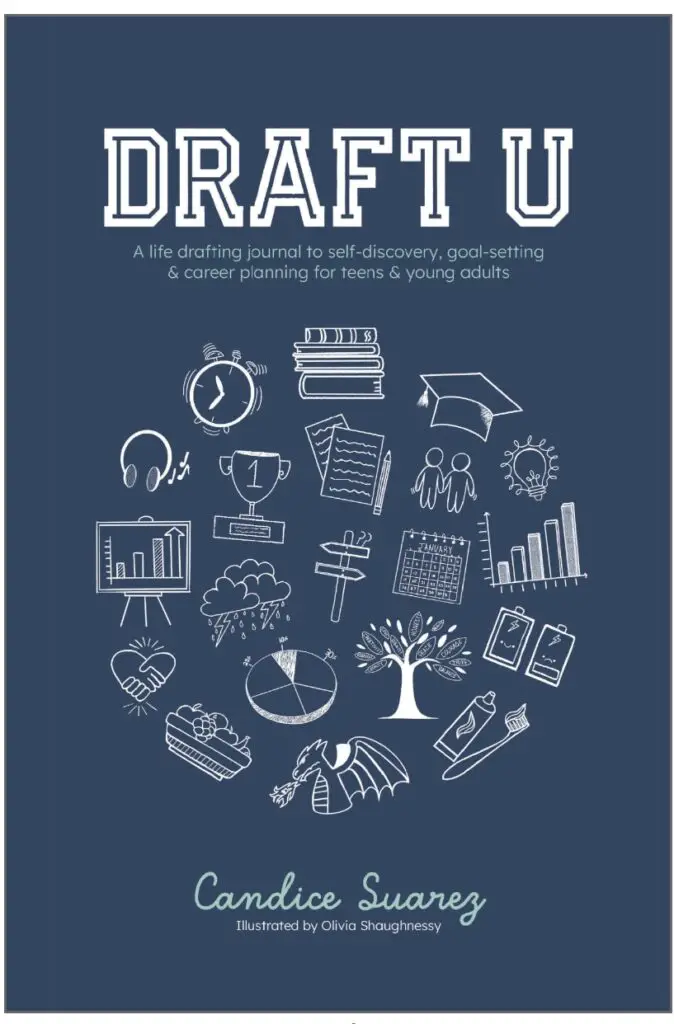
They really need time and space to explore what they really, and truly want. Examine what they value in life, experiment in spaces that interest them but might be different from what their parents think or what their friends are doing. I am a firm believer in journaling to self-discovery. My book, Draft U is a guided journal to creating space for drafting all the possible futures that lay before them.
Why do you think writing things down helps people understand themselves better than just thinking about them?
Writing and journaling helps process their thoughts and make them real. Putting pen to paper in longhand is a therapeutic journey. It helps to problem-solve
What role do emotions play in decision-making, especially for students choosing paths for college or work?
Emotions play a huge role. In Draft U, I talk about the difference between subjective and objective reasoning in decision making. I believe a healthy combination of the two is essential. Do your research. Look at things like cost of living, salary projections, campus major offerings, proximity to home, etc. (objective information). But when it comes down to it, you also have to feel it in your gut that a college campus is the right place for you, or that a career will check off all your boxes for fulfilling your purpose in life. Finding the balance between the two is essential. You can choose a creative career path because it’s who you are and what you feel called to do, but you also need to go in with your eyes wide open to the objective facts of traveling down that path.
How do you help someone tell the difference between their own wants and the expectations placed on them?
By going inward. Again, journaling can be the key to unlocking what you truly want versus what you feel you should be doing. Draft U takes readers through a process of self-discovery that addresses this very thing. They will spend time assessing their current satisfaction in four life buckets: Health, Connection, Contribution, and Play. Then they will explore their core values, examine their view of life and work, as well as create a vision for their future. They are prompted throughout to shut out all of the “shoulds” that bombard them.
What does healthy guidance look like when someone is still figuring themselves out? Allow them to experiment. No one truly knows what they want until they actually try it.
Informational interviews, shadowing, watching videos, joining clubs, all will give them a taste of what they might want to do. Be curious and flexible in the outcome.
In your work, what usually changes first: confidence, clarity, or direction?
Clarity comes first. They often have an “a ha” moment when presented with possibilities they hadn’t considered. Confidence has to come next. They have to believe they are capable of heading down the path they are interested in before they can begin to commit to a first direction.
What is one small shift in thinking that can make a big difference when someone feels stuck?
Their choice isn’t forever. No decision has to be final. Especially as a teen/young adult. Many of us are not in the career we chose at the age of 17, 23, or even 35. You can always change your mind when you are presented with new information. We grow and evolve as we experience life and the world around us. Hence, life drafting. It takes the pressure off of having to get it right the first time.
What part of your work feels the most meaningful to you on a personal level?
I love the “a ha” moment. That moment when they start to see a possible future that excites them.
How do you define “progress” for someone who doesn’t yet know where they’re going?
Progress is being open to trying stuff. Ruling it in and ruling it out, but not being afraid of putting yourself out there.
Finally, if someone is standing at an uncertain point in life, what is one thing you would want them to know?
That there is no perfect choice. Every choice can teach you something if you are open to it.
Important Links
https://store.bookbaby.com/book/draft-u

We believe in sharing knowledge with everyone and making a positive change in society through our work and contributions. If you are interested in joining us, please check our ‘About’ page for more information