
About: Teresa S. Navas is an expert in bilingual education and English as a Second Language and has taught in the U.S. school system for more than 20 years. Her work has consisted of serving Hispanic and English as a Second Language students at all grade levels: elementary, middle school and high school. Over the years, she has served as Department Head and teacher mentor, in addition to being awarded multiple grants from her school district. She holds a bachelor’s degree in Social Work and Spanish (B.A.) and studied at the University of Seville, Spain. Her counseling experience is in the fields of social service and adoption. In addition, she has a master’s degree in Educational Administration (M.A.) from DePaul University in Chicago, Illinois, U.S.A. In her free time, she enjoys cooking, biking, nature, international travel and spending time with her family.
Welcome to our interview series, Teresa. Thank you for joining us. To begin, could you share a little about yourself and what first inspired your commitment to bilingual education and supporting Hispanic families?
I have been a bilingual educator, ESL teacher and social worker over the course of my 25 year career. I am passionate about education and have taught at the secondary, middle school and elementary level in public schools near Chicago, in addition to teaching English as a Second Language (ESL) to adults. These experiences with children and parents inspired me to create a resource guide in order to teach parents how to best support their children’s educational needs during the elementary school years.
With more than two decades of experience in the U.S. school system, what moments most shaped your understanding of immigrant parents’ challenges?
The majority of my students are English Learners (ELs) which means that their native language is not English. Many of their parents have immigrated to the U.S. from Mexico, Venezuela, Nicaragua, Honduras and other Latin American countries. As I interacted with immigrant parents in the school setting, I began to notice a pattern of common difficulties and challenges that parents often encounter.
Were there writers, educators, or storytellers in your family or community who influenced your path toward becoming an author?
I come from a long line of educators in my family. My sister, cousins, aunts and uncles are teachers, principals and school librarians. Ever since childhood, I’ve always loved reading, journaling, writing poems and composing songs for my guitar. Some of my favorite books during childhood included Charlotte’s Web, the Little House on the Prairie series and the Nancy Drew Mysteries.
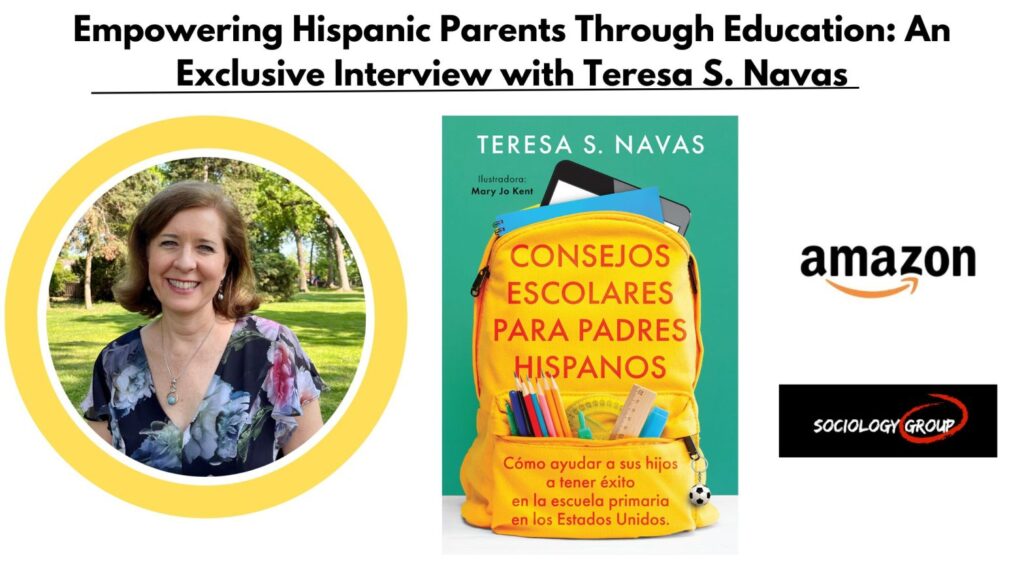
What led you to write your debut nonfiction book, Consejos Escolares Para Padres Hispanos, and why did that message feel urgent to share?
Latino parents face many unique challenges which make it more difficult for them to support their children’s academic progress. I wanted to provide a resource that was available in Spanish. Many families are unfamiliar with the educational system in the U.S., and therefore, aren’t knowledgeable about how to monitor their children’s learning and growth.
Why was it important to present this resource in Spanish and structure it around the fictional Garcia family?
By writing this book in Spanish, it will enable Hispanic parents to access the information possibly in their first and most dominant language. I included illustrations of the fictional Garcia family along with common parenting scenarios, in order to assist parents in comprehending the educational tips. This guide also includes additional resources such as websites, articles and videos in Spanish at the end of chapters, if parents want to dive deeper into a topic and learn more. An extensive glossary of educational terms used in U.S. public school districts is also provided for families.
From your perspective, what are the most common barriers Hispanic parents encounter when trying to engage with elementary schools?
In my opinion, the three most common barriers Hispanic parents encounter are: 1) language, 2) parent participation and 3) understanding the school culture in the U.S. First, if parents don’t feel confident in their English language skills, they may withdraw or hesitate to interact with their child’s teachers and the school’s administrators. In reality, many public school districts have bilingual educators and/or interpreters available and are using technology to translate and improve communication between parents and school staff.
Second, many Hispanic parents are unaware that parent participation is encouraged and even expected in the U.S. Parents are encouraged to ask questions, volunteer on field trips and during classroom parties, and reach out to their child’s teacher if there is an issue, problem or concern.
Third, many Latino parents attended school in a foreign country, therefore they need information about the school culture in the U.S. In my guide, I explain basic concepts like what happens in a typical school day, what occurs during a parent-teacher conference, how to read a report card and how to structure and support homework completion. In addition, there are chapters that describe extracurricular activities, how to use public libraries and how to provide educational activities during Summer vacation.
Your book addresses issues like bullying, homework, and technology. Which of these concerns do you see impacting families the most today?
One of the biggest challenges for families today is how to manage their children’s technology use and screen time. In my book, I discuss the many negative effects of children’s technology use such as: exposure to violence and pornography, obesity, lack of sleep, problems related to mental health and addiction, in addition to cyberbullying. In order to decrease these negative effects, I recommend that parents limit their children’s screen time, select high-quality programs, videogames and apps and supervise their children’s use of technology.
How did your background in social work and educational leadership shape the guidance you offer in the book?
I hold a bachelor’s degree in Social Work which provides me with a unique perspective on parent-child relationships. For example, one chapter instructs parents as to how to effectively inquire about their child’s day at school. Typically, if a parent asks, “How was your day?”, a child will answer with a single reply such as: ‘fine’, ‘good’ or ‘ok’ which results in the mother or father learning absolutely nothing! Instead, I instruct parents to rephrase their question by asking their child, “What was the best part of your day?”, followed by a pause and providing thought time. A follow up question is, “What was the worst part of your day?”. These two important questions can’t be easily answered by a single word response and can provide parents with valuable insight.
Entering indie publishing can be both exciting and challenging. What was the most valuable lesson you learned during the process?
Indie publishing can be exciting, scary, frustrating and rewarding – all on the same day! Since Consejos Escolares Para Padres Hispanos is my debut nonfiction book, I had to educate myself during each phase of the writing, publishing and marketing process. I learned how to hire high-quality professionals to be on my team – editors, proofreaders, cover designers and a marketing coach. In addition, I read books, listened to podcasts and attended virtual webinars and in-person conferences. It was very important for me to produce a simple, useful, high-quality resource for parents and families.
Is there a particular experience from writing or publishing that stayed with you personally?
After publishing my book, I received a beautiful note from a Latina mother. This was her reaction after reading my book:
“In the midst of all the fear and overwhelm…this book shows that there is a way forward, a path for children and their parents, instructions for success in school, even when we face the challenges of staying hopeful in the midst of the turmoil.
There is hope.” – una mamá Latina
Beyond practical tips, what deeper purpose or mission drives your work through Consejos Escolares Para Padres Hispanos?
My mission is to show parents that education is the key to improving their children’s life. Through learning and education, well-prepared parents can provide a brighter future for their children. I truly believe that education is one of the most important gifts that can never be taken away once attained.
Looking back on your teaching career, are there experiences with students or parents that continue to influence your perspective?
After many years of teaching, I have worked with hundreds of children and their families. I believe that all parents want the best for their children…and wish to provide opportunities for them that they themselves, at times, were lacking. Parents need tools, resources and a mentor who can provide guidance and encouragement. My goal is to provide them with these resources.
As a member of professional and publishing organizations, how have these communities contributed to your growth?
I am a proud member of three outstanding professional organizations: Independent Book Publishers Association – IBPA, the Alliance of Independent Authors – ALLi and Independent Publishers of New England – IPNE. Each organization offers a plethora of tools, resources, conferences and opportunities to support, guide and educate indie authors. If you are an indie author who wishes to grow and thrive on your author journey – I highly recommend you join these exceptional organizations today!
Looking ahead, what future projects or directions do you hope to explore as an educator and author?
In the future, I plan to apply for grants to create an audiobook version of Consejos Escolares Para Padres Hispanos. An audiobook is essential so that busy parents can access the information by listening while doing chores or commuting to work. I also intend to translate my book into English so that it can reach more immigrant parents from diverse cultures.
Finally, what message would you like to share with parents navigating unfamiliar educational systems while supporting their children?
I’d like to encourage all parents to do hard things. It is our job as parents to be informed and prepared in order to guide and support our children’s learning. For this reason, I sprinkled important “tips” or “consejos” throughout each chapter of my book which is translated in English to: School Tips for Hispanic Parents: How to help your children succeed in elementary school in the U.S. I’d like to share one of these “tips” with your readers today:
“Well-prepared parents continue to learn…And they don’t make excuses.”- Maestra Navas
Website: www.tnavas.com
Book available on: Amazon and IngramSpark

We believe in sharing knowledge with everyone and making a positive change in society through our work and contributions. If you are interested in joining us, please check our ‘About’ page for more information