
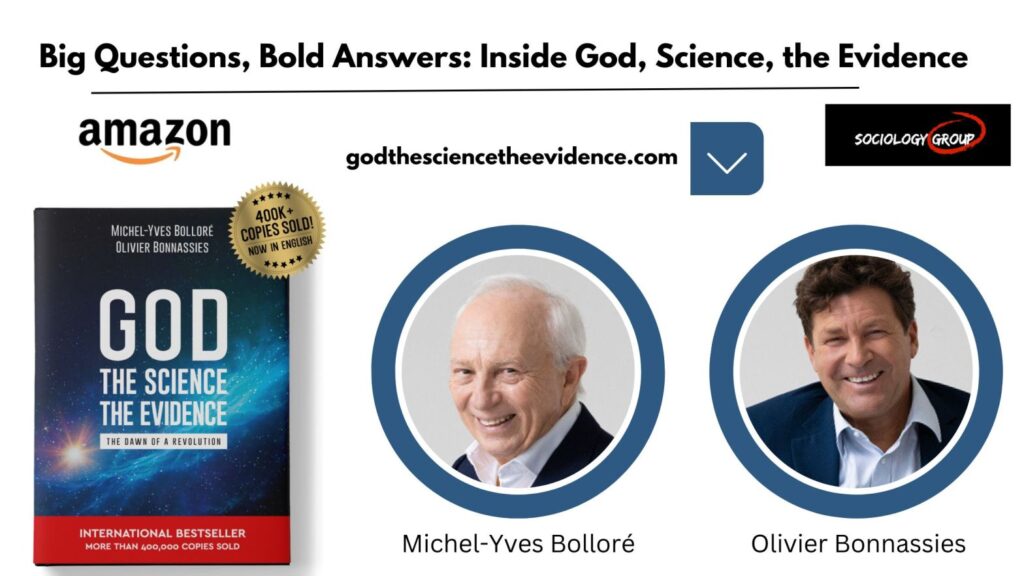
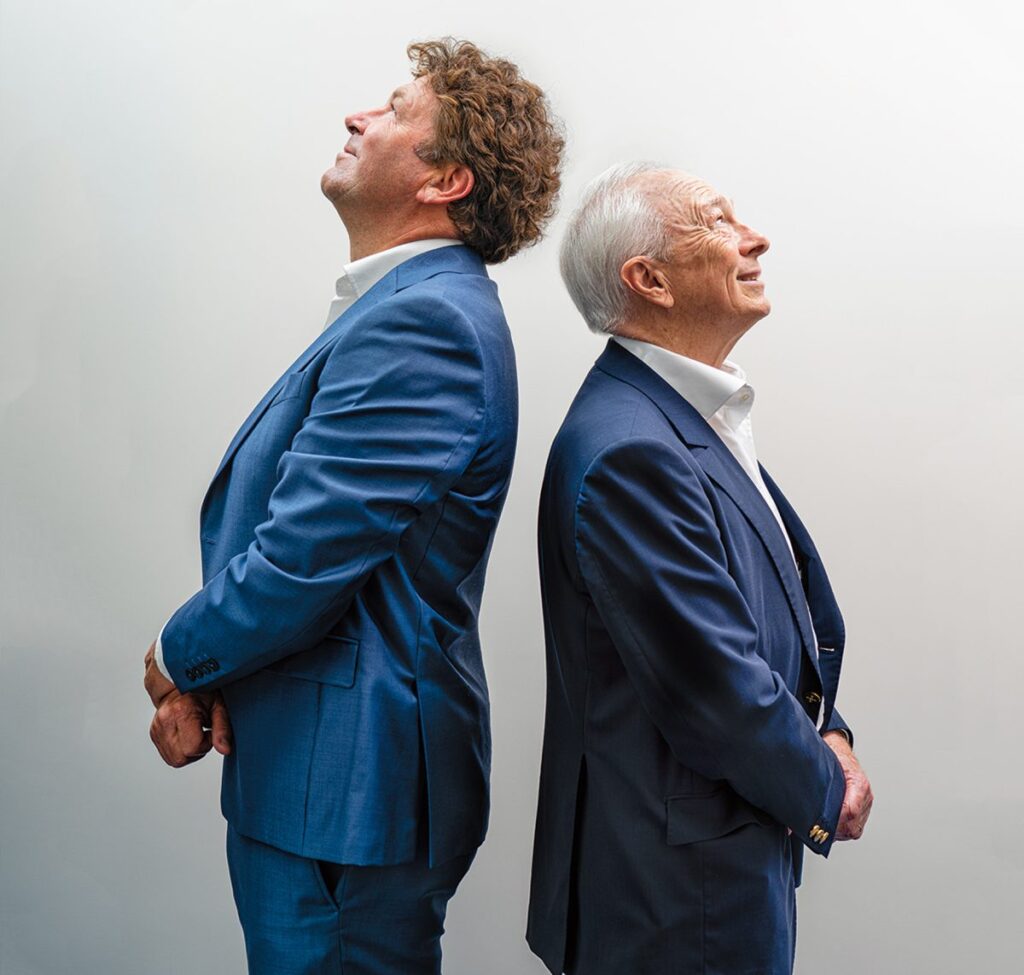
About the Authors of God, Science, the Evidence: Michel-Yves Bolloré and Olivier Bonnassies are authors who explore the relationship between science, reason, and faith. Bolloré is an engineer and business scholar with a strong interest in philosophical questions, while Bonnassies, a graduate of École Polytechnique, is an entrepreneur who later pursued theology after moving from agnosticism to faith. Together, they co-authored God, Science, the Evidence, a widely discussed book that presents scientific and philosophical perspectives on the question of God’s existence.
Q1: What led you to explore the question of God through science and rational inquiry rather than through tradition alone?
Michel: I was born into a Christian family where no one asked questions; but from adolescence onwards, I felt the need to know whether the faith I had received from my family was supported by reason or not. This strong need for coherence between my faith and my reason is why, throughout my life, I have read many books on this subject. Thanks to my scientific background I could understand the publications I read. Over time, I realized that this question was not only very important but also absolutely fascinating.
Later in life, I realized there was no good, accessible book intended for the general public that would summarize—much like an anthology—all the reasons to believe in the existence of God. There were science books on one side, and philosophy or theology books on the other, but none that offered a complete overview of knowledge. I had met Olivier a few years earlier, and we realized that we shared the same ideas on the subject. That is how the idea was born to write our book together: God, Science, the Evidence.
To return to the second part of your question, faith and tradition are, of course, very good, but on their own, they are insufficient. To paraphrase Pope John Paul II, man is like a bird; he has two wings—faith and reason—and he only flies well and high if he has both.
Q2: Olivier, you have shared that you were once an unbeliever. What questions or experiences first challenged your earlier assumptions and opened you to reconsider faith?
Olivier: When I was in my early twenties, I was studying mathematics at the École Polytechnique and was, like my entire family, completely agnostic. I used to think that religions were nonsensical beliefs—perhaps even ridiculous—intended for gullible people. One day, by chance, I came across a book about the reasons to believe in God. I read it as a challenge, certain that I would quickly find errors. To my surprise, I found that the book was very serious, and so was the question it posed. Consequently, I read other books, and two or three years later, I became a Christian.
As I have always felt the need to do things thoroughly, I decided after my scientific studies to pursue a degree in theology. I then oriented my entire life toward defending the truths I had discovered by starting various businesses. It was during one of these ventures—the creation of the Catholic news site Aleteia, published in six languages—that I met Michel-Yves and we decided to write this book together.
Q3: Michel-Yves, with a background in engineering and business, what drew you toward investigating questions usually associated with philosophy and theology?
Michel: The answer to your question is actually very simple: there is no doubt that the question of God’s existence is the most important question of our lives. If God does not exist, we are nothing more than a fortunate assembly of particles brought together by chance and the necessity by the laws of the universe—a fleeting assembly that will end at our death. We are, therefore, nothing; thus nothing matters and nothing is of importance. No one will remember us in a few thousand years, and even our planet, as well as the universe itself, will eventually disappear.
If you think about it, this isn’t necessarily tragic, but it would be better to know it. Because if nothing matters, we should simply try to enjoy our time on Earth by doing whatever we please: eating, drinking, and dancing, for instance. Since nothing is important, there is no real difference between a human and a mosquito; we are just a bit larger and a bit more intelligent. Crushing a man or a mosquito would not be very different actions because both are just particles which, once destroyed, will return to a different place. Good and Evil do not exist. They are merely what we decide they should be at a given moment—and our children will likely decide differently than we did, just as we ourselves changed our parents’ rules.
If, on the other hand, God exists, everything is different. All religions promise an eternal life after this one—an eternal life where we would be reunited with those we have loved. If this is true, it is monumental; infinity awaits us. In that case, to reach it, everything matters and everything is of importance. Life has a meaning; good and evil exist.
When you consider the magnitude of this question, it is astonishing to see how few people reflect on it seriously. How is that possible? Is it due to the false but widespread idea that no evidence for God’s existence exists, and that the question is therefore undecidable? It is possible. That is precisely why we wrote this book: to show that there is, in fact, much evidence for God’s existence, and that they are reasonably simple to understand.
Q4: After four years of research and collaboration with scientists and scholars, what discovery or insight surprised you the most?
Olivier: What struck us most is not any single scientific discovery regarding the existence of God , but rather the sheer number and significance of the findings in the twentieth century, the fact that they emerged in such a short span of time, and that they come from different scientific fields. Their origin in diverse fields is crucial because it makes them independent of one another, and therefore, far more convincing.
The fine-tuning of the Universe is one of the most significant. This fascinating discovery has even led several atheist scientists to change their minds and become believers. This was the case for Fred Hoyle, the famous astrophysicist who opposed Georges Lemaître and coined the term “Big Bang” to mock him.
Q5: Modern physics describes a universe governed by precise laws and constants. How can readers understand the idea of “fine-tuning” without oversimplifying it?
Michel: Fine-tuning is actually a fairly simple idea. Mathematical modeling of the universe has revealed that it is built upon 20 or 30 fundamental numbers. For instance, we are aware of the four forces: gravity, electromagnetism, the weak nuclear force, and the strong nuclear force. We also all know the speed of light, which is approximately 300,000 km/s.
Why this specific value, and what would happen if it were even slightly different? This is the central question of fine-tuning, and here is the answer: if this speed were only marginally different, our universe would not exist. The same would hold true if the four forces were even slightly altered.
To better grasp the extraordinary nature of this discovery, consider this: we now know the expansion rate of the Universe at the time of the Big Bang very precisely. If the 15th decimal place of this number had been just one higher or one lower, our universe would not exist, or at the very least, would be incapable of supporting life.
Thus, our universe is like a large airplane at take-off. For it to lift off and fly, about thirty parameters displayed on its dashboard must be set in a unique and extraordinarily precise way for it to function. This level of adjustment and precision defies all probability and therefore requires an explanation that the hypothesis of “chance” cannot satisfy.
The simplest explanation for fine-tuning is that there is a watchmaker behind the watch, a designer behind the airplane. Naturally, materialist scientists dislike this explanation and prefer to imagine that there are billions of universes and that, by pure luck, we happen to be in the right one. However, this hypothesis is absolutely unverifiable, and it is far more implausible and complex than the existence of a Creator.
Q6: The complexity and information encoded in DNA raise profound questions about life’s origins. Why is biological information such a compelling scientific mystery?
Olivier: In 1870, Darwin asserted that the first living cell appeared by chance in a “warm little pond” at the foot of a volcano, thanks to the presence of numerous chemicals and favorable environmental parameters. This became known as the primordial soup. This idea persisted for nearly a hundred years, until the 1950s. At that time, many American laboratories, such as Robert Miller’s in Chicago, were trying to replicate these conditions to produce at least the building blocks of life, or perhaps life itself.
However, during this period, a “thunderclap” occurred: the discovery of DNA, RNA, and the Ribosome. It was then discovered that even the smallest living cell was equipped with ultrapowerful computers and a genuine computer language. The information density of the smallest living unit is billions of times denser and more complex than that of our mobile phones.
From that moment on, almost all scientists realized that the primordial soup theory had no chance of being a serious answer to the origin of life. A computer cannot emerge by chance from a primordial soup. Thus, today there is no longer a solid theory for the origin of life. The scientific world is faced with an enigma, and many scientists now prefer to believe in an extraterrestrial origin of life. But merely pushing the problem further away does not solve it.
Q7: Science often explains how things work but not why they exist. Why is this distinction important when discussing the origins and meaning of the universe?
Michel: Indeed, it is common to hear that science deals with the “how” and religion with the “why,” suggesting that these two fields are complementary yet entirely separate. This is what the paleontologist Stephen Jay Gould theorized in 1997 under the acronym NOMA, standing for “Non-Overlapping Magisteria.” The core of this idea is that each domain of knowledge must remain in its own sphere—physics on one side and metaphysics on the other—without attempting to interfere with one another.
However, this idea no longer holds up. Modern science shows that it is no longer accurate, as there is now a common hinge between physics and metaphysics, involving questions that have one foot in each domain. A prime example is the question of the absolute beginning of the universe. Today, this is both a metaphysical question—since, if God does not exist, it is impossible for the universe to have had an absolute beginning—and a scientific one, which, through our understanding of the expansion of the universe, is now firmly established. In fact, there are now at least six lines of evidence from the world of science showing that an eternal universe is highly improbable, if not impossible!
Q8: Skeptics argue that science removes the need for a creator, while believers see science as revealing order and meaning. How can these perspectives engage in respectful dialogue?
Olivier: The scientific discoveries that emerged starting in the Renaissance—from Copernicus, Galileo, and Newton to Buffon, Lamarck, and Darwin—seemed to demonstrate that the world could be explained without the hypothesis of a Creator God. Consequently, the simplest, and therefore most preferable, explanation for this new realization was that God simply did not exist. In the West, this gave rise to a powerful materialist current that continues to live today. Then in the early 20th century, a series of spectacular discoveries like the Big Bang, finetuning, and DNA emerged to affirm the exact opposite. Today, it is no longer possible to explain our universe in purely materialist ways. We recount the story of this unprecedented and unexpected reversal in our book.
Q9: On a personal level, what does the word “God” mean to you beyond religious definitions?
Michel: As I stated at the beginning of this interview, I have always been a Christian, and the sole objective of my work over all these years has been to delve deeper into the realms of science and reason, ensuring that my faith remains in perfect harmony with reason. It was this compelling need for coherence that led me to undertake these studies and to co-author our book. Today, I can joyfully behold the fruits of this labor. The God of my Christian faith—who is Father and Love—is indeed the very same extraordinary Creator God who fashioned a world of such beauty, harmony, and complexity—a complexity that is rendered intelligible to humanity through the power of reason, science, and that astonishing instrument known as mathematics.
The God of our faith desired to have a vast family; for this reason, He created human beings, offering them a path to eternal happiness in His presence—regardless of the weaknesses they have faced or the trials they have endured. Yet, He endowed us with great intelligence so that we might discover Him amidst the mysteries of nature.
Q10: Across cultures there are many names and images of God. Do these differences reflect separate truths, or a shared human search for meaning?
Olivier: Indeed, there are numerous religions on Earth, and within each of these religions, many variations. This does not reflect the notion that reality itself is manifold—a view that would lead to the acceptance of an intellectual relativism suggesting that “all roads lead to Rome,” or that all ideas and religions are of equal value; for this is simply not true. Regarding the truth, Christ declared: “He who does not gather with me scatters.” The diversity of religions observed today is, in fact, a reflection of human frailty—of mankind’s inclination to reshape religions to suit their own tastes and interests. As for relativism, it stands as one of the most disheartening intellectual fads of our time. It leads to a cessation of thought, of reflection, and ultimately, of action; for if everything is of equal worth, what is the point of seeking the truth, and what is the point of wishing to share it with others?
In reality, God is One, and His revelation can be nothing other than singular. There exists but a single truth; all existing variations stem from the exercise of human freedom in a misguided direction—whether driven by self-interest or by error. The truth is unique, and we must therefore exert our utmost efforts to seek it out and discover it.
Q11: Why do you think discussions about science and God remain culturally sensitive or controversial today?
Michel: The answer to this question is very simple. The question of God’s existence is indeed a matter of science and reason—this is a fact, and our book, like many others, amply demonstrates it—but it is also an intensely emotional issue. For many, the potential existence of God is perceived as a threat to their freedom. In their minds, God represents a set of prohibitions. God is also perceived as a potential judge of our actions, and we have absolutely no desire to be judged.
Admittedly, these perceptions and preconceptions are false, yet they persist in the minds of many. It is therefore unsurprising that a great number of people, whether scientists or not, prioritize what they believe to be the defense of their freedom, adopting the motto “Neither God nor Master,” and that this choice can take precedence over all scientific discoveries, regardless of their compelling nature.
Q12: After completing this intellectual journey and seeing the global response to God: The Science, The Evidence, what sense of wonder, humility, or renewed curiosity about the universe stays with you today?
Olivier: What truly surprised us upon the release of our book in 2021 was its success—nearly 500,000 copies sold to date. In fact, as the years went by—through discussions with our readers and participation in numerous debates and conferences—we came to understand the reason behind its success. Today, there exists among the general public, a genuine thirst to know whether God exists or if there is nothing at all. The rise of materialism has sparked real anxiety among believers and atheists alike, and families themselves are often divided. Moreover, materialism has failed to deliver the happiness it promised to those who embraced it. Quite the contrary: what we observe today is, instead, loneliness, and a rise in depression and drug use! Consequently, people today are seeking answers.
Our book—designed for the general public, easy to read yet highly rigorous, and featuring independent chapters that can be read in any order—has clearly resonated with readers. Our goal was to ensure that anyone grappling with the question of God’s existence could find, within a single volume, everything that science and reason have to say on the subject. Ultimately, however, the reader remains the sole judge. It is up to them to decide whether the arguments presented in this book are convincing or not. For our part, we feel that we have accomplished something worthwhile. What more could we ask for?
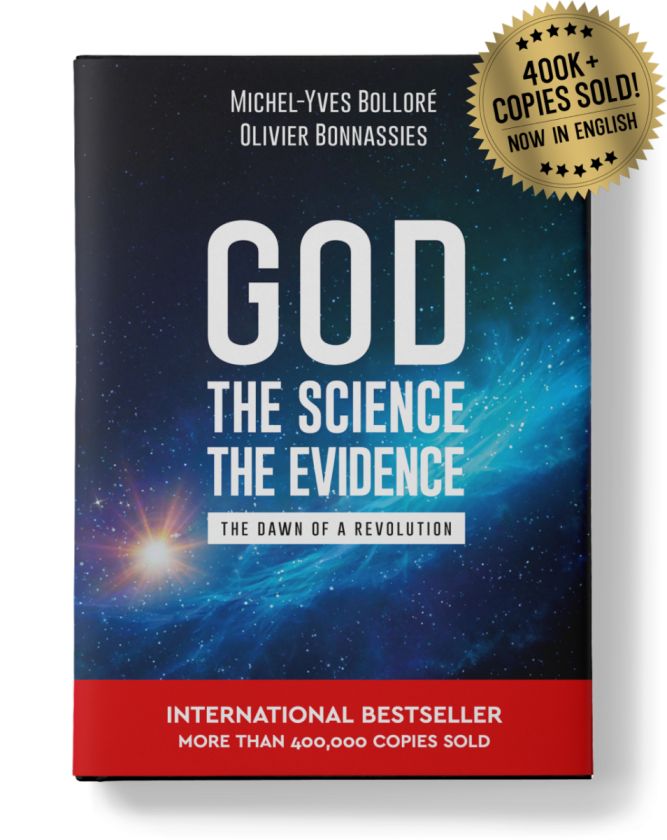
For more information about the authors and their work, readers can visit the official website: God, Science, the Evidence Official Website. The book God, Science, the Evidence is also available on Amazon for those interested in exploring it further.

We believe in sharing knowledge with everyone and making a positive change in society through our work and contributions. If you are interested in joining us, please check our ‘About’ page for more information