
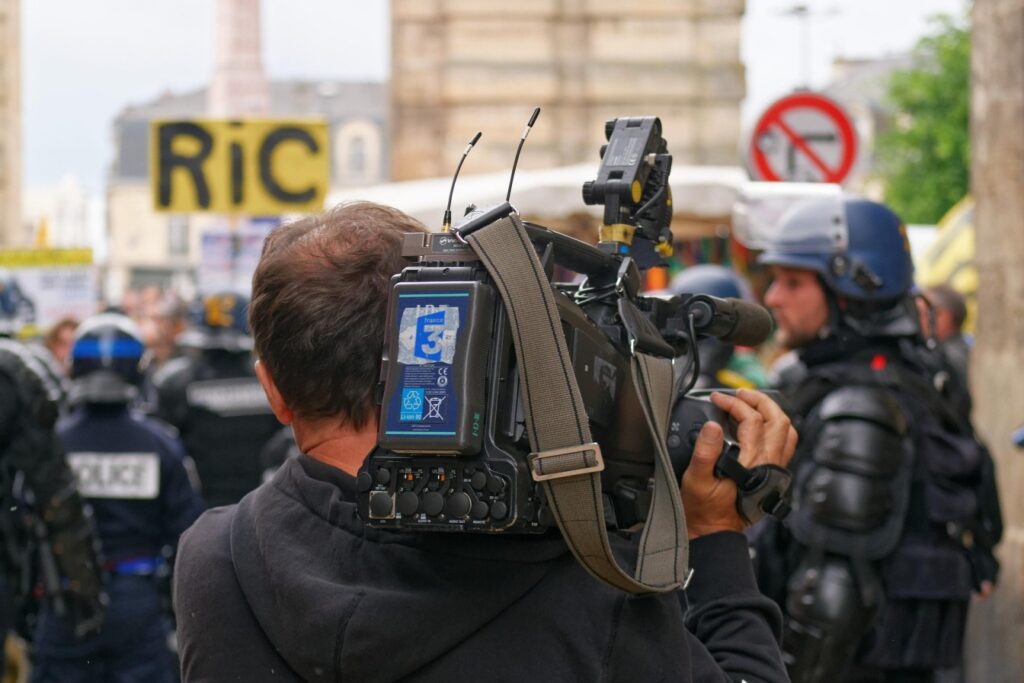
Whose stories get told – and whose remain invisible?
In South Asia, the media plays a powerful role in shaping public understanding of social realities. From television news to digital platforms, journalism does not merely reflect the world; it actively constructs it (Hall, 1997). Through selection, framing, and repetition, media narratives influence how viewers comprehend social concerns and decide who gets attention. However, the representation of people with disabilities remains insufficient, stereotypical, or invisible. People with disabilities are often depicted in limited ways, either as objects of sympathy or as sources of inspiration, while their everyday struggles, experiences, and decisions are disregarded.
Deeper social hierarchies and cultural presumptions about everyday life, productivity, and worth are reflected in this selective visibility, which is not coincidental. Because of this, disability is often marginalized in public discourse. This poses an important question: Whose realities are being excluded in journalism’s current structure, and what does it mean to be inclusive?
Disability, Stigma, and Representation
A useful way to understand this issue is through the work of Erving Goffman, who conceptualized stigma as a socially constructed process that marks certain identities as “other” (Goffman, 1963). Stigma operates not only through interpersonal interactions but also through institutions and cultural representations, including media. In journalistic contexts, stigma is reproduced when certain identities are simplified, stereotyped, or excluded altogether.
Disability, therefore, cannot be understood solely as a medical condition. It is also a social identity shaped by cultural meanings, institutional practices, and public narratives. The “social model of disability” further emphasizes that it is not impairments themselves that limit individuals, but the barriers created by society, whether physical, social, or attitudinal (Oliver, 1990).
When journalism fails to represent disabled people accurately and inclusively, it reinforces these barriers. It normalizes exclusion and perpetuates the idea that disabled lives are either tragic or extraordinary, rather than ordinary and complex. In doing so, the media contributes to the maintenance of stigma rather than its disruption.
The South Asian Media Context
In the South Asian context, disability is often framed within discourses of charity, dependency, or uniqueness. Disabled people are often portrayed in news reports as either “victims” in need of assistance or “heroes” who have overcome adversity. Even though these depictions might seem sympathetic, they ultimately reduce complex human experiences to emotionally charged storylines.
Hardly do these portrayals address systemic problems such as lack of accessibility in public areas, discrimination in the workplace and in schools, or exclusion from decision-making processes. Media portrayal frequently individualizes disability, emphasizing personal struggle over social conditions, rather than challenging systemic injustices.
Cultural attitudes also play a significant role. In many South Asian societies, disability is still associated with stigma, shame, or moral judgment. These ideas influence the narratives told and the stories deemed newsworthy. Disability is therefore frequently simplified and excluded from broader discussions of inclusion, justice, and rights.
Absence of Voices and Structural Barriers
The other major issue in journalism is not just about how disability is portrayed, but who is allowed to tell its stories. The lack of disabled people among media practitioners themselves is apparent. Reports from journalists, editors, and decision makers lack sensitivity and knowledge because they fail to accommodate those with impairments.
Such an imbalance is caused by specific obstacles rather than occurring at random. Many people with disabilities are discouraged from working in the workplace due to a lack of adaptable technologies and a lack of institutional support. For this reason, conversations about disability continue to occur outside of the sector.
We can thus see a vicious cycle here; it will be difficult to produce more complex narratives about people with disabilities if they are not presented in media production. Additionally, people won’t realize how important it is to include people with disabilities in media production if such tales aren’t created.
Reflections from Practice
My own experience working in disability-inclusive journalism has made these gaps more visible. While contributing to content development and social communication initiatives, I observed how editorial decisions shape representation in subtle but significant ways. Emotional appeal was frequently given preference over structural criticism in stories about disabilities to conform to audience expectations.
Campaigns to elevate the voices of people with disabilities have occasionally encountered opposition due to deeply rooted presumptions about what makes a “compelling” tale, rather than clear exclusion. Stories that emphasized systemic issues or everyday realities were frequently viewed as less captivating than those that inspired compassion or admiration.
However, some examples showed how inclusive media can be revolutionary. Giving disabled people the opportunity to tell their own tales made them more complex, real, and grounded. They emphasized commonplace situations that are frequently ignored in the media, such as crossing inaccessible infrastructure or coming across subtle discrimination.
These experiences revealed that inclusion is not simply about representation, but about participation. It concerns who is authorized to tell stories and whose voices are respected.
Why Representation Matters
Exceptional media practices have wide-ranging effects. By choosing which topics receive attention and how they are presented, journalism plays a critical role in influencing public opinion and policy. When disability is misrepresented or ignored, it affects how societies understand inclusion, rights, and responsibility, often reinforcing existing stigma (Goffman, 1963). These portrayals actively mold society’s beliefs rather than merely reflecting them, normalizing exclusion and restricting the range of public discourse.
Policies that put charity ahead of empowerment or visibility ahead of significant change may result from this. For instance, rather than addressing long-term structural barriers like accessibility, education, and employment discrimination, initiatives may concentrate on short-term support like welfare or symbolic inclusion. Disability is therefore still viewed as an individual issue rather than a shared social obligation. On the other hand, inclusive media has the capacity to question prevailing narratives, provide a voice to underrepresented groups, and draw attention to structural injustices that call for ongoing action.
Therefore, representation is not just about being visible but also about having one’s voice heard and respected. It determines who is heard, who is seen, and whose experiences are deemed authentic or deserving of consideration. Alternative viewpoints can be silenced and established hierarchies strengthened by the absence or distortion of some voices. In this regard, journalism is not impartial; rather, it is closely linked to the creation and perpetuation of societal injustices. Acknowledging this function is the first step in turning media into a platform that promotes a more equitable and inclusive society, in addition to providing information.
Toward Inclusive Journalism
A fundamental change in perspective is necessary to move toward disability-inclusive journalism. First, narrative frames need to shift from inspiration and sympathy to representation, rights, and dignity. Disability should be viewed as a societal and political problem rather than as personal grief.
Second, from reporting to editorial decision-making, media organizations must actively involve people with disabilities in all phases of production. This includes making workplaces accessible, offering the required support networks, and appreciating other viewpoints.
Third, accessibility needs to be considered a fundamental necessity rather than a supplement. This entails both digital inclusiveness and physical accessibility, ensuring that media locations are accessible to everyone.
Finally, journalists must adopt a more reflexive approach, questioning their own assumptions and biases. Inclusive journalism requires not only new practices, but also a shift in mindset one that recognizes the importance of diversity, equity, and representation.
Conclusion
However, the lack of representation and portrayal of disabled individuals in South Asian media does not solely lie in oversight but rather in a deeper sense of social stratification that takes place in such an institutional system. According to Erving Goffman, stigma exists not only in individual actions but also in institutionalized settings such as journalism. To go beyond the scope of stigma and exclusion, journalism cannot focus solely on telling inspiring stories.
What is needed instead is for journalism to recognize its power and the opportunity to create social change as well as to tell a story. The simple act of giving attention to certain issues is not enough when striving towards inclusivity, and the active participation of people with disabilities in constructing stories and changing ideas about what should be considered news is necessary. In conclusion, one should note that this is not an obligation for journalists alone; the whole process requires media organizations and audiences to take responsibility as well.
Ultimately, this responsibility does not lie with journalists alone. Media institutions and audiences also play a crucial role in shaping more inclusive narratives. Creating a more equitable media environment requires a collective effort to question existing assumptions and to ensure that diverse voices are not only included but genuinely heard.
References
Goffman, E. (1963). Stigma: Notes on the Management of Spoiled Identity.
Oliver, M. (1990). The Politics of Disablement.
Hall, S. (1997). Representation: Cultural Representations and Signifying Practices.

Sanjida Tamanna Oishee is a master’s student in Sociology at South Asian University. Her academic interests focus on migration, media, and gender, with a particular emphasis on representation and social inequalities. She has experience working in the development sector, including minority rights advocacy, disability-inclusive journalism, and social communication.