
About: Angela Caldwell, MA, LMFT is a California Licensed Marriage and Family Therapist and Family Coach. She serves as the Founder and Director of the Caldwell Family Institute in Los Angeles, specializing in family-based coaching. She has been teaching graduate students for over a decade and is currently an adjunct professor at California State University Northridge, teaching systems theory and related courses. Angela offers regular trainings, lectures, and speaking engagements covering a broad range of topics, including building a family identity, finding core values, parenting in the digital age, and understanding non-suicidal self-injury. More details here: caldwellfamilyinstitute.com
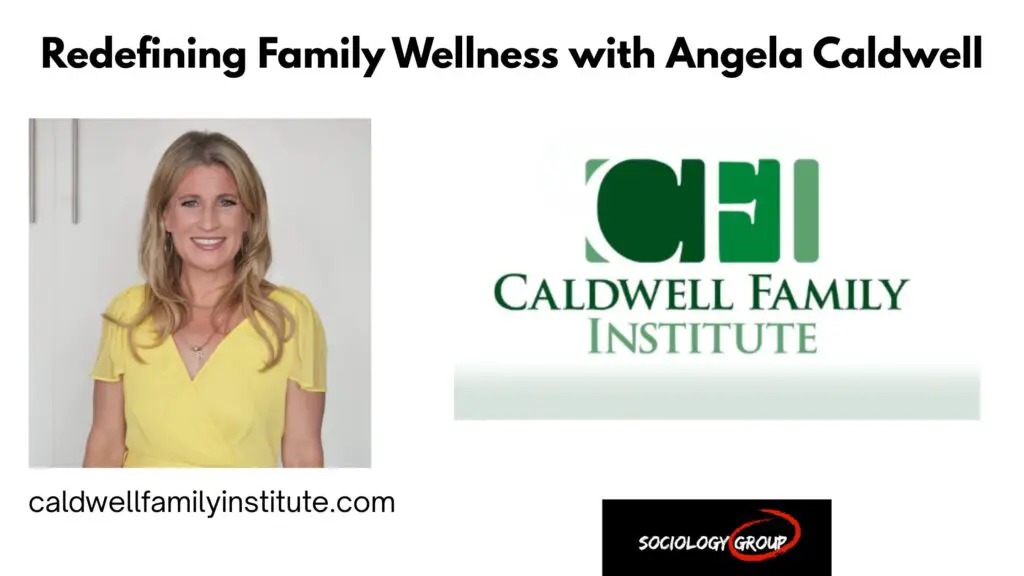
Welcome to our interview series, Angela. Thank you so much for joining us. To begin, could you please describe yourself in a few words and share what first inspired you to work with families and young people?
Sure! I am a licensed marriage and family therapist in Southern California, and I run the Caldwell Family Institute where I and a group of talented therapists work with families all around the country to heal old wounds and facilitate healthier connections. I have always been fascinated with the complicated web of relationships that make up a family, and I have a big personality that does best in a group of rowdy people, so this job couldn’t be a better fit for me.
You wear many hats, as a therapist, family coach, educator, and founder of the Caldwell Family Institute. How do these different roles shape the way you approach your work with families?
I know it seems like a lot of hats, but honestly, the roles aren’t really that distinct from one another. The difference between a family therapist and a family coach is quite small in reality. A family therapist can treat mental illness whereas a coach cannot, but the truth is that I am rarely treating mental illness when I’m doing family therapy. If there is mental illness that warrants treatment, I usually refer out to an individual therapist so that I can focus on directing family members in various exchanges, which is really just coaching people through a given interaction. When I’m teaching, I’m just teaching what I do, so again, the line between those roles is pretty blurry. And all it means to be the founder of CFI is that I hired everyone. It’s not really my different roles that shape the way I approach my work, but rather my background and experience.
You have been teaching graduate students for over a decade and currently teach systems theory at California State University Northridge. What do you hope future therapists and counselors carry with them from your classroom into real-world practice?
The worst thing that comes out of grad school is the therapist who’s trying too hard to look and sound like a therapist. You know those television shows that make fun of how therapists talk? Well, they got it right. The telltale sign of a therapist who is scared to death of doing therapy is the one who says things like “be present in the moment” or “claim your true identity” or “needing a safe space to process.” Nobody talks like that in the real world. And family therapy is the real world. My hope is that my students keep their heads out of the clouds and their feet on the ground. These are real, everyday families who are facing actual, down-to-earth problems like school suspension, custody battles, money problems, screen addictions, and unplanned pregnancies. You can’t talk to them about “creating a safe dialogue around complicated feelings” when they need to know how to get through things like this.
You don’t work alone, you have a team supporting families alongside you. What have you learned from working with your staff, and how does that teamwork show up in the way families are cared for?
Oh man, that is probably the best professional decision I’ve ever made. You see, in the therapy world, you work alone. It’s just you and your client in there. You have no coworkers or bosses or teammates that actually see what you do because the laws of confidentiality seal your door shut like Fort Knox. Sure, you can report your sessions to your supervisors or colleagues, but there aren’t any eyeballs on your actual work, so there’s no real way to be held responsible for any mistakes or critically evaluated on places in need of growth. That always seemed colossally stupid to me. Any report of my session that I give to any colleague is going to be filtered through my own biased lens, so how can I ever get any real accountability? I started working with other therapists actually in the room with me about 13 years ago, and it was a gamechanger. We changed our consent forms, and all of a sudden, I had to do my deed in front of another therapist. Every misstep, every retreat, every bad judgment, every moment of fear was observed by another pro. The feedback we started sharing with each other skyrocketed our effectiveness, and the families benefited. There were more than one set of eyes on them, so now observations were doubled or tripled, and the therapy itself became incredibly streamlined. It’s the best thing I ever did for myself professionally, and I wish more therapists did it too.
Many people hear the phrase “family-based coaching” but may not fully understand what it means. How would you explain this approach to someone who is new to it?
It’s coaching families on their relationships and dynamics. So, different from life coaching which tends to center around an individual usually professionally or academically, family coaching is having a family in your office where they tell you what’s bothering them, and inevitably end up demonstrating the problem right in front of you. As a family-based coach, you’re blowing metaphorical whistles to interrupt bad patterns, redirecting communications, telling people to say it like this instead of like that, and pointing out the results of different interpersonal decisions. A lot of times, you’re orchestrating entire family meetings where you’re helping the family restructure something very fundamental, like division of household labor, or rules and consequences. Family coaches are very directive and goal-oriented.
Could you walk us through the types of services and support your team offers at the Caldwell Family Institute, and how these are designed to meet families where they are emotionally and practically?
We primarily offer family therapy and family coaching, which is what I described above, but built into that package is auxiliary therapy and coaching as needed. So sometimes that means that a family of five has some big dynamics that need shifting, but two of the members need to work out some of their own personal stuff as well, and we assign individual therapists or coaches to address their issues simultaneously, in line with the overall family coaching goal. Other times it might mean that the marriage needs its own special attention outside of the larger family meetings, and we assign an auxiliary therapist to handle that, again, in the spirit of whatever the family sets as its goal. As far as meeting families where they are, I’ll admit that I’ve never fully understood this question. I don’t really know another way to meet families. Families come to us with a load of issues, big feelings, limited resources, and a couple of resistant members. We simply roll our sleeves up and work with what we have. I don’t know how else to do it.
Families come in with very different needs. How do you and your team adapt your approach to support families from different emotional, cultural, and social backgrounds?
This seems like a nice, politically correct question that would have a nice, politically correct answer addressing all the cultural, ethnic, social, financial, emotional, academic, spiritual, and physical differences that exist in different kinds of families. The problem with the question is that it suggests there is a “normal” family, and that there are deviations from that “normal” family wherein you would have to adapt your approach according to their unique needs. That just isn’t how family therapy works. There is no “normal” family, so there is no family that would be different than the “normal” family, so there is no “adaptation” to be made. Family therapy demands adaptation to whatever family is sitting in front of you, and your treatment is specially designed to meet that particular family’s needs. Sure, you have a toolkit filled with techniques and interventions that you’ve mastered, but they’re supposed to be modular, like a Lego set. You’re supposed to pick and choose from your toolkit specific sizes and shapes and colors of Legos that uniquely fit the family sitting in your office, according to all those cultural, ethnic, social, financial, emotional, academic, spiritual, and physical differences.
In today’s fast-paced and digitally driven world, what emotional challenges are families most commonly struggling with?
Neural overload. There’s too much going on around us, and we are expected to attend to all of it all the time. Remember when cell phones were supposed to be for our convenience, not someone else’s? Our world has shifted the way we perceive our obligations. We used to attend to work matters during work hours (most of us, at least), and return calls, texts, and emails on our own time. Now, if our phone dings, we’d better pick it up. If we get an email, we’d better answer it. If there’s a meme everyone’s referencing, we’d better tune in. It’s actually considered rude now to “leave someone on read,” which is a radical shift from doing things on our own time, no matter how much urgency someone else is putting on it.
This has caused our global anxiety to tick up a few notches, and we are less patient, less forgiving, more irritable, more demanding, and way too hard on each other. Family members have lost a sense of grace and calm when they interact with one another, because their brains are drowning under a firehouse of information, obligation, and pressure. I’d say over the past decade, the increase in anxiety and frantic exchanges in families has reached an all-time high.
How has the rise of technology and social media changed the dynamics you observe between parents and children?
The two biggest changes I’ve observed would be screen addictions and what John Gottman calls “digital walls.” I’ve been breathing a sigh of relief lately as Australia enacts its new social media ban for young people and Spain follows suit. In our own country, there are government hearings finally confronting social media giants on how their products exploit underdeveloped brains and purposefully design software that keeps a kid asking for more and more and more and more. I’m keeping my fingers crossed that society at large will begin to recognize that screen addiction is just as damaging to young brains as cigarette smoke. Maybe worse! At least cigarette smoke doesn’t impair your social abilities like eye contact, verbalization, and the natural give-and-take of conversation. Parents are absolutely overwhelmed, and in many cases completely defeated by, screen addiction. It’s like they have to watch their formally on-track kid regress back to the social level of a toddler. There’s no precedent for this, so some of them try to strongarm it, while others wilt under the travesty of it. They need help, and weekly therapy isn’t enough.
“Digital walls” are those invisible barriers that exist between people when one or both parties are looking at their phones instead of attuning to one another. Hopefully by now, your readers understand that multitasking is a myth peddled by TikTok influencers. The attentional part of your brain works on a one-at-a-time system, so there is no listening while you’re reading or watching something on your phone. You can only do one of those things in any given moment. If you choose your phone over your family member, there’s some real hurt there. And if it happens chronically, that damage is hard to come back from. In many families, phones have become the object of resentment, and conversations that need to happen over deeper issues become hijacked by arguments over screen time.
Parenting in the digital age comes with unique pressures. What gentle, realistic strategies do you often encourage parents to try at home?
Screen limits are easy. Parental controls are easy. Do both. And no, it’s not too late. There are also a few really good courses on how to raise our digital children. When our girls were old enough for us to open the door to the wild west that is the internet, we took a couple of online courses on how to parent a digital generation. They were awesome and worth the time and money. We learned about all the scary stuff like online predators and identity theft, but we also learned about digital citizenship, screen discipline, time blindness, and other concepts that were new to us. Those are realistic strategies for arming yourselves with as much knowledge as your kids. What I would definitely not recommend is throwing your hands up and repeating the tired refrain that we just didn’t grow up this way. Catch up. Learn the new stuff. Be a good digital citizen yourself, so that you can model for your kids.
You often speak about building a strong family identity and clarifying core values. Why do you believe these are essential for long-term emotional health and connection?

It all comes down to self-esteem. If you take a look at all the healthy adults in the world, you’ll see that no matter how different they are from one another, good self-esteem is what they all have in common. In contrast, look at all the adults in the world causing all the problems, and you’ll see patterns of insecurity, inferiority complexes, and fear of not being enough.
But building self-esteem is not what most people think it is. You don’t build a kid’s self-esteem by showering him with praise and compliments, or ensuring that he is accomplishing and achieving—that builds a false sense of self-esteem called arrogance that can turn into more dangerous stuff in adulthood. The only way to build real self-esteem is to live a life according to a set of morals and values that you believe in. This starts in the family. Families that spend time talking about their values and beliefs create environments where kids are forced to even think of these things in the first place. Those kids take on the family values and beliefs until they are old enough to question them, tweak them, and make them their own, which sets in motion a series of life dilemmas that will test those values, allowing for multiple opportunities to do the right thing and build positive self-esteem. But none of this can happen without the foundation of the family identity and the “borrowed” family values in early childhood.
You also work with sensitive topics such as non-suicidal self-injury. What do you wish more parents, educators, and communities understood about this issue?
Non-suicidal self-injury is a delicate topic that’s hard to distill into a few sentences. You have to determine which brand of self-harm you’re dealing with, and that requires the assistance of a trained professional. You have to assess the level of risk for suicide, again, something that requires the help of a trained professional. So if you’re asking what parents, educators, and communities could understand that doesn’t require professional intervention, I think I would highlight this disturbing trend of blasting it all over the internet and attempting to raise awareness, which actually has the counter effect of glamorizing it. I am opposed to all the awareness days and ribbons and pins and other movements that essentially do the opposite of what they were intending, because they inadvertently create yet another club where desperately lonely and misunderstood kids and teens could be a member if only they cut themselves. I think in an effort to destigmatize mental illness, we’ve moved to the other end of the spectrum and done an equal amount of damage by glamorizing it. It is very “in” to have a mental illness, and it’s especially impressive to have some self-harm and few suicide attempts on your record to boot. I’d like to see us move NSSI back into the private realm.
Without sharing private details, what does real progress usually look like when families begin to feel emotionally safer and more connected?
I know the answer that people are looking for here. You want to hear that once families feel emotionally safer and more connected, they all forgive each other’s differences, become best friends, reach their full potentials, and ride off into the sunset. Unfortunately, I have to burst your bubble. Families are hard. They just are. It is exceedingly difficult to share a sink and a fridge and divide the chores and put up with quirks and annoyances on a daily basis. So when it comes to progress in families, what we’re looking for is compromise. And if you remember that cynical maxim that a good compromise is when no one gets what they want, you start to understand that progress in families doesn’t involve puppies and rainbows. On the contrary, we know we’ve made real progress in a family when members begrudgingly agree to try something different. Members will try different ways to communicate, but not happily. They’ll agree to a different household structure, but not with a smile. But we know we’ve made meaningful progress at that point, because that begrudged “yes” actually becomes the foundation of honest and direct transactions in the house. It’s years later that we’ll hear from families that things are happier and more connected, and that they have, in fact, found the puppies and rainbows. But to do what we do, you have to be in it for the long haul. I guess it’s like planting trees in that way. You have to be willing to plant a seed and then patiently wait for it to grow into a tree years later.
Is there a moment or general experience from your work that deeply moved you or reminded you why you chose this profession?
It would have to be those moments where I see family members in the parking lot after a session. Every so often, I get a glimpse into how a session impacted a family because I happen to be walking to my car as they are standing outside theirs, sometimes smiling, sometimes laughing, sometimes even hugging. On those days, I think I might just drive my car right into the clouds.
You lead trainings, lectures, and speaking engagements. What themes or questions seem to resonate most with audiences today?
I’ve been doing quite a lot of work recently with politically divided families, where differences in viewpoints have created deep chasms between members, sometimes even estrangement. Audiences seem to be very interested in this work, and I wonder whether there’s more of it happening than I realize. The interest brings me a lot of hope, though. I take it to mean that families experiencing painful political differences want to know how to become close again. In some of my lectures and seminars I walk the audience through the steps that are required to tolerate deep differences, and this means having powerful discussions about forgiveness, grace, and curiosity—ideas that sound nice in a poem, but often elude us in everyday life. My hope is that the looks of registration from the audience mean that something deep inside is clicking. That people are realizing they need to be more tolerant of one another.
You have an upcoming book that will be released soon. Could you share what inspired this book, what themes it explores, and what you hope readers will take away from it?
I’m pretty excited about this project. It was inspired by me wanting to impact more families than I can in just my practice alone. Over the years I’ve noticed that I keep giving some of the same advice over and over again, but because of the nature of my work, I can only dole it out one family at a time. I thought maybe a book would be a way to extend my reach.
There are a handful of things that I consider to be at the core of family harmony, and all the unique issues that present in my office seem to stem from problems in one of these basic fundamentals. The first one is the need for a village. Parents feel so very alone in their parenting duties; the pressure of being the sole caretaker of another human’s survival and wellbeing is absolutely crushing. And because we live in a culture where we give parents a wide berth and stay in our lanes, we end up abandoning them in that pressure cooker. I look around and see that while we all talk about the village in the abstract, we don’t give any instructions to the villagers about how to show up. So no one in our culture knows what to do.
This idea is the premise for this book, and all the books to follow. I’m hoping to release this as the first in a series where we delve into those basic fundamentals of a peaceful family life, but from the standpoint of the villagers. Not just how to parent, but how to uncle, how to sister, how to grandparent, and how to neighbor.
How does this book reflect the real conversations and struggles you witness every day in your work with families?
The book comes directly out of what I witness in my work. Overwhelmed parents create environments of stress, irritation, and combativeness. Siblings are the victims of their parents’ exhaustion, rather than the assistant caretakers. Grandparents are angrily cut out of the loop instead of welcome into the home to pitch in and help. The looks of relief on parents’ faces when I suggest that other family members should be helping to shoulder the load is heartbreaking. We are socialized to never dream of asking for help—that it is a social felony to burden other people with babies that they never asked for. When I share my viewpoint with my families that this is not only illogical, but in fact considered absurd by other cultures, I can actually see their shoulders drop. I want my book to create a paradigm shift where we all accept the burden of childrearing as a given of the human condition. If we want the planet to thrive long after we’re gone, if we want world leaders to carry our legacies forward, if we want to continue improving our global community, then we all bear the burden of child-rearing, even if the kids aren’t ours.
With so much uncertainty in the world today, what emotional skills do you believe children and teenagers most need to develop?
I’m going to give a shout out to the DBT therapists of the world: We need emotional regulation, distress tolerance, mindfulness, and interpersonal effectiveness. I have a beloved colleague who practices DBT, and she has angrily diagnosed the entire world with a personality disorder where people have either forgotten or never learned these very basic skills. The slightest negative experience seems to end conversations or result in taking a sick day (no distress tolerance), or is met with angry outbursts, panic attacks, or depressive spirals (no emotional regulation). Our global leaders offer fewer and fewer examples of conflict resolution, instead setting examples that petty insults and name-calling are acceptable responses (no interpersonal effectiveness), while the rest of us have buried our heads so far into our devices that we couldn’t be bothered to look up and become aware of our surroundings (no mindfulness). How can we possibly expect our children to have any of these emotional skills if we don’t have them ourselves?
Let’s start there.
How do you help families balance structure and flexibility while raising children in changing social environments?
This is a difficult question to answer in general terms. Families come in with established structures, whether they recognize them or not. Our job is to identify these existing structures, assess the integrity of them, see where the family could use some assistance, and then provide that assistance. How we do this depends on the unique structures within each family and the specific concerns they are bringing to the therapy. With some families, we have to do some role reversals. With other families, we balance power distributions. Sometimes we rearrange the responsibility load. Other times we facilitate difficult and uncomfortable conversations. The “how” of family therapy differs from case to case.
For families or individuals who may feel hesitant or nervous about seeking help, what would you like to say to them in a reassuring and honest way?
Family therapists have a reputation of being very friendly. And because we are rooted in the real world, we don’t pass any judgments, because we know it doesn’t move the ball down the field. All we care about is what needs to be done, so you’ll have this experience of someone listening to what’s broken, then rolling up their sleeves to help fix it.
Oh, and we’re really funny too. You’ll like us.
Finally, looking ahead, what hopes or changes would you like to see in the future of family therapy and community mental health support?
We are moving into a culture of tribalism and echo chambers. More and more therapists are moving away from family work and into individual work. Individual therapy can be profoundly healing, but it also runs the risk of validating individual realities that just aren’t true and driving stakes into relationships without ever knowing the other party. We need more family therapists! We need more outgoing personalities who work well in groups and who are inspired by hopefulness and optimism. It would be nice to see more programs that offer a different viewpoint of therapy—that maybe you aren’t a victim of your family, but rather an integral part of its pathology and its healing.

We believe in sharing knowledge with everyone and making a positive change in society through our work and contributions. If you are interested in joining us, please check our ‘About’ page for more information