
Welcome to our interview series, and congratulations on the continued success of your writing journey. After the strong response to your first book, A Boy Who Loved Me, your latest work, Dance of a Phoenix, further establishes your voice as one that thoughtfully blends storytelling with deeper reflections on mindset, purpose, and personal transformation. Set against a rich international backdrop and driven by complex, relatable characters, this book invites readers to look inward while staying fully engaged in the story. We’re excited to speak with you about your creative process, the ideas behind the narrative, and the message you hope readers take away.
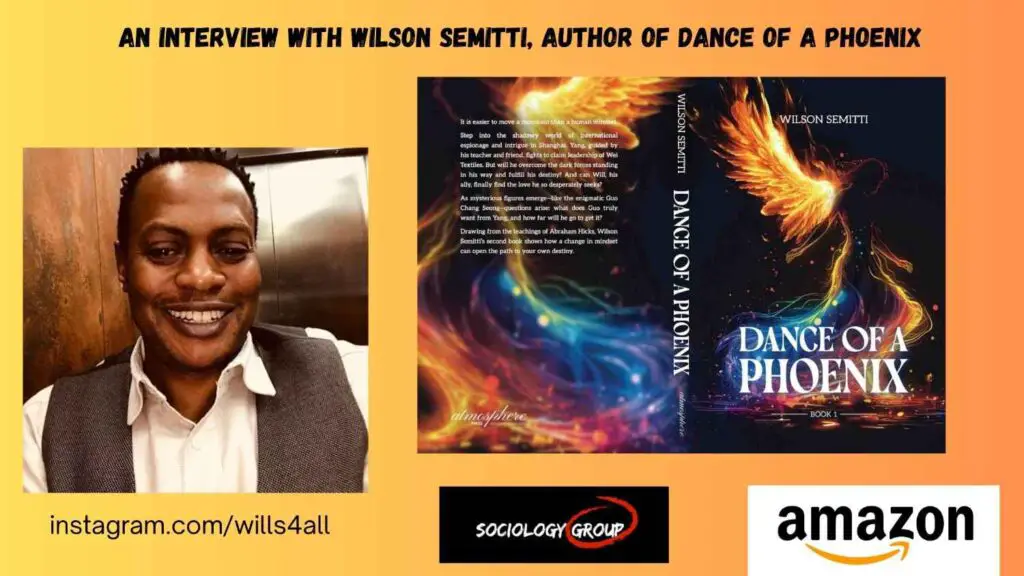
After the success of A Boy Who Loved Me, how did stepping into Dance of a Phoenix feel for you creatively and emotionally?
“A Boy Who Loved Me” was a memoir, and writing it meant reopening memories I had spent years learning to live with. It wasn’t easy, it demanded honesty, vulnerability, and a willingness to sit with moments that shaped me, even when they were painful.
“Dance of the Phoenix,” on the other hand, comes from a different part of my journey. It’s fiction, but rooted deeply in my own growth. I took my time deciding what form it should take. I didn’t feel ready to write a purely spiritual book yet, even though spirituality is a strong part of my life and healing. Instead, I chose to use what I know and transform it into a story, one that can help readers reflect on their own path without feeling instructed or preached to.
Emotionally, stepping into this book felt freeing. It allowed me to explore themes of rebirth, resilience, and self-understanding in a creative way. And creatively, it gave me space to evolve from reliving my past to reimagining my future.
For readers discovering Dance of a Phoenix for the first time, how would you describe the story in your own words?
There are so many beautifully written books in the world, and I’m genuinely grateful for the ones that have shaped me. But Dance of the Phoenix, in its fictional form, offers something a little different.
It gives readers a window into their own internal struggles, the quiet battles we all fight but rarely speak about. The story weaves in subtle teachings and reflections, not in a heavy or instructional way, but gently, through the character’s journey.
My hope is that readers find pieces of themselves within the story, and perhaps take some of those woven lessons into their own lives. If the book can help even one person pause, reflect, and feel empowered or clearer on their own path, then I’ve achieved what I set out to do.
You write that it’s easier to move a mountain than a human mindset. What personal experience led you to build this idea into the heart of the book?
I’ve read countless books on mindset and even completed Tim Han’s LMA course from Success Insider, and they all emphasise that mindset is the foundation of a person’s evolution and growth. But I discovered that knowing something and living it are two very different things. Applying those principles consistently in my daily life became my biggest struggle.
For a long time, I was hard on myself — wondering how I could understand these concepts so deeply yet fail to embody them. Eventually, I realised that changing a mindset requires more than knowledge; it demands focus, patience, and continual practice.
I’m still very much on that journey. Writing about it has given me momentum. It forces me to be honest, to reflect, and to stay committed. That personal battle, between understanding and application, is what led me to weave this idea into the heart of the book.
Why did you choose Shanghai as the setting for such an intense and transformative story?
Choosing Shanghai felt completely natural because it was in Shanghai that I finally came into alignment with what I truly wanted to do with my life. That city marked a turning point for me, a moment of clarity, renewal, and inner awakening. That’s why the opening of A Boy Who Loved Me also begins there; it’s the place where my own transformation began.
While I was in Shanghai, I was fortunate enough to meet people whose stories, struggles, and resilience deeply inspired me. Their experiences left such an imprint on me that I wanted to honour them by weaving elements of their lives into a fictional world. In many ways, Shanghai became both a backdrop and a catalyst, a city that held the energy, intensity, and humanity needed for the kind of story I wanted to tell.
Yang’s journey at Wei Textiles is filled with pressure and self-doubt. What part of his struggle do you think readers will relate to most?
For me, Yang’s pressure and self-doubt were directly inspired by my own struggles as a new author. When I started writing, I constantly questioned whether I was ready or even capable of creating a book that someone would genuinely enjoy. That uncertainty shaped Yang’s inner world: his fear of not being enough, of not meeting expectations, of failing before he even begins.
I’ve since grown beyond that mindset. Today, I write simply because I love it, and that shift has brought me a lot of freedom. My hope is that readers will recognise their own moments of hesitation and self-doubt in Yang’s journey, and feel inspired to keep moving toward their dreams anyway. If his story helps someone find alignment, even in the middle of their struggles, then I’ve done what I set out to do.
Will plays an important role as both a guide and a friend. What does he represent in terms of faith, focus, and belief?
Will represents the power of co-creation, the idea that none of us is meant to walk our journey alone. Through him, I wanted to show that guidance, support, and genuine connection are essential ingredients in anyone’s path toward growth.
He also embodies the importance of focus and belief, reminding us that no matter where we come from or what our background is, we all have the ability to come into alignment with our dreams. Will stands as a symbol of faith in the process, faith in each other, and faith in the quiet inner voice that leads us forward.
Ultimately, he represents our collective contribution to the expansion and evolution of this lifetime, a reminder that when we support one another, we evolve together.
Dance of a Phoenix blends suspense, personal growth, and spirituality. What kind of experience did you want readers to have while reading it?
When I first began writing Dance of a Phoenix, my instinct was to focus purely on the spiritual themes. But I paused and asked myself a simple question: Would I enjoy reading this story if I weren’t already interested in spirituality?
That question changed everything. It led me to weave the spiritual aspects together with suspense, character development, and emotional depth. I wanted the book to feel grounded in human experience — something readers could connect with even if they weren’t seeking a spiritual message.
My goal was to create an experience where readers follow the characters’ journeys, and at the same time, see gentle reflections of their own lives, doubts, dreams, and transformations. I wanted them to feel entertained, moved, and perhaps even awakened in small ways they didn’t expect.
Ultimately, I hoped the story would offer a blend of tension, introspection, and inspiration , a journey that keeps readers turning pages while also inviting them to look within.
Mindset and the Law of Attraction are central themes. How do these ideas shape the characters’ decisions and outcomes?
Mindset and the Law of Attraction are central in the story because they reflect the idea that we are active creators of our own realities. Our thoughts, beliefs, and emotional focus shape the direction our lives take, and I wanted my characters to embody this truth in a relatable, human way.
By building these themes into the narrative, I had to be very intentional about how I presented them. That’s why I chose fiction. A story allows readers to feel these concepts rather than be instructed about them. Through the characters’ decisions, whether driven by fear, clarity, doubt, or belief, readers can see how mindset influences outcomes without being told what to think.
Ultimately, I trust that readers know what resonates with them. Fiction gives them space to interpret, question, and draw meaning in their own way. If they see parts of themselves in the characters’ journeys, then the themes have done exactly what they were meant to do.
Guo Chang Seong is a mysterious and powerful presence. What does his character add to the tension and deeper meaning of the story?
In any spiritual journey, you inevitably meet people who challenge you, individuals whose energy, mindset, or behaviour seems completely opposite to the alignment you’re striving for. In my own experience, these encounters were often uncomfortable, yet they became some of the most important catalysts for my growth. They taught me that in life, there are no coincidences. Every person you cross paths with is part of your expansion, even if they arrive in contrast rather than harmony.
Guo Chang Seong embodies that truth. His character adds tension because he disrupts the spiritual, emotional, and mental equilibrium of others, yet his presence carries deeper meaning. He represents the unexpected forces that push us to question what we believe, to confront our fears, and to connect the dots we couldn’t see on our own.
Through him, I wanted readers to recognise that not everyone they meet on their journey will look like a guide or a friend. Sometimes the most challenging personalities are the ones who reveal exactly what we’ve been missing. His mystery, his power, and his unpredictability remind us that every encounter — even the unsettling ones, can be a stepping stone toward alignment.
Many readers feel torn between family expectations and their own dreams. How does this book speak to that inner conflict?
This is a complex and deeply personal topic, especially because in many cultures, people set aside their own dreams to fulfil family expectations. Dance of a Phoenix addresses this inner conflict by focusing on mindset and self-belief. The story suggests that if you believe you cannot pursue your dreams, you will likely live according to that belief. But if you choose to trust your own vision, even when it feels difficult, life begins to shift around you.
The book shows that those who truly love you may not always understand your path at first. They might feel disappointed or confused when you step outside the expectations they’ve set. But alignment has a magnetic quality. As the Law of Attraction teaches, “that which is like unto itself, is drawn.” When you stand firmly in your truth, the people who care about you often come around in time, recognising that your joy and fulfilment were never a rejection of them.
Ultimately, the story encourages readers to honour their dreams without guilt, and to trust that genuine love can stretch, adapt, and evolve, just like we do.
Was there a particular scene that felt especially meaningful or challenging for you to write?
One of the most meaningful and simultaneously most challenging, scenes for me to write was the blending of Abraham Hicks–inspired rampages. On a personal level, those moments felt incredibly aligned. Writing them allowed me to tap into a sense of clarity and emotional momentum that I’ve often experienced in my own spiritual practice.
But at the same time, they were challenging because I constantly questioned whether I was capturing them in a way that would truly serve the reader. Was I expressing them authentically? Would they resonate, or feel out of place? I had to set aside that self-doubt and trust the process.
In the end, I chose to follow my intuition and include them exactly as they came to me — because nothing ventured, nothing gained. Those scenes became a bridge between my own growth and the story’s message, and I’m grateful I allowed them to flow onto the page.
How do you feel this book reflects your growth, not just as a writer, but as a person?
Writing this book became a mirror for my own growth, not only as a writer, but as a human being. So many of the lessons woven into the story are reflections of what I’ve had to learn myself: patience, trust, alignment, and the courage to follow a path that isn’t always straightforward.
Someone once told me that the most powerful way to teach is through your own example. That stayed with me. Even if this book touches just one person, even if it helps one reader see their situation differently or feel a little more hopeful, then everything I’ve poured into it is worth it.
This story marks a turning point in my life. It represents my willingness to grow, to be vulnerable, and to share parts of my journey with honesty. And it reminds me that I’m exactly where I’m meant to be, continuing on a path that feels aligned with who I’m becoming.
What do you hope readers discover about themselves through Yang and Will’s journeys?
I hope readers realise that we’re living in a time where knowledge, guidance, and teachers are more accessible than ever, often right at our fingertips. The world has expanded so much, and with that expansion comes endless opportunities to learn, grow, and align with what truly resonates within us.
Through Yang and Will’s journeys, my wish is for readers to feel encouraged to explore their own inner landscape, to seek out the wisdom, practices, or perspectives that speak to them personally. If the story inspires someone to pause, reflect, and choose the kind of growth that feels right for their own evolution, then that would bring me so much joy.
Ultimately, I want readers to recognise that their expansion is uniquely theirs and that they have the power, and the resources, to shape it in whatever way feels aligned.
Who do you feel will connect most deeply with Dance of a Phoenix?
I believe the readers who will connect most deeply with Dance of a Phoenix are those who find themselves aligned with the energy and message the story carries. This book tends to resonate with people who are already on a path of self-discovery, or who are quietly searching for clarity, healing, or a deeper understanding of themselves.
Whoever feels drawn to this book is likely already in a space where its themes, mindset, alignment, spiritual growth, and personal transformation, speak directly to what they’re experiencing in their own lives. In that sense, the story meets readers exactly where they are.
My hope is simply that those who pick it up do so at the right moment in their journey, when its message can support or inspire them in the way they most need.
Finally, what would you like to say to readers who are considering picking up the book?
Any person considering picking up this book should expect to be entertained by characters shaped by the times we’re living in a world full of suspense, uncertainty, and transformation. At its core, this story is a reminder that we are the creators of our own destiny, and we already hold the tools to shape it.
All I can say is that I hope Dance of the Phoenix takes you on a magical adventure, one that entertains you, moves you, and leaves you with something meaningful to carry forward.
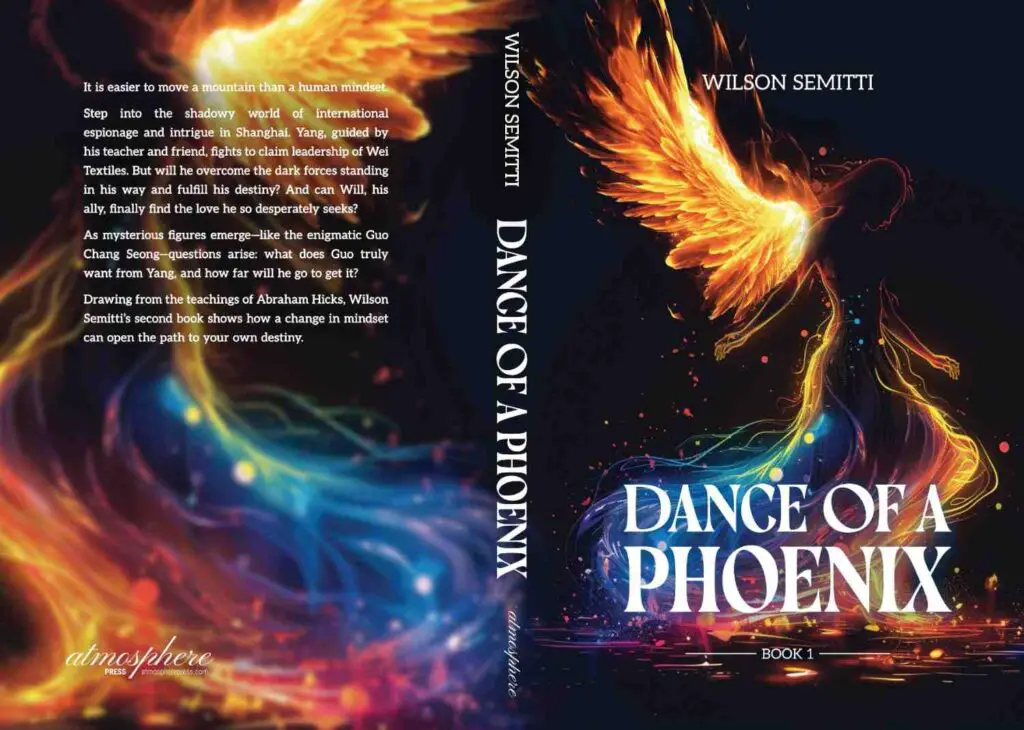
If you enjoy meaningful stories about personal growth, emotions, and real-life struggles, you should definitely buy Dance of a Phoenix on Amazon. It’s an inspiring and thoughtful read that stays with you long after you turn the last page. Here is the link
https://www.amazon.com/Dance-Phoenix-Wilson-Semitti-ebook/dp/B0F1DMBHTZ?ref_=ast_author_mpb

We believe in sharing knowledge with everyone and making a positive change in society through our work and contributions. If you are interested in joining us, please check our ‘About’ page for more information