
About: Sarah has a master’s degree in education from Stanford University. She is an educator, a school administrator, a multimillion-dollar fundraiser, and editor for a widely-distributed medical newsletter about her daughter’s condition. Through her twenty-year career in education, she has developed relationships with cross-cultural organizations and with families all over the world. Sarah and Fred live in Minnesota, both of their daughters live nearby.In addition to her book, she has written many short stories about her family’s experience living in Japan, and about the process of writing and trying to publish a book. More details are available on her official website, and her books can be found on Amazon.
Welcome to our interview series, Sarah. Thank you for sharing your story with us. To begin, could you tell our readers a little about yourself and the journey that led you from education and global work to becoming an author? Please introduce yourself to our audience.
I am a memoirist and nonprofit development professional whose writing explores family, resilience, and the lasting impact of medical trauma. I’m a former teacher and administrator in the United States and Japan. I later raised millions of dollars for nonprofit organizations.
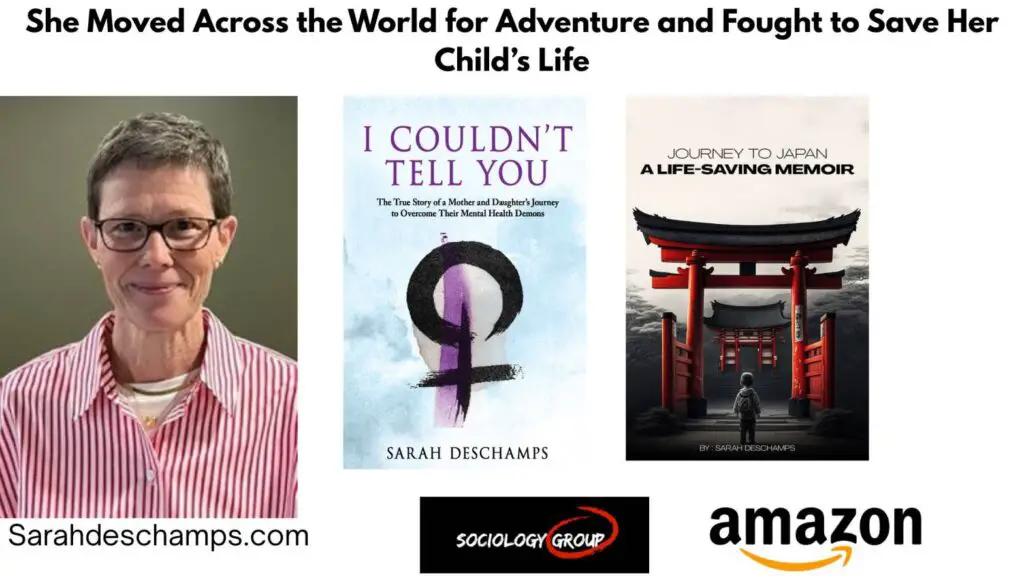
My debut memoir, Journey to Japan: A Life-Saving Memoir, has been published internationally. It tells the story of me and my husband deciding in 2000, when I was eight-months-pregnant, to move from Minnesota to Tokyo, Japan. We dreamed of exploration and adventure. Instead, I gave birth in a rundown Japanese hospital to a baby with multiple medical issues. We were thrust into a cross-cultural nightmare.
My new book, I Couldn’t Tell You: The True Story of a Mother and Daughter’s Journey to Overcome Their Mental Health Demons, is a deeply moving memoir about a mother and daughter navigating the emotional aftermath of childhood medical trauma. This memoir sheds light on the hidden toll of chronic illness, and the strength required to keep going when hope feels out of reach.
What inspired your family’s decision to move from Minnesota to Tokyo at such a pivotal moment in your lives?
My husband is from Belgium, and I’m from Minnesota. When we were married, we committed to each other that one day we would live in a city and culture that was neither of ours so we could learn about and explore it together.
In 2000, my husband had an amazing job opportunity in Tokyo, and even though I was eight-months-pregnant and we had a 2 ½ year old, we decided to make the move. We thought it would be thrilling to experience giving birth and raising our children in Japan.
When your daughter was born with serious medical complications, how did that moment reshape your understanding of motherhood?
Hours after our daughter’s birth in Tokyo, when the doctors told us that there were serious medical complications with our baby and that she could die, I wasn’t thinking about being a mother. She was my child, and I immediately loved her, but all I could think about was saving her life. My body and mind went to a different place, not as a typical mother who loves and dotes on her newborn, but as someone who would give everything to have her baby live. I found strength and determination I never thought I had.
Navigating a medical crisis in a foreign country can be overwhelming. What challenges did you face communicating and making decisions across cultural and language barriers?
I had only lived in Tokyo for a month before I gave birth to our baby. We were supposed to be at a hospital where all of the medical personnel spoke English. It turned out that at the last minute, they were worried that something was wrong with the baby, so sent me to a level 3 trauma hospital on the outskirts of the city. No one, except some of the doctors, spoke English, but that wasn’t the hardest part. The rules of the hospital were such that the woman must come to the hospital alone, without their partner or family, truly alone. I ended up in a rundown hospital, far from even my husband, giving birth in a hospital to a baby who turned out to have multiple life-threatening medical issues.
During the most uncertain moments, what helped you continue moving forward as a parent?
Once we understood the complexity of our daughter’s situation, and the life-threatening nature of her rare disease, we not only were forced to take one worrisome day at a time, but we also had to begin to plan whatever surgery was coming our way next. Our daughter had seven surgeries during the seven years we lived in Tokyo. We had to live through the operation, time in the hospital, then spend time recovering from it, and months later begin the process again. I had no choice. I love my children more than words could ever explain, and I just lived through whatever was put in front of me, no matter the consequences or sacrifices.
Over the course of multiple surgeries and recovery, what moments of hope or strength remain most vivid to you?
We absolutely loved living in Japan. To this day, it is one of the highlights of our lives. It wasn’t the dream of total immersion in the culture that we wanted because we were constantly managing our daughter’s medical issues, but we took advantage of the thrill of living in a foreign country to the highest extent that we could. We went to festivals, shrines, museums, restaurants. We put ourselves in uncomfortable situations just to see what it feels like to be a foreigner, and not to fit it. We traveled to as many Asian countries as we possibly could, bringing a suitcase filled with our daughter’s medical supplies with us, and working our activities around what she needed. We celebrated our seven years in Japan, made life-long friends, and reveled in living in a different place. We miss the thrill of opening our front door each morning to welcome a new day in a place we loved where it was so different from anything else we knew.
What did this experience teach you about advocating for your child within complex medical systems?
The Japanese medical system is paternalistic. That means parents, mothers in particular, are not included in the decision making around a child’s health. The system is set up in a way that favors doctors knowing what is best, and mothers doing what they say. It was extremely difficult to advocate for the needs of our daughter when everything was so complex, described in a medical language or the foreign language to us of Japanese. Ultimately, we made the hard decision to have all of our daughter’s surgeries in Los Angeles, where not only were we included in the medical decisions of our daughter, we were welcomed and considered an equal partner.
How did this journey affect your marriage and partnership as you and your husband faced prolonged uncertainty together?
This is one of the complex issues that I explore in my second book, I Couldn’t Tell You. At first, as a couple, we remained steadfast and united. My husband took the role of maintaining his job and our healthcare. My role was caring for both of our children and executing all of the medical needs of our daughter. We both went to all seven of our daughter’s surgeries which was complicated in and of itself. My husband’s job, and our life was in Japan, but the surgeries were in Los Angeles, and we had to live there for months at a time.
After one of our daughter’s incredibly intricate surgeries, her surgeon told us that marriages don’t survive this kind of complex and unrelenting stress. We didn’t believe him. We knew our marriage would last. When our daughter was seven, whole, healed and we thought all of the surgeries were behind us, we made the difficult decision to move from Tokyo back to Minnesota. We thought it would be the best move and that we could start over. Instead, she needed another surgery weeks after we arrived, and being back in a hospital with the anxiety and stress that comes with it, finally brought up the mental health trauma we had been holding inside for all of those years.
It took many more medical problems, and both my husband and me trying so hard to keep our own worries in place, that we finally came to a breaking point. He had his job to take care of, I had the girls and all of the medical and childhood stresses to manage. We didn’t have a lot to talk about in the end, so finally got a divorce.
It is complicated to explain, but in my book, I give details about how hard it was, how alone you feel even when you want your marriage to work. I hope people will read the book to get insight about what it looks and feels like when you have such extreme trauma and mental health issues.
Living abroad during crisis can shift one’s sense of belonging. How did your understanding of “home” change through this experience?
Home was Japan. Even with everything medically that we had going on, we never wavered in our conviction that our home was in Tokyo. It was where we learned to fit in, where we had friends from all over the world, where we felt most ourselves, and where there was a sense of adventure every single day.
When we got back to the U.S. in 2007, as I show in detail in I Couldn’t Tell You, home was much more complicated. It was more complicated to find friends. Parents groups had already been formed around their children’s schools before we arrived. We were different because we had chosen to raise our children in Tokyo, and certainly different because we continued to spend so much time in the medical world. Not only did we not feel at home, we were back in a world we didn’t want to be in.
Beyond survival, how did these experiences shape the bond between you and your daughter?
During the early years of my daughter’s life, we were inseparable. It was because she needed medical interventions each and every day, and because she was a lot of fun to be with, both of our daughters were. We explored Tokyo, enjoyed their school where I volunteered and worked, and we also spent months in and around hospitals and clinics together. Not only did I love to be with my daughter, I was always watching, worrying, wondering if something terrible medically might happen. I had to know every detail in her life because most of the time the worst possible thing that could happen, did.
As I describe in my book, I Couldn’t Tell You, when we moved back to the United States, in 2007, when our daughter was seven our daughter was finally healthy. We were both ready to move on, specifically for her to take on a little bit of responsibility for herself, as any seven-year-old might. That didn’t happen because she unexpectedly required another operation weeks after we moved back to MN. My role as protector of her life remained, and she never really got to grow up.
As a result, the stress and anxiety that we had been carrying came to the forefront in both of our daily lives. I needed her to live a certain life so we could preserve her health, and she desperately wanted her independence. It became too much for each of us. We were confronted with our debilitating mental health demons. I explain in great detail what that looks like, feels like, and how ultimately, we found our way out of that dark place.
Your memoir, Journey to Japan: A Life-Saving Memoir, shares a deeply personal story. What inspired you to transform such painful experiences into a narrative for others?
I knew the story would resonate. 400 million people are affected globally by rare disease. Any parent who has had to fight for answers for themselves or their children will relate to my story. Travelers, those who have lived abroad, or have experienced tremendous strain on a marriage, will also immediately relate. My first memoir is about marriage, family, belonging and what it means to find home in a foreign land. I believe it is worth telling that story.
Many families worldwide face rare diseases and long diagnostic journeys. What do you hope they feel when they encounter your story?
My first memoir, Journey to Japan: A Life-Saving Memoir, has received 45 five-star reviews. I have had people in seven countries read my book. I think these reviews speak to the question of how they felt when they read my story.
“This story is incredible!
Sarah is such a good writer. I couldn’t put this book down. Her total transparency concerning her fears, doubts, and anxieties made this book come alive.
I was engrossed in this mother’s journey from the moment I started the book. It is an amazing testament to the power of a mother’s love.
Sarah is an amazing, inspirational woman for having overcome such huge challenges with perseverance and grit.
The story is riveting and life-affirming. I only took breaks from reading when I had to, and when the end came, I wished there was more! Would love to see a sequel from this author!
There are memoirs about struggling to heal a very sick child, some about the rollercoaster of emotions that come from navigating life in a foreign country, but this one is a rare combination of both.
A story within a story within a story with heart-string tugs on every page.
I attempt to read many books each year, I order them all and they sit half or partially read on my bedside table. I read this book cover to cover in less than 24 hours.”
Writing about trauma can be emotionally complex. What was the process like revisiting these memories?
It was my daughter who told me to write both of my memoirs. Once I had her permission to tell what we experienced, it wasn’t hard to write. We were both ready to have our story told so others could learn from what we went through.
I’m often asked if it is cathartic to write my books. For me, it isn’t. I don’t write so I can feel better, I write so others can feel what I felt, see what I saw, experience what I experienced, and then hopefully take something away from it for themselves. I have had a complicated life. I hope other people can learn from it, and maybe after reading my books, even make their own life just a little bit better.
Looking back now, what has this journey taught you about compassion and resilience?
Parenting a fragile child with special needs is almost impossible. You are thrown into a medical community you never wanted to know with a child who could die if you don’t get it right.
In my book, I Couldn’t Tell You, I write the following:
“I often say that I have an MD and PhD in my daughter. I know every detail about her intricate, complicated body. I studied it, researched it, experienced it and my PhD thesis would have been several hundred pages. The answers on my tests would have saved her life, or killed her. For my oral exam, I would have recited when a procedure was done, who did it, and what the outcome was. I lived and breathed my daughter.”
I’m not sure I’m the right person to talk about compassion and resilience. I did absolutely everything I could think of to give our daughter the best possible outcome for her life. In the process, I lost my relationship with her, my marriage, and my mental health. I didn’t see that there was any other path than the one I chose.
How did this experience influence your understanding of family strength and connection?
My daughter and I are intertwined tightly. As the reader learns in, I Couldn’t Tell You, many times the relationship is wound too tightly. To keep my daughter alive, I had to pay attention to every detail in her life. That made for a difficult and complicated relationship as she grew up.
The reader will see and feel how much I love my daughter, how much I worry about her, and how much she wants to make her own choices for her own body and life. That creates a sometimes toxic, sometimes loving, sometimes complicated, but absolutely unbreakable mother/daughter bond.
Finally, what message would you share with families navigating medical trauma, uncertainty, or life in unfamiliar places today?
1) If you choose, as I did, to never give up on your child, no matter what happens, and no matter where it leads you, then as a mother, because of that relentless sacrifice, I’m guessing one day you will have to fight your own mental health demons.
2) Sometimes the most gut-wrenching and life-altering decisions, like getting divorced, or sending your daughter to live away from you, are the only decisions that give you clarity, and allow you to find a path forward.
3) Isolating yourself from friends and family because you don’t want to share your sadness, grief or embarrassment about your life can add to your own personal trauma, and make it harder to recover.
4) There is a path forward through a mental health crisis. It may be messy, and may take many years, but there is a positive life waiting for you on the other side.

We believe in sharing knowledge with everyone and making a positive change in society through our work and contributions. If you are interested in joining us, please check our ‘About’ page for more information