
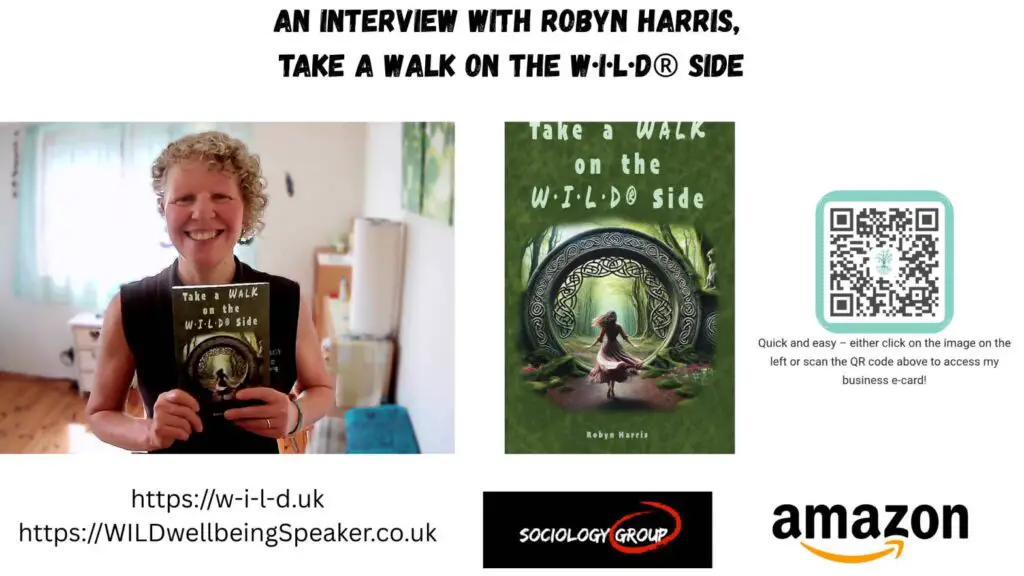
About Author: A dedicated wellbeing practitioner, Robyn Harris supports individuals on their healing journey using her W-I-L-D(R) approach. With a deep understanding of the healing capacities we hold within our own bodies, Robyn’s unique strategy has helped not only herself but many of her clients – including animals! She is also a mentor, speaker and trainer, as well as a fluent British Sign Language user. Her passion is for all of us to become the person we were born to be.
https://WILDwellbeingSpeaker.co.uk
Robyn, can you start by sharing a little about your personal journey and what inspired you to create the W·I·L·D® approach?
Absolutely. My journey into creating the W·I·L·D® approach really began with my own health unravelling. For years I was pushing through life, ignoring the whispers from my body until they became full-blown shouts. I found myself anxious, exhausted, burnt out, and feeling like my body was failing me — even though, in hindsight, it was actually trying to protect me.
As I started exploring different healing modalities, something clicked: my symptoms weren’t the enemy. They were messages. They were my body’s way of trying to guide me back to balance, safety and alignment. Realising this was a turning point. I stopped seeing myself as “broken” and started getting curious instead — and that curiosity opened the door to some pretty profound changes.
W·I·L·D® grew out of that.
It’s a blend of everything I learnt along the way: the body’s bio-logical wisdom, the emotional patterns we carry, the intuitive nudges we so often override, and the importance of meeting ourselves with compassion rather than judgement. It’s really an invitation — to turn towards ourselves with Wonder, to listen more deeply to the guidance of our Intuition, to start Loving ourselves more, and to honour the natural Dance of our own healing.
And honestly, I created it because it’s what I needed when I was in the thick of it. I wanted a way to help others feel less afraid of their symptoms, more connected to their inner wisdom, and more empowered to work with their bodies rather than against them.
Your book Take a Walk on the W·I·L·D® Side shares a powerful story of healing. What do you hope readers will feel or learn when they read it?
I’d love readers to feel a sense of relief, first of all — that soft exhale you make when you realise you’re not broken after all. My journey wasn’t linear or glamorous, and I’m very open about that in the book. I wanted people to see the raw, human side of healing, because so many of us judge ourselves for struggling, or for not “getting better” quickly enough.
What I really hope is that readers come away with a new relationship with their body. Instead of seeing symptoms as something to fear or fight, I want them to feel curious… and to meet what they find with compassion. Our bodies are constantly trying to communicate with us, and when you drop the battle stance, there’s so much wisdom waiting underneath.
And I hope they feel empowered. If my story shows anything, it’s that healing isn’t reserved for the lucky few — it’s available to all of us when we listen inward, trust our intuition, and allow ourselves to dance with life rather than brace against it.
If someone finishes the book feeling lighter, more hopeful, or simply more themselves… then I’ll feel I’ve done what I set out to do.
Many people today feel overwhelmed by symptoms and stress. How does the W·I·L·D® approach help them see their body in a new and hopeful way?
I think so many people are exhausted because they’ve been taught to see their body as a problem to solve. When symptoms show up, the first instinct is usually fear — What’s wrong with me? Why is this happening? How do I make it stop? And that fear creates even more tension in the system.
The W·I·L·D® approach turns the whole thing on its head.
Instead of asking, “How do I fix this?” we explore, “What is my body trying to show me?”
That tiny shift opens up a completely different experience — one that’s kinder, calmer, and far more empowering.
W·I·L·D® helps people reconnect with their natural wisdom. We bring in Wonder, so they can look at themselves with curiosity rather than judgement. We lean into Intuition, so they can start trusting their own inner guidance again. We soften into Loving ourselves, because healing simply doesn’t happen in a harsh environment. And we learn to Dance with Life — to move with what’s here rather than brace against it.
When someone realises their symptoms aren’t enemies but messengers, everything relaxes. They feel less overwhelmed, more in control, and much more hopeful. The body suddenly becomes part of the team instead of the battlefield.
And honestly, once that relationship shifts, healing often begins in ways which surprise people. It’s one of the most beautiful things to witness.
You talk about the body’s natural wisdom. In simple words, what does that mean, and how can people reconnect with it?
When I talk about the body’s natural wisdom, I’m really talking about the quiet guidance that’s built into all of us. Our bodies are constantly communicating — through sensations, symptoms, energy, mood, intuition — long before anything becomes a crisis. The trouble is, most of us have never been taught how to listen. Instead we override, push through, numb out, or judge ourselves.
Natural wisdom is the part of us that already knows when something feels “off,” when a boundary’s being crossed, when we need rest, nourishment, connection, movement, stillness, or change. It’s not mystical — it’s deeply practical. It’s the same innate intelligence that heals a cut or regulates breath without us thinking about it.
Reconnecting with it starts with slowing down just enough to notice.
A few simple ways:
• Get curious instead of critical.
“What is my body trying to tell me right now?” is a much kinder starting point than “Why am I like this?”
• Feel what’s here.
Not analyse, not fight — just notice. The body relaxes the moment it feels heard.
• Create a bit of inner peace.
Even a minute of quiet helps the noise settle so intuition can speak more clearly.
• Trust small signals.
You don’t have to wait for a health scare to pay attention. Tiny nudges are the body’s favourite language.
• Bring in compassion.
The more lovingly you respond to yourself, the easier it becomes to understand what your body is asking for.
That’s really what W·I·L·D® is all about — helping people move out of fear and back into relationship with themselves. Once they start listening with wonder and responding with love, that natural wisdom becomes something they can rely on every single day.
What are some common fears people have around illness, and how do you help them release those fears through your work?
When their body shows signs of illness, many people fear it means something is “broken” beyond repair, or that they’re powerless over their own health. Others worry about the unknown — what it means for their future, their independence, or their life as they know it. These fears can be heavy, and they often make symptoms feel worse, or more overwhelming.
In my work with W·I·L·D®, I help people gently shift that perspective. We start by recognising their body isn’t broken — it’s communicating. Every symptom is a message, a way the body is showing what it needs, where there’s imbalance, or how it’s trying to protect them. By tuning in, learning to listen, and creating an environment of support and curiosity rather than fear, people can start to feel empowered.
This process often involves exploring the emotional, cognitive, and lifestyle factors which influence their wellbeing, so they begin to see patterns instead of threats. When fear is replaced by understanding and connection, the body’s natural wisdom can come forward, guiding people to choices and practices that truly support healing and balance.
Your book includes fun and easy exercises. Can you share one small practice that anyone can try today to feel more ease or clarity?
One simple little practice I love is like a “micro-check-in”. It only takes a few seconds, but it can shift your whole inner landscape.
Just pause for a moment and ask yourself, “What’s the most noticeable sensation in my body right now?”
Don’t try to change it or fix it — simply notice it. Maybe it’s a tight shoulder, a flutter in the tummy, a heaviness in the chest, or even something pleasant.
And while you’re noticing, take a slow, gentle breath in, through the nose and right down into the bottom of your lungs. Let the out-breath be a touch longer than the in-breath. This kind of breathing helps your body feel a bit safer, a bit more settled — it’s like whispering, “It’s okay, you can soften.”
Often the body responds all on its own with a tiny release or a little more space. It’s such a small thing, but it’s one of the quickest ways to reconnect with your body’s natural wisdom and find a moment of ease, even on a busy day.
You’ve been through illness, anxiety, and depression yourself. How does your personal experience help you support others with compassion?
My own journey through illness, anxiety, and depression means I don’t sit with people from a place of theory — I sit with them from lived experience. I know what it feels like to be scared of your own body, to feel lost or overwhelmed, and to wonder if things will ever shift. And because I’ve been there, I meet people gently, without judgement or pressure.
It’s also helped me develop a huge amount of respect for the body’s wisdom. Looking back, so many of my symptoms were simply my body trying to communicate with me, not punish me. This insight shapes everything I do now. When someone comes to me feeling stuck or frightened, I can hold a calm, compassionate space because I genuinely believe — and have experienced — that change is possible.
So my personal experience doesn’t define the work, but it does deepen it. It allows me to walk alongside people with real empathy, real hope, and a trust in their ability to heal that’s grounded in something true.
What makes your W·I·L·D® approach different from other wellbeing methods people might have tried before?
What makes W·I·L·D® different is that it isn’t about fixing you or telling you what’s ‘wrong’ — it’s about helping you understand what your body’s been trying to say all along. A lot of wellbeing methods focus on symptoms, or give you a long list of things you “should” be doing. W·I·L·D® takes a much more compassionate, curious approach.
I bring together bio-logical understanding, intuition, and energy work, so we’re looking at the whole picture — your body, your emotions, your history, and the patterns which might be shaping how you feel. Instead of trying to override your symptoms, we explore them as wise signals. When people realise their body isn’t broken, it’s simply communicating, everything softens.
And it’s playful, too. W·I·L·D® invites in Wonder, Intuition, Loving ourselves, and that gentle Dance with life — not just more pressure or self-improvement. It helps people reconnect with their natural inner wisdom, build trust in their body again, and create real shifts that feel empowering rather than overwhelming.
So it’s not a method that’s done to you — it’s a partnership that brings you back to yourself.
Your website describes W·I·L·D® as a “Wonderful, Intuitive, Loving Dance.” How would you explain this idea to someone hearing about it for the first time?
When I talk about W·I·L·D® as a “Wonderful, Intuitive, Loving Dance”, I’m really describing the natural way our body and life move when we’re not fighting ourselves.
It’s Wonder-full because there’s so much wisdom and mystery in how our body works.
It’s Intuitive because deep down, we all have an inner knowing that guides us — we just forget how to hear it.
It’s Loving because real healing happens when we treat ourselves with kindness, not criticism.
And it’s a Dance because life isn’t linear. We ebb, we flow, we change direction… and that’s completely natural. Dancing with Life also reminds us that it isn’t a test or a competition. It’s not something we can get ‘wrong’. We can’t ‘fail’. Rather it’s something we can relax into, and even enjoy!
So it’s not a technique or a set of steps — it’s more like an attitude, a way of relating to yourself. Instead of pushing, forcing, or judging, W·I·L·D® invites you to move with life, with your body, with your emotions. And when people start doing that, things usually soften in a way which feels surprisingly peaceful and freeing.
You often say symptoms carry messages rather than threats. How can seeing “dis-ease” this way change someone’s healing journey?
When we see symptoms as threats, we usually tense up, brace, and try to shut them down as quickly as possible. That’s totally understandable — fear makes us want to get rid of whatever feels uncomfortable. But it also means we miss the real information underneath.
When we look at dis-ease as a message, everything shifts. Instead of asking, “How do I make this stop?”, we start asking, “What is my body trying to tell me?”
That one question opens the door to understanding patterns, releasing stress, and making changes which actually support healing rather than just masking the surface.
It also reduces a huge amount of fear. When people realise their body isn’t attacking them but communicating with them, they soften. Their nervous system settles. And that calmer state makes it much easier for the body to repair, rebalance, and find its natural rhythm again.
So it’s not about ignoring symptoms — it’s about listening to them with curiosity instead of panic. That shift alone can make a massive difference to someone’s wellbeing journey.
Many people today feel stressed and burned out. In your view, what is causing this, and what is one simple thing people can do to feel better?
I think a lot of the stress and burnout we’re seeing comes from people constantly pushing themselves while ignoring their own capacity. We live in a world that celebrates doing, achieving, and “powering through”, but it rarely asks how we actually feel. So we override the early signals — tiredness, tension, emotions we ‘don’t have time for’ — until the body has no choice but to speak louder.
One simple thing people can do is to build in tiny pauses during the day. Nothing dramatic — just a moment to stop, feel your feet on the ground, and take one slow breath right down into the bottom of your lungs. Let the out-breath be a little longer. This single pause helps your body shift out of “go-go-go” mode and back into a sense of safety.
It seems small, but when you practise that kind of gentle check-in regularly, it starts to unwind the overwhelm and brings you back to yourself in the middle of a busy day. It’s a lovely first step toward feeling more human again.
People are spending more time with technology and less time with themselves. Why do you think reconnecting with our inner world is important now?
I think we’re living in a time where we’re constantly ‘plugged in’ but not actually connected to ourselves. Technology is brilliant, but it keeps our attention outward — scrolling, comparing, consuming — and we lose touch with the quieter signals inside us. Our body, our intuition, our emotions… they all speak softly. And if we’re always distracted, we simply can’t hear them.
Reconnecting with our inner world matters now because that inner connection is where our steadiness lives. It’s where clarity comes from. It’s where we notice what we need before we hit breaking point. When we’re in touch with ourselves, we make kinder choices, we spot the early signs of overwhelm, and we stay grounded in what’s true for us rather than being swept along by everyone else’s noise.
And the lovely thing is, it doesn’t require hours of meditation. Even a few moments of breathing down into the bottom of the lungs, feeling your feet, or noticing what’s alive in your body can bring you back home to yourself. In a world full of distractions, that kind of inner reconnection is a quiet form of power.
Nature and animals seem to play a big role in your work. How does the natural world inspire the way you support people?
Nature and animals are such a beautiful mirror for how we can live and heal. Observing them reminds us of rhythm, patience, and resilience — how a tree grows slowly but steadily, or how animals instinctively know when to rest, move, or play. In my work, I draw on that wisdom: helping people reconnect with their own natural rhythms, honour their body’s signals, and rediscover joy and curiosity. It’s about learning to listen, respond, and move with life rather than against it — just like the natural world does effortlessly.
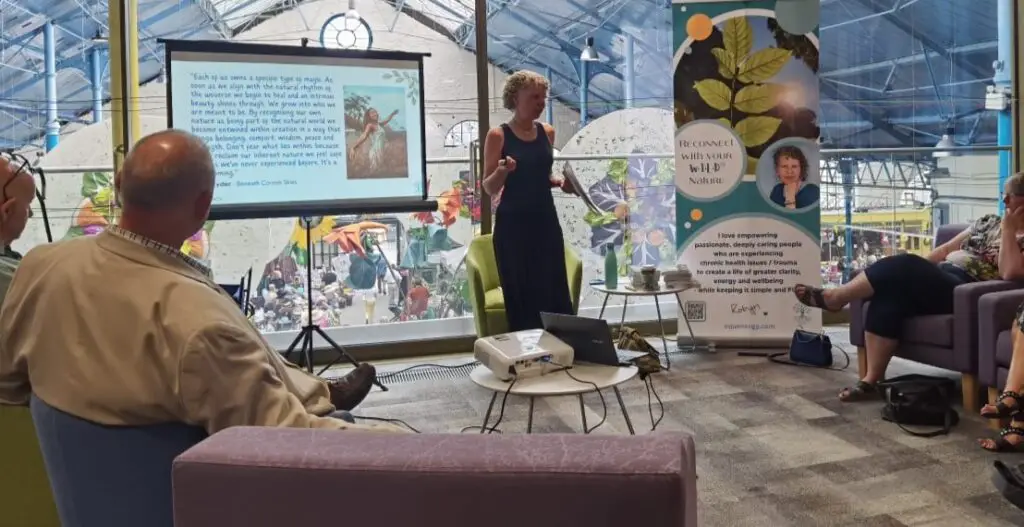
You offer talks, workshops, and 1:1 sessions. For someone new to your work, which option do you feel is the best starting point and why?
I think it depends on the person, where they are in their journey, and what they’re looking for, but I often suggest a 1:1 session. It’s a gentle, personal way to explore what’s going on in your body and mind, and to get a real sense of how the W·I·L·D® approach would work for you, in your situation. In a one-to-one space, you can move at your own pace, try small exercises, and start noticing shifts in ease, clarity, or energy. Once people have that experience, joining a talk or workshop can then deepen the learning and bring the added benefit of community and shared insight.
If someone is reading this interview and feeling stuck, anxious or overwhelmed, what one message from W·I·L·D® would you want them to carry with them as they move forward?
I’d want them to remember this: you’re not broken, and you don’t need fixing. Your body and your mind are already full of wisdom, and even when things feel heavy or confusing, that wisdom is still there, quietly guiding you. With a little gentle attention, curiosity, and support, you can start to listen, respond, and move through life with more ease, clarity, and even joy. It’s about trusting yourself and giving yourself permission to feel, heal, and rediscover your own natural rhythm. Be gentle and patient with yourself – you’ve got this 🩵
Amazon Book: Take A Walk On The W-I-L-D(R) Side

We believe in sharing knowledge with everyone and making a positive change in society through our work and contributions. If you are interested in joining us, please check our ‘About’ page for more information