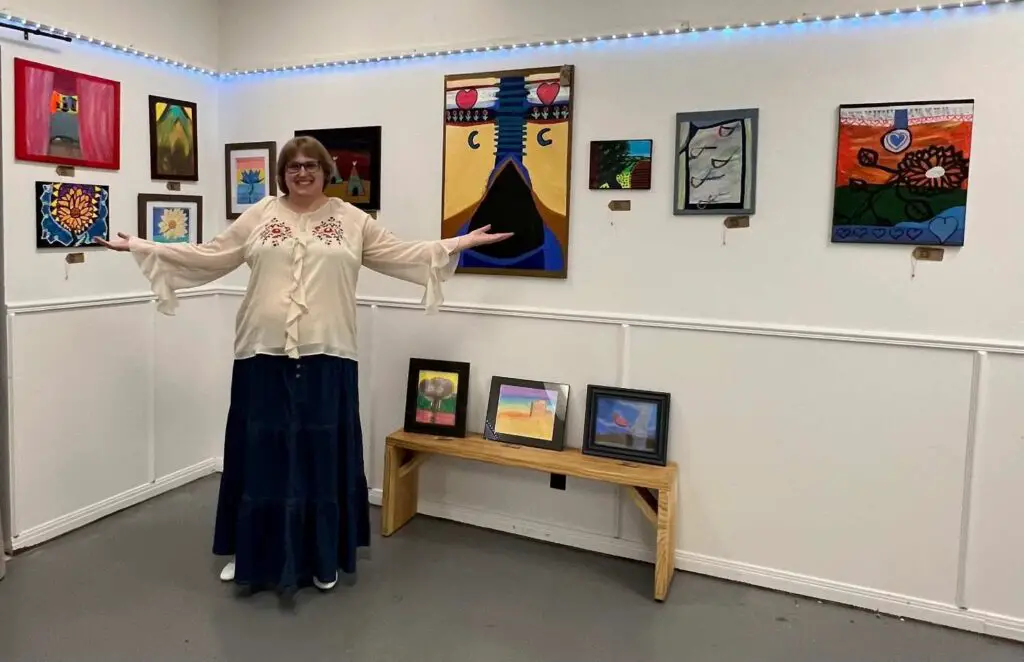
Welcome to our interview series, Allison. Thank you for joining us. To begin, could you share a little about yourself and the journey that shaped who you are today?
Thank you so much for having me. I’m Allison Bruning, an international educator and bestselling author originally from Marion, Ohio. I earned my B.A. in Theatre Arts with a minor in Anthropology from Sul Ross State University and later completed my MFA in Creative Writing at Full Sail University. Over the years, I’ve worked as a teacher, writer, speaker, and creative professional, publishing novels, short stories, children’s books, and poetry.My journey has been shaped by a deep love for storytelling, culture, history, and education. As the widow of poet Delfin Espinosa, I continue to draw inspiration from both personal experiences and the diverse communities I’ve worked with around the world.
You work across education, writing, art, and advocacy. How do these different roles connect in your daily life?
They are a part of my identity. My art and writing are a way that I express myself. I have found that I am always a teacher, whether I am doing it for a pay check or not. I feel drawn to help children. As for being an advocate for the special needs community, I feel that is something that needs to be done because I want to change this world to be a better place than one, I grew up in. I am neurodivergent. I advocate for the next generation. I feel as if many parents who aren’t neurodivergent need the support of the neurodivergent teachers to guide them in how to teach their children.
You’ve spent more than fifteen years supporting neurodivergent individuals. What first inspired you to dedicate your work to this community?
My first inspiration came when I was teaching second grade in a school. I had a neurodiverse student who wasn’t receiving services from the school because they told me he couldn’t learn. I don’t believe any child can’t learn. So I spent time with the child and developed a personalized approach to learning for him. By the end of the school year, he had risen two school grades in all classes. The principal was impressed and asked what I did to help him learn. I just told him that I allowed him to learn his own way.
Growing up, were there writers, artists, or storytellers among your family or friends who encouraged your creative path?
When I was Kindergarten, my grandmother realized that I loved to write. She bought construction paper, writing paper, crayons and large pencils. One day, after she picked me up from school she told me to write a story. I was nonverbal at the time, but I was expressing myself by writing. She told me she would help me to spell a word if I tried to express myself. I started to learn to express myself verbally in 1st grade and was able to speak by the end of the year.
Can you share an early memory that made you feel drawn toward writing or storytelling?
It would have to be my grandmother encouraging me to create my own books at such a young age. When I was young, I started liking Star Trek. One time I created my own Star Trek: The Next Generation book with her. We used my trading cards as pictures along with my drawings. I had an entire plot where Number One had twin sisters.
You’ve received several recognitions and honors over the years. Which moments or acknowledgments felt especially meaningful to you personally?
I have two most memorable the first one was when I won a Rosetta ribbon at the Ohio State Fair in my Junior High Years for my Genealogy work.
My other is when I achieved the Gold Award in Girl Scouts. That was really hard to get because I started it in Ohio and finished it in Texas.
In your professional work, what misconceptions about neurodivergence do you most hope society moves beyond?
Many people don’t understand the term. They believed if someone is neurodivergent than we aren’t intelligent. Most people believe they are low functioning. Yet, neurodivergent people often have high IQs.
From your perspective, what changes would make education more inclusive and empowering for neurodivergent students?
Most neurodivergent students learn in a split grade level, meaning for example they may learn 2nd grade math, 4th grade reading, 3rd grade social studies, 2nd grade science. They will get bored and cause problems due to their boredom if their academic attention isn’t kept. They simply don’t learn the same way a neurotypical learns. If school systems would change their policies so that neurotypicals can learn the way they do then we would have less problems in the school system.
Your books explore history, culture, and imagination. What ideas or experiences usually spark a new story for you?
I often ask myself, “I wonder what would have happened if this part of history was told.” That’s especially true for the Shawnee. I’m originally from Ohio and I know Ohio history doesn’t tell the true history about the Shawnee people.
Beyond writing, you are also a photographer and artist. How do visual and written creativity differ in the way you express ideas?
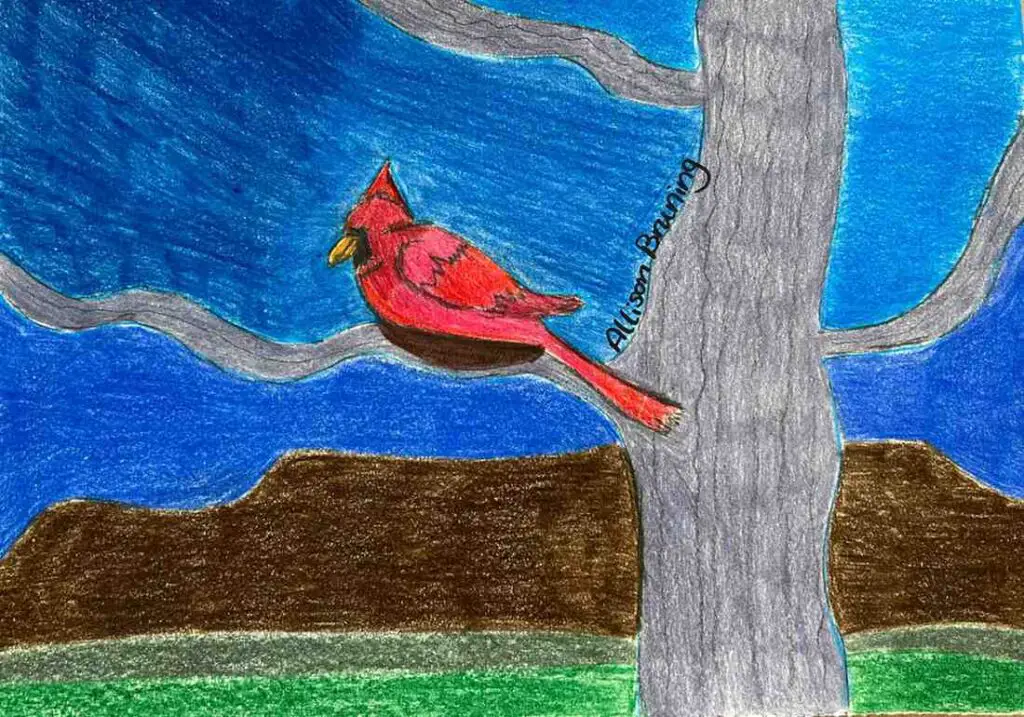
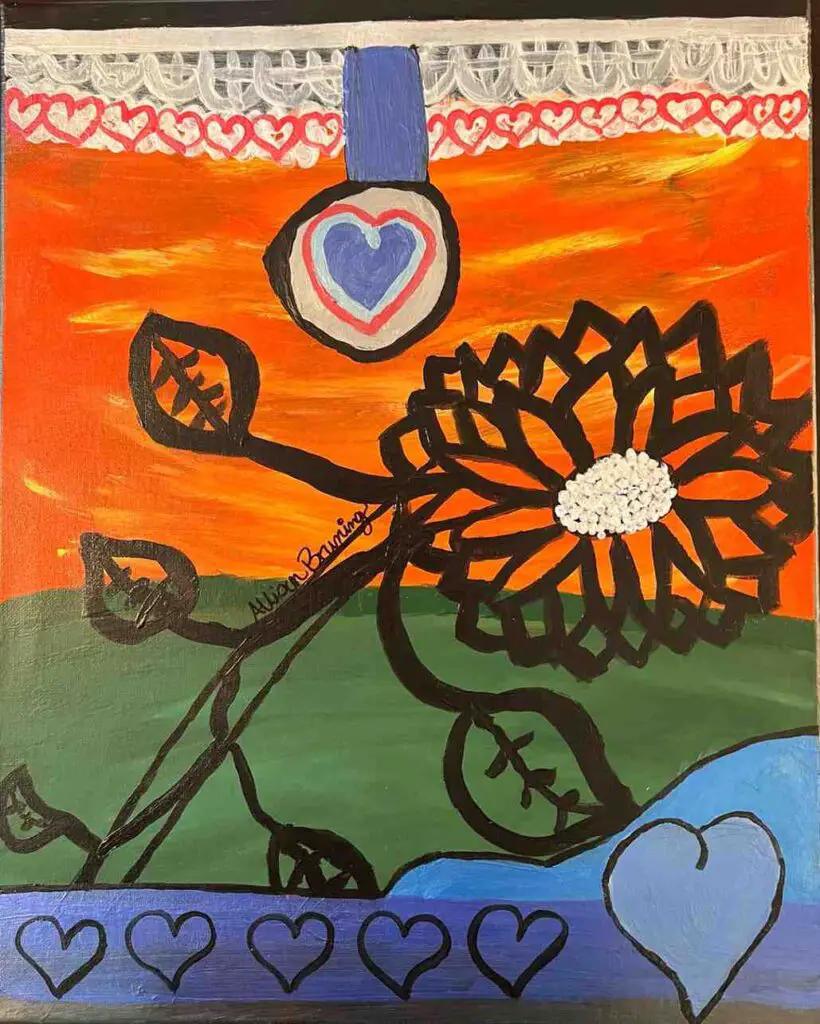
In the written world I can come out to tell my reader what I am trying to say. In the visual world, it’s very different. I get to tease their minds by what they see so that they are left wondering they ideas of what I am trying to tell them. Many times my viewers are able to figure it out right away.
You have a strong background in theatre arts and anthropology. How have these disciplines shaped your creative voice?
Theatre can be found in both my books and art. In my Children of the Shawnee series there is a very dramatic character named Alexander who is always acting. I used my theatre background to help his character to be able to lie and be as dramatic as possible. He had to be able to be so believable whenever he lied to be an excellent spy for the British that it took whatever I had from my Theatre days. It worked. In my art, I painted a stage multiple times.
I have used my anthropology in my art and writing many times. I was an archaeology student before I became a teacher. I have never given up on that love. I’ve been on 1 paleontological dig and 5 archaeological digs since I was 12. I use what we have learned of any given culture in all my art and writing. For example, my art piece Pueblo Puzzle, is based on the archaeological sites of the ancient Pueblo people and the mystery of we don’t know where they went but we know they are the direct ancestors of modern day Pueblos.
Without revealing details, could you share a memorable or meaningful experience connected to writing one of your books?
I have a children’s book called Hoppy’s Grave that is a story that was told to me for many years while I was a camper at my church camp in Ohio. That camp is no longer a church camp.
Managing multiple roles and responsibilities takes resilience. What keeps you motivated and moving forward?
My students and family.
Looking back, is there a moment in your journey that still stands out as especially transformative?
My husband died from Covid in 2021. I took a break to grieve. In 2023 I went overseas to teach. I returned in 2024. When I returned, I had parents and students asking me to return to teaching special needs. That was a wide awakening moment for me. I went back to teaching online, writing and started my art career.
What future projects, writing goals, or creative directions are you excited to pursue next?
I want to open a studio where neurodivergent artists can show their art. I have more books to write.
Finally, what message would you like readers, especially those facing their own challenges, to carry with them after hearing your story?
Don’t give up on your dreams. Just because your different doesn’t mean you can’t do something you love.
Inspired by Allison’s journey? Check out her books and creative projects on her Amazon author page: https://www.amazon.com/stores/Allison-Bruning/author/B0079SK9LQ or https://allisonbruning.com/
Support meaningful art with a purpose. Visit Allison’s art website and know that 10% of all sales help organizations serving autistic and neurodiverse individuals. https://www.allisonbruningstudios.com/

We believe in sharing knowledge with everyone and making a positive change in society through our work and contributions. If you are interested in joining us, please check our ‘About’ page for more information