
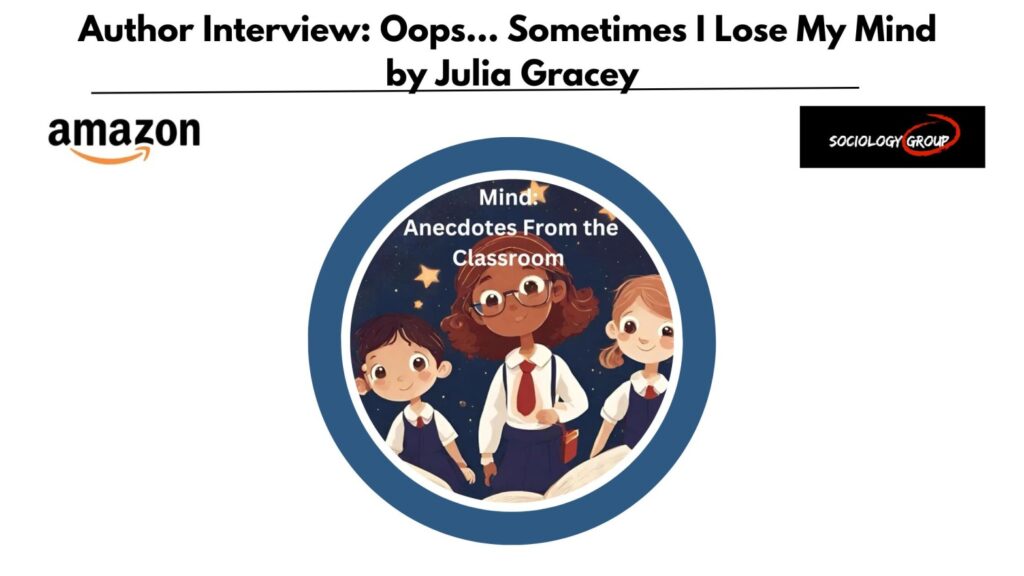
Welcome to our interview series, Julia Gracey, and congratulations on the release of your book Oops… Sometimes I Lose My Mind: Anecdotes from the Classroom. Your book offers a deeply honest look into the emotional realities of teaching, childhood behavior, trust, and growth inside the classroom. We are excited to learn more about your journey and the experiences behind these stories.
What was the moment when you realized these classroom memories were not just experiences, but stories that needed to become a book?
I came to this realization about three years ago after accepting a teaching position at my current school. At the end of one school day, an incident involving one of my students prompted me to reflect on the unique experiences that occur within the classroom—moments that often remain unknown unless they are shared by someone on the “inside.”
While reading the book, it feels like you remember even the smallest details about your students. Do teachers carry these moments with them longer than people realize?
We carry these memories with us for a long time, sometimes even for years. The experiences shared in my book are the kind that leave a lasting impression and are never truly forgotten.
Tony’s story appears throughout the book in different ways. Did writing about him change how you personally understood difficult student behavior?
The months I spent trying to build a relationship with him were both challenging and transformative. Every time I felt I had reached a breakthrough, a new behavior or obstacle would emerge that I was not prepared for. Looking back, I believe that working through this experience became an important part of my journey toward learning not to take my students’ actions personally—what educators often call QTIP: “Quit Taking It Personal.”
Many people think teaching is mostly about lessons and grades, but your book shows how emotional the profession really is. What do you wish more people understood about a teacher’s everyday life?
You are correct that teaching extends far beyond lesson planning and grading. Educators spend countless hours reflecting on their interactions with students and considering how best to help them grow into well-adjusted members of society. Many teachers lose sleep brainstorming ways to support their students as they navigate both school and life.
Some students in your book act out, while others quietly struggle. Do you think silent struggles are sometimes harder for teachers to notice?
It is often easier to recognize the pain expressed through loud or disruptive behavior, which can sometimes be mistaken for attention-seeking. Unfortunately, those behaviors can unintentionally draw attention away from the quieter students who may also be struggling. Teachers must intentionally create moments throughout the day to connect with those quieter children, because without that effort, they can easily go unnoticed. I see a great deal of myself in those students because that was who I was during my elementary years—the child who hoped to quietly make it through the day without being “seen.”
Your stories never make children look “bad”; instead, you try to understand what may be happening behind their behavior. Where does that patience come from?
The patience you mentioned has developed over time through both personal growth and emotional maturity. There are still moments when my former self wants to resurface and take my students’ words or actions as personal attacks. However, I have reached a stage in my personal and professional life where I consciously choose not to allow my ego to take control.
One interesting thing in the book is how small moments- a hug, a sentence, even a student asking about your hair, become unforgettable memories. Why do these tiny moments matter so much in teaching?
Teaching is often described as an unappreciated profession because it goes far beyond academics—it involves building meaningful relationships with students. The “small moments” you mentioned, such as hugs, smiles, kind words, and handwritten notes with a few misspelled words, often become the highlights of an educator’s day. Those gestures remind teachers that they are valued, appreciated, and truly making a difference.
Did any chapter become emotionally difficult for you to write because it brought back strong memories?
Chapter 39 was the most difficult chapter for me to write. During my first year at my current school, I experienced something especially heartbreaking: two students each lost a parent during the holiday season. Although I had previously supported students through the loss of relatives, this situation affected me deeply. I struggled with balancing my personal desire to openly express compassion while also following the communication guidelines established by my school and district leadership. At times, it felt as though I was being asked to remain emotionally detached.
In your experience, how much does a child’s home life quietly affect what happens inside the classroom?
Home is undoubtedly a child’s first classroom, so home life naturally influences what happens in school. Unfortunately, this reality is sometimes overlooked or denied because some parents may feel that acknowledging it is criticism from educators. However, when children are not guided toward accountability at home, schools often inherit the responsibility of addressing the resulting behaviors.
Your book often shows teachers trying to stay calm even during stressful moments. What helps you emotionally reset after a hard day at school?
My faith, practicing yoga, spending time with family and friends, and even playing with my cat all help me decompress and manage the stress that can come with teaching.
The chapter about students falling asleep in class was especially powerful because it showed there is often a deeper story behind simple behavior. Do you think adults judge children too quickly sometimes?
I believe it is essential for teachers to have conversations with students before making assumptions about why they may fall asleep during instruction. Too often, the immediate conclusion is that a student lacks parental supervision or discipline at home. However, many students are carrying unseen responsibilities and challenges that educators may not initially understand.
You write a lot about trust between teachers and students. What is the hardest part about earning a child’s trust?
I believe the most difficult part of earning a child’s trust is maintaining consistency. Many of the students we serve have experienced trauma, broken promises, or neglect, which can cause them to view adults—including teachers—with caution. Trust is not built overnight; it requires patience, consistency, and genuine care.
Some students in your book slowly gain confidence and begin believing in themselves. As a teacher, is watching that growth one of the most rewarding parts of the job?
Watching students gain confidence and discover their voices is one of the greatest rewards of my profession. Seeing the transformation from the beginning of the school year to the end—when students begin to believe in their abilities and recognize their value as individuals—makes every challenge worthwhile.
If one of your former students reads this book years later, what do you hope they feel while reading it?
If one of my former students were to read this book years from now, I hope they would feel the love, care, and dedication that their teachers had for them every single day.
If this book were placed in every teacher training program, what is the one lesson you would most want future educators to carry into their classrooms?
I want every future educator to walk into their classroom each day with an open mind and the belief that every day offers a fresh opportunity. It is another chance to try again, to grow, and to create a positive experience for both them and their students. Teaching can certainly be challenging, but it becomes far more rewarding when educators learn not to take students’ behaviors personally.
Are there themes or stories you still feel called to explore in a future book?
I have not considered writing a second book about the classroom experience, but only time will tell what the future holds. Overall, I think it depends on the feedback I receive from this book.
Looking back now, writing Oops… Sometimes I Lose My Mind change you personally in any way?
Writing Oops… Sometimes I Lose My Mind changed me personally as much as it did professionally. The process allowed me to cherish the moments I shared with my students and reflect deeply on my growth as both a person and an educator. Writing the book felt very much like keeping a journal, and it encouraged me to think more intentionally about alternative ways to approach classroom situations.
If one of your students reads this book as an adult years from now, what would you hope they understand about your intentions as their teacher?
Two of my students purchased the book, and I had the pleasure of signing their copies. One student even brought her book to school the following Monday after attending the book launch. When I asked how she was enjoying it, she told me she loved it so far. My hope is that if any of my students read this book again as adults, they will recognize the genuine love and care I had for them and understand that I always wanted what was best for them.
What kind of conversations do you hope this book starts between teachers, parents, and children?
I hope this book encourages honest conversations built on trust and hope between teachers, parents, and children. When parents trust that educators genuinely have their child’s best interests at heart, communication between home and school can improve significantly. Stronger partnerships ultimately create a more supportive environment for students both academically and emotionally.
Finally, after everything this book holds humor, exhaustion, frustration, empathy, and hope. What does the title Oops… Sometimes I Lose My Mind mean to you today?
Today, the title Oops… Sometimes I Lose My Mind represents honesty, humanity, and grace. It reflects the reality that teaching is deeply emotional work, and even the most passionate educators can feel overwhelmed, exhausted, frustrated, or mentally drained at times. The title is not about giving up—it is about acknowledging those moments with humility and self-awareness.
For me, it also represents growth. Over the years, I have learned that “losing my mind” does not mean losing our purpose. It means we are humans. There were moments in my journey when I questioned myself, felt emotionally stretched, or struggled under the weight of caring so deeply for my students. Yet through those experiences, I also discovered patience, resilience, empathy, and the importance of extending grace to both my students and myself.
Today, the title serves as a reminder that educators carry many unseen emotions behind their professionalism. It reflects the humor, exhaustion, frustration, empathy, and hope that exist within the classroom every day. Most importantly, it reminds me that even on the hardest days, there is always another opportunity to learn, reconnect, and begin again.
Oops… Sometimes I Lose My Mind by Julia Gracey is available now on Amazon.

We believe in sharing knowledge with everyone and making a positive change in society through our work and contributions. If you are interested in joining us, please check our ‘About’ page for more information