
Your work has been described as inaugurating a new genre-“metabiography.” What inspired you to move beyond traditional biography and create this hybrid form?
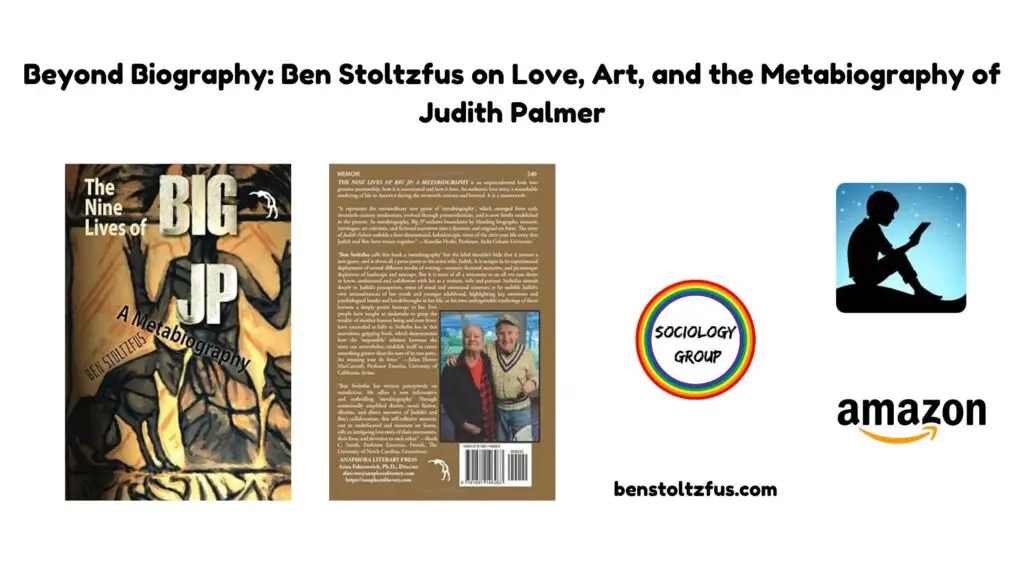
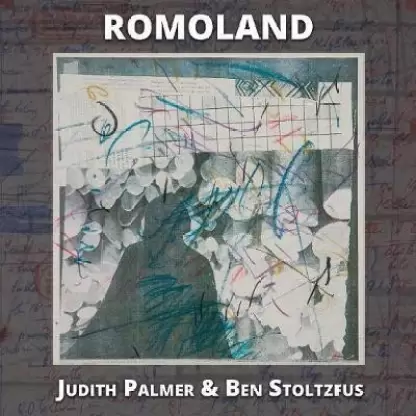
I have been exploring metafiction for decades both as a literary critic and a fiction writer. So, when I started writing Judith’s biography, The Nine Lives of Big JP, it was only natural that I would do so in a hybrid form, i.e., as a biography with photos, and, because Judith is a distinguished artist, with samples of her art. She and I had collaborated on a pictonovel entitled Romoland (her images, my fiction); so, it seemed logical to include me in the narrative. Furthermore, because Judith is my spouse, the narrative needed to address our relationship before and after our marriage. For example, she almost drowned on a scuba diving trip, and, after she told me about it, I wrote a short story entitled Scuba Queen. It was published in a short story collection entitled Falling. In her first marriage she had a bad LSD trip that required two years of psychoanalysis before she regained her equilibrium. After she described that experience, I wrote a short story entitled Her Story. It was published in a short story collection entitled Cat O’Nine Tails. Both fictions are included in Big JP. As metabiography the narrative also incorporates cultural and historical information that provides essential context for Judith’s life challenges. In addition to my narrative, I included parts of the daily journal she kept during her one-year trip around the world in 1957-58. All these facets define metabiography.
How do you see the role of personal memory, especially Judith’s memories, in shaping both individual identity and a shared partnership across decades?
The journal Judith kept during her trip around the world describes not only the countries she visited but also her reactions to the art of famous painters and sculptors in many European museums. Her thoughts about Rembrandt, Gustav Klimt and other artists anticipate her future development as an artist. In addition to transcribing parts of her journal, I have been listening to her stories about her early family life, her first marriage, her drowning, her LSD trip, and her beginnings as an artist. Along the way she survived an unhappy childhood, a rape, a regretful first marriage, a disastrous LSD trip, and a near drowning. Her descriptions of these encounters helped me understand who she was as a person. They gave me insights into her states of mind that were an important part of our ongoing relationship. I could understand why she had moments of deep anger and why she mistrusted men.
One reviewer mentioned that your work highlights the “impossible” relation between the sexes. What does your journey with Judith reveal about gender dynamics in long-term partnerships?
Men and women are not only biologically different but also psychologically different. Misunderstandings arise when either party takes offense at something a partner did or said, or, when the values of the one contradict those of the other. Anger is seldom a constructive reaction to an emotional challenge. A calm approach often smooths over differences, creating a bridge between what is possible and what is impossible in a fraught relationship. I’m reminded of George Bernard Shaw’s “Pygmalion effect” in the musical My Fair Lady in which Rex Harrison, as Professor Henry Higgins, in his efforts to transform a Cockney flower girl, Eliza Doolittle, into a refined lady, says in exasperated frustration, “Why can’t she be more like me?” In this case, however, the differences between the two protagonists are social, not sexual.
The blending of memoir, fiction art criticism, and travelogue in your writing is quite unconventional. Did you face any resistance from traditional publishers or readers for this approach?
Some twenty presses never answered my submission or rejected it. By contrast readers of The Nine Lives of Big JP have been enthusiastic about the metabiography, perhaps because a holistic approach is more satisfying. It provides background information that traditional biographies tend to omit.
How does the concept of “love” in your narrative challenge or conform to conventional Western notions of romantic relationships?
In my narrative, the concept of love evolved from friendship to love. If romantic love in the Western world thrives on “obstacles” to sustain it, as it does in the medieval romance, Tristan and Isolde, then my relationship with Judith seems to challenge that notion. Our artistic collaborations kept it alive and still do. See Love in the Western World by Denis de Rougemont.
As an academic and partner, how did you balance the roles of objective narrator and subjective participant while writing this memoir?
The roles of objective narrator and subjective participant are not necessarily contradictory. The challenge in both literary criticism and the writing of fiction is how to put words together in a way that reflects what you want to say. In fiction language can only approximate the feelings of an experience or a description of an event because it is not the event or the feeling. It is only words. You want the reader to see what you saw, or hear what you heard, or feel what you felt. For example, Franz Kafka’s novella, The Metamorphosis, is a brilliant example of how it feels to be oppressed. Gregor Samsa, the protagonist, wakes up one morning to find himself transformed into a cockroach. The reader empathizes with Samsa’s efforts as a bug to adapt. Feelings, however, have no place in literary criticism because, as a writer, you want the reader to understand the argument you are making about a particular text. It is a question of logical persuasion. In either case the task is not impossible. But it is a challenge.
Your book seems to be as much about Judith’s perceptions as your own. How did you ensure that her voice was equally represented, especially in a genre written by you.
I used the log Judith kept while going around the world, paraphrasing it and quoting passages that expressed what she was thinking or feeling. My narrative also incorporates decades of listening to her reminiscences. As a result, I know who Judith is, what she believes, how she reacts to situations, and how she relates to other people as well as to me. As a writer, I found it easy to capture the essence of her experiences.
The book discusses psychological breakthroughs in Judith’s life. How did these breakthroughs impact your partnership over time?
Judith’s “breakthroughs” occurred before we were married. The bad LSD experience followed by her two-year psychoanalysis, and then her near drowning, took place before we tied the knot; also, her decision to become an artist. She described these events to me in detail, and that helped me understand where she was coming from and who she was. Writing them down for Big JP solidified our partnership because, in a sense, she was continuing the “talking cure” that began with her psychoanalyst, and I was gaining insights into her states of mind by writing about them.
Could you explain more about how art criticism and landscape description became integral to telling your life story together?
Judith is an innovative artist, and I am an innovative writer. We experiment with new art forms because innovators push the boundaries of the possible to deepen our understanding of ourselves and the world around us. The impressionists (Paul Cézanne, Claude Monet, Édourd Manet) in art, and the dadaists (Marcel Duchamp, Man Ray) also, in art and photography, and the surrealists (André Breton, Paul Eluard) in writing, like the “new novelists” (Alain Robbe-Grillet, Robert Coover), also in writing, were all experimenting with new forms. Judith and I bonded when discussing these artists, their ideas, and their movements. She was not wedded to realism in art any more than I was to realism in writing. I wanted fiction to be the story of telling, not the telling of a story; Judith wanted art to reflect the feelings of sight, not sight itself as in a realistic rendering of an object or a person. René Magritte’s painting of a pipe entitled The Treachery of Images captures the essence of what we were experimenting with, i.e., the image of a pipe is not the pipe itself. To reinforce this idea Magritte added the caption “This is not a pipe” below the painting. As a definition of metafiction and innovative art, this distinction is critical. These were the ideas motivating us when we collaborated on the structure of Romoland, our pictonovel, in which my short fictions are in dialogue with her images. My narrative voice alternates between the man’s voice and the woman’s voice. Most of Judith’s images–composed of circles, squiggles and arabesque—represent the woman’s voice. Both voices, hers and mine, are subverting the squares and straight-line expectations of realism embedded in the husband’s preconceptions.
In your opinion, how does “metabiography” help modern readers reimagine autobiography and biography in a fragmented, postmodern world?
Metabiography is more inclusive than autobiography and biography because it adds background information. In the case of Big JP, I added Martin Luther Kings’ “Black movement” of the 1950s and 1960s to flesh out Judith’s relationship with Black students at Berkely High after it was integrated. I added information about Nelson Mandella’s resistance to apartheid and his imprisonment to Judith’s journal descriptions of South Africa. I added information about Timothy Leary and psychedelic drugs to Judith’s description of her bad LSD trip. I added information about innovative writers and the university lecture circuit in the United States to my descriptions of innovative art. I wrote her “talking cure” with the psychoanalyst as fiction, and her drowning experience as fiction to give the reader immediacy and a heightened feeling of these events. I included myself in the narrative to give it a self-reflexive dimension. Big JP is metabiography because it includes photos, art images, biography, autobiography (her’s and mine), literary criticism, art criticism, and cultural history.
What advice would you give younger couples who aspire to build long-lasting partnerships like yours, especially in today’s fast-paced world?
In building a long-lasting relationship much depends on your identity of self. Are you a caring person or a selfish person? Are you quick to anger or are you patient? What kind of job do you have? Are you happy in what you do? Did you marry or decide to live together because you are in love or was your decision based on security needs or something else? Do you want children or not? Because so much depends on the answers to these questions it is difficult for me to pontificate. Assuming that each partner is a well-integrated individual and cares for the other one, I suggest that when arguments arise, as they inevitably will arise, that the first order of business is to listen– to listen to what your partner is saying and how they say it. Sex, for example is a critical issue. If one partner wants an open marriage and the other one does not, can you resolve this difference without tearing the relationship apart? Are you both raising your children in the same way? If not, how can you reach a consensus? If you are having money problems, what can you do to solve them? If your politics are different, can you agree to disagree? If you are a believer and your partner is not, can you accept the differences and still love each other? These questions and others need to be addressed ahead of time because if they are not, when they do arise, and you both get angry, it may be too late.
How has writing this memoir changed or deepened your understanding of love, partnership, and artistic collaboration?
The writing process itself deepens one’s understanding of the subject. I think my answers to the above questions explain our love, partnership and artistic collaboration.
If you’re curious to explore a unique blend of love story, art, memory, and personal history, The Nine Lives of Big JP offers a thoughtful and moving read. It’s available on Amazon, and you can learn more about Ben Stoltzfus and his work at www.benstoltzfus.com.

We believe in sharing knowledge with everyone and making a positive change in society through our work and contributions. If you are interested in joining us, please check our ‘About’ page for more information