
Swiftynomics: How Women Mastermind and Redefine Our Economy
Misty L. Heggeness is co-director of the Kansas Population Center, Associate Professor of Economics and Public Affairs at the University of Kansas, and former Principal Economist and Senior Advisor at the US Census Bureau. She is also creator of The Care Board, a dashboard of economic statistics built by and for caregivers that brings their economic contributions into the fold.
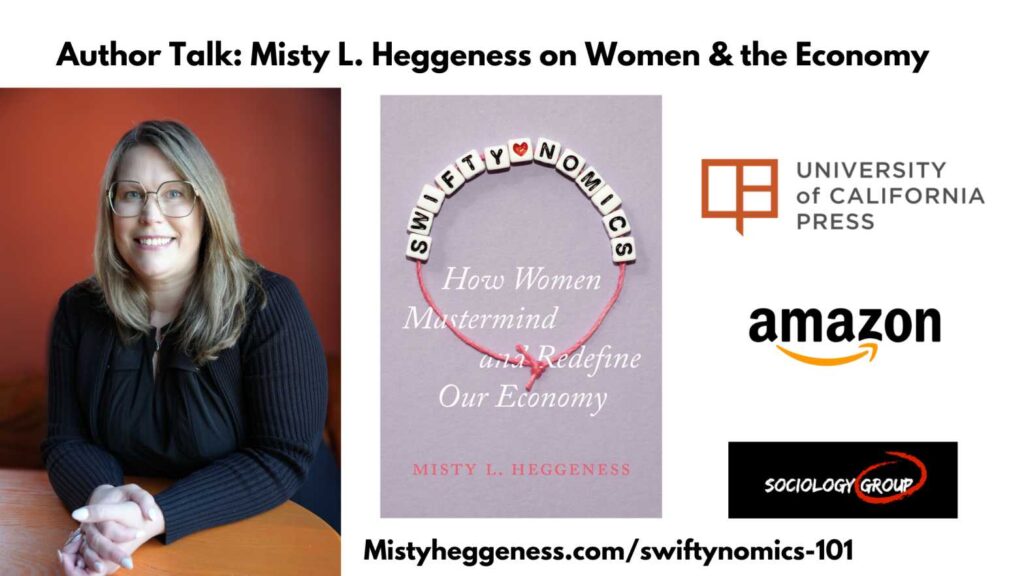
Q: Welcome to our interview series, Misty. Your work blends economics, culture, and lived experience in a powerful way. To begin, what personal experiences first made you realize that women’s economic lives were being overlooked?
Two personal experiences come to mind, family gatherings and having children. In both cases, the women in my family were doing a disproportionate amount of unpaid work caring for others, but it wasn’t being counted and was often invisible in public spaces and statistics.
Q:You’ve spoken about learning the story of an ancestor accused during the witch trials. How did that history shape your understanding of gender, power, and belonging?
While many in my family were embarrassed, I was elated. I found out as a teenager, and knowing how women in the past had been persecuted for being bold and outspoken, I felt like having a woman like that in my ancestry only made sense. I was very proud of her.
Q:Growing up, when did you first notice that economic freedom does not look the same for everyone?
Since as long as I can remember. My parents divorced when I was two years old. I watched my mother work just enough to get by. She struggled in ways that two-parent households did not.
Q:What drew you toward studying gender, inequality, and economic life rather than a more traditional path in economics?
My parents never finished college, so I did not have a path forged by others that told me what to study or how to achieve my goals. In college, I studied things that interested me and, given my family background, I have always been fascinated by the role gender has played in my mother’s life and understanding barriers that stood between her success and dominated her struggles.
Q:You often say the economy is lived, not just measured. What everyday experiences reveal this most clearly?
We all have lived experiences that shape who we are and who we will become. Those experiences include the opportunities available to you or what you do with other reactions to your choices and preferences. I think it is these experiences that determine the outcomes we measure. If we do not understand them, then even if we measure an outcome, we might not be able to work on improving it.
Q:Why have women’s economic contributions historically remained invisible or undervalued?
Because we live in a world outside of our homes that was historically developed for the ease and lives of men or those who do not have labor-intensive family care responsibilities.
Q:Care work and emotional labor sustain families and communities. What is lost when economic systems fail to account for this work?
We undervalue the economy influencing economic growth and market efficiencies.
Q:Many women structure their careers around caregiving responsibilities. How should we rethink productivity and success in light of this reality?
There needs to be less penalty on women’s need to balance work and care – and men need to step up more both at home and in supporting social policies that create a more efficient and equitable distribution of care responsibilities across a spectrum of demographics.
Q:Your book Swiftynomics: How Women Mastermind and Redefine Our Economy connects pop culture with economic insight. What made you see artists like Taylor Swift as a lens for understanding women’s economic power?
People often think of the Taylor Swift of her earliest eras – a teenage girl who likes pink, sparkle, and cats, and who sings love songs about teenage romance. But the Taylor Swift of today is that girl amplified. She is a strong, bold woman who has mastermind her way through an industry that typically minimizes women’s strength and power. Listen to songs like Vigilante Sh$t, Cancelled!, Mad Woman, and Who’s Afraid of Little Old Me?, and you understand why she is a prime example of how women’s economic power thrives today.
Q:When cultural icons influence industries, trends, and consumption patterns, what does that reveal about women’s influence in the economy?
Taylor Swift is a cultural icon. But it isn’t her influence creating economic ripples across the globe, it’s her fans. Taylor’s fans and millennial women today have more purchasing power than ever because of higher levels of education and waiting to have children. They are using that power to purchase things that give them joy – like an Eras Tour concert ticket or a new vinyl of The Life of a Showgirl.
Q:Cultural moments like major tours or fandom movements demonstrate collective economic power. What deeper social truths do these moments reveal beyond spending?
They reveal beliefs and attitudes at the core of a fandom. For Taylor Swift fans, those beliefs and attitudes center precisely on women’s economic agency and influence.
Q:You highlight how women support and invest in one another. Why is this network of mutual support an underestimated economic force?
I am not sure for how much longer it will be an underestimated economic force. But since it has been, those who realize it and tap into women’s economic agency have the most to gain.
Q:The book emphasizes making invisible contributions visible. What everyday economic activities should we begin recognizing and valuing?
Family childcare, domestic responsibilities like washing clothes and making meals, and transporting youth to all their activities is where I would start. These are all labor and time intensive activities that are undervalued by society.
Q:You write about women adapting systems that were not built for them. What does this adaptability reveal about resilience and innovation?
Women who have the privilege to adapt systems are better able to lean into their own productivity, skills, and talent. When they do that, we all benefit.
Q:You discuss the motherhood penalty and persistent wage gaps. What meaningful shifts are needed to close these gaps?
Men need to step up more in terms of unpaid and invisible labor and/or policymakers need to support systems that reduce the unequal burden of care.
Q:Having worked in federal policy and research, how has seeing systems from the inside shaped your understanding of inequality?
Inequality in the United States is a choice. It usually increases when we stop believing in the common good and start listening to rhetoric around people who abuse systems. Most people have basic ethics and want to do good, and almost all of us need a help up at one point or other in our lives. It is unfortunate we live in a society right now that is not willing to acknowledge or believe that.
Q:What does real allyship look like in practice when building a more equitable economy?
Real allyship is being comfortable with differing opinions and open to listening to the struggles of certain groups. Then, it is actively working to promote the reduction of barriers and systemic biases that hold some down while lifting others up.
Q:If policymakers truly centered women’s lived experiences, what is one change that could reshape economic opportunity?
Universal, quality childcare and payments to family members who provide care for their families.
Q:As Swiftynomics reaches readers, what conversations or connections do you most hope to spark through book talks, classrooms, and community discussions?
I hope to spark feelings of hope and a believe that positive change is possible. And, I hope women lean into their own power and economic agency within their families, jobs, and communities.
Q:Looking ahead, what ideas, research, or writing projects are calling your attention next, and how do you hope they continue this conversation about women and the economy?
I am more convinced than ever that men and women are more similar than different. I would like to call attention to that as a way of moving the dial on how we think about all genders today.
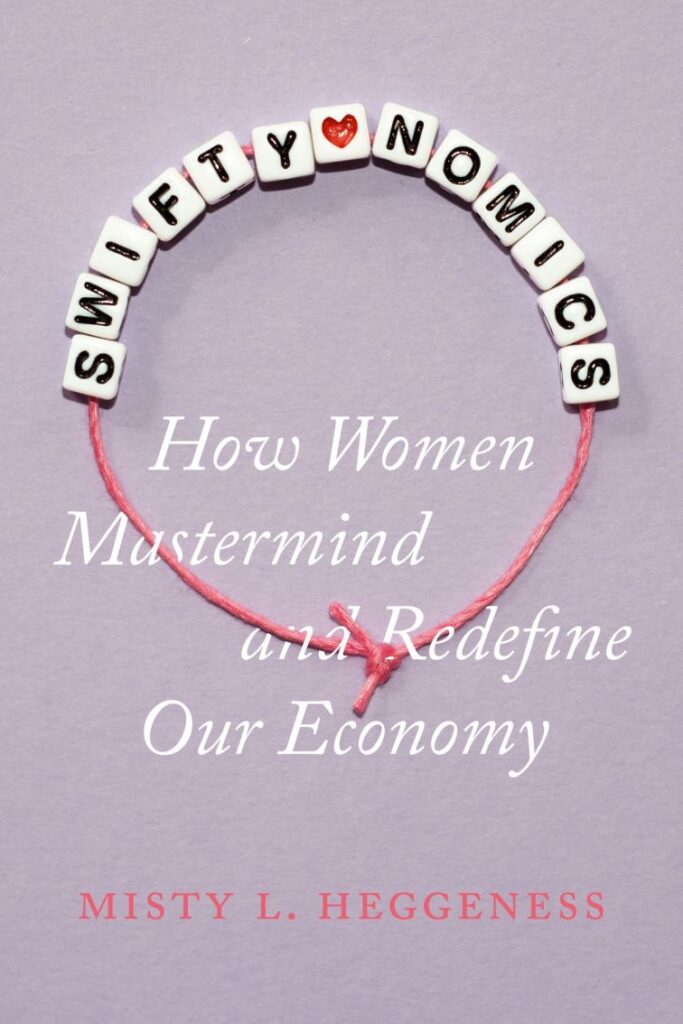
Swiftynomics: How Women Mastermind and Redefine Our Economy by Misty Heggeness is published by the University of California Press. The book explores how women’s invisible labor and cultural influence shape modern economic systems. It offers a fresh, engaging perspective on gender, power, and the lived realities of the economy.

We believe in sharing knowledge with everyone and making a positive change in society through our work and contributions. If you are interested in joining us, please check our ‘About’ page for more information