
About: Mark Anderson Serves as Director of Training with Anderson Investigative Associates (AIA), a firm specializing in customized training for investigation and audit professionals. With over 40 years of distinguished experience in law enforcement, investigation, and training, Mr. Anderson brings unparalleled expertise to the development and delivery of science-based investigative programs. More details here: https://andersoninvestigative.com
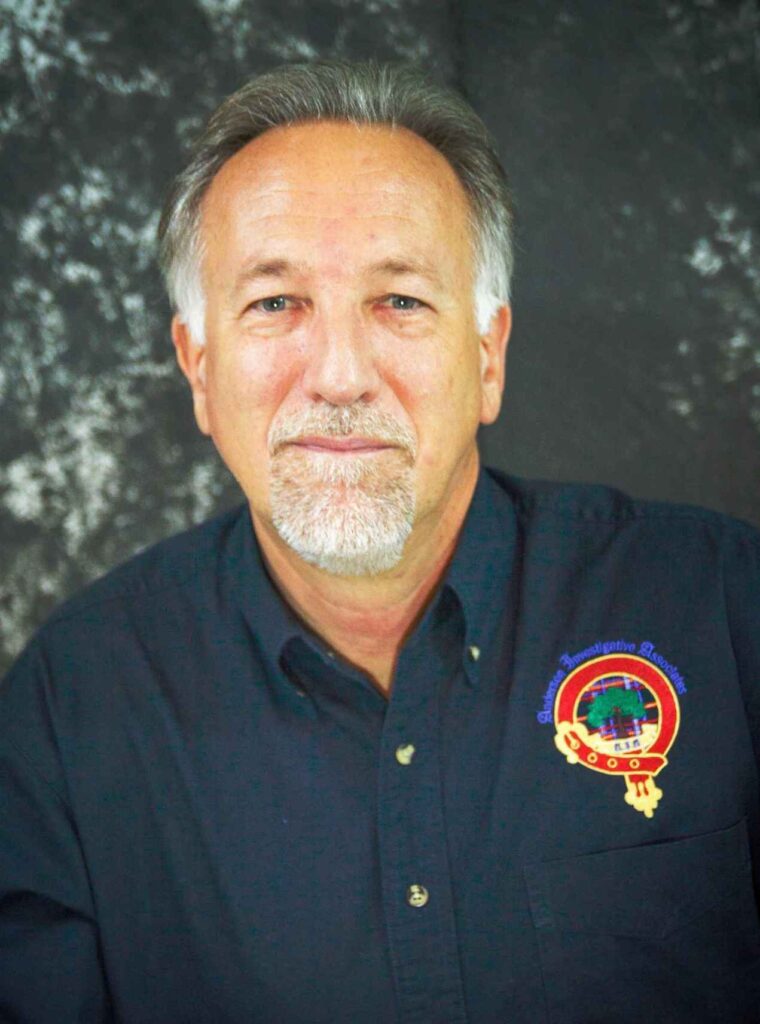
Welcome to our interview series, Mark. Thank you for joining us. To begin, could you share a little about your early life and what first sparked your curiosity about people and human behavior?
I grew up in a small town in upstate New York where everyone knew everyone — neighbors, teachers, the people who ran the local stores. You didn’t pass someone without saying hello. As a kid, I talked with people of all ages, partly because that’s what the community expected, and partly because I wanted to be liked and included. Those early interactions made me comfortable around people and curious about what made them tick.
In a town that small, your reputation traveled faster than you did. People noticed how you behaved, how you treated others, and whether you carried your weight. With a disciplinarian father and a community that held you accountable, I learned early that responsibility and fairness weren’t abstract ideas — they were daily expectations. That environment shaped how I saw people and how I tried to show up for them. Even then, I noticed that what people said and what they meant weren’t always the same, and that behavior often had more to do with emotion than logic. That quiet curiosity about human behavior never left me; it just matured into the work I eventually chose.
Before your professional career began, were there early influences that shaped your sense of justice, responsibility, or empathy?
My sense of justice and responsibility was shaped long before my professional life began. I grew up in a family where service and accountability weren’t concepts — they were daily realities. My dad was a teacher who later became a principal, my mom was the truant officer, and after she passed, my dad married the school nurse. Between home and school, I didn’t have many places to hide. I like to joke that I was surrounded, but the truth is, I was shaped.
My parents lived their values in quiet, consistent ways. My dad served on the rescue squad, volunteered as a fireman, and was the person people called when something went wrong. He believed deeply in kindness and responsibility, and he modeled both without fanfare. One of his favorite sayings — the one printed on his funeral card — has stayed with me my entire life: “I shall pass through this world but once. Any good, therefore, that I can do or any kindness that I can show to any human being… let me do it now. Let me not defer or neglect it, for I shall not pass this way again.”
That mindset shaped my understanding of empathy long before I had the language for it. It taught me that how you treat people matters, especially when no one is watching. Those early influences became the foundation for how I approached investigations later on — with curiosity, fairness, and a belief that every person deserves to be treated with dignity.
Your path moved from forensic science to federal investigations and later into training and speaking. Looking back, what connects these chapters of your life?
Looking back, the thread that connects the different chapters of my life is curiosity — and a willingness to pivot when something no longer fit. My dad was a chemistry and earth science teacher before becoming a principal, so when I went off to college in a small town with limited options, majoring in chemistry felt like the path that would make him proud. I started out thinking I might go into dentistry, then pharmacy, then maybe graduate school. I was enjoying a little too much freedom for the first time in my life, and my direction changed more than once.
But underneath all of that was a steady interest in law enforcement and crime. That led me to a forensic chemistry graduate program, which felt like the perfect blend of science and that early curiosity about human behavior. Once I started working in a forensic lab, though, I realized something important: I wasn’t satisfied being behind the bench. I wanted to be on the street, where the human side of the work lived.
My analytical background gave me a way in, and I eventually pivoted into the FBI. That’s where everything shifted. The more cases I worked, the more I realized that interviewing — the human conversation — was the backbone of everything. And the more I paid attention, the more I saw that we could do it better. That realization pulled me toward training, and eventually into speaking, where I could help others understand both the science and the humanity behind communication.
Each chapter wasn’t a departure from the last — it was an expansion. The science gave me structure, the investigations gave me experience, and the training and speaking gave me purpose
Was there a moment in your investigative work that changed the way you understood people?
When I entered the FBI, I thought I was wearing the white hat. In my mind, there was a clear line between right and wrong, and my job was to stand firmly on the right side of it. Then I met reality — and reality is never that simple.
One of the first moments that shifted my understanding came when I was assigned to help develop a source. He didn’t like my more senior partner, so the responsibility fell to me. It was in the world of international terrorism — a long way from the small‑town New York kid I had been. I quickly realized that nothing about this interaction would work if I relied on authority or assumptions.
Listening became everything.
I had to find common ground with someone whose life experience was completely different from mine. And the surprising thing was: there was a lot of commonality once I slowed down enough to hear it. When I stopped trying to push my agenda and started paying attention to his, the entire dynamic changed. He opened up. The conversation shifted. Trust began to form.
That moment taught me something I’ve carried ever since: if we truly listen, people will tell us who they are and what matters to them. It wasn’t my agenda that mattered — it was his. And that realization changed the way I approached every interview, every conversation, and eventually, my entire career.
Over time, you shifted toward more humane, science-based communication practices. What led you to question traditional approaches?
When I first learned interviewing in the FBI, I accepted it without question. Who would know better? The techniques were presented as proven, and for a long time I used them because that’s what I had been taught. But the more time I spent actually interviewing people, the more something felt off. The methods didn’t line up with how human beings really interact.
I often found myself asking a simple question: Is this how I would want to be treated?
And too often, the honest answer was no.
The results reflected that discomfort. People shut down, resisted, or told me what they thought I wanted to hear. I did those techniques for years, but I quietly modified them to fit who I was — even though I didn’t have anything more solid to back up my instincts than the legacy practices I’d been handed. Much of what we relied on was folklore, tradition, or “this worked once,” rather than anything grounded in science.
Eventually, I couldn’t ignore the gap between what I was taught and what I was seeing. There had to be more — something that aligned with human behavior, with dignity, and with the outcomes we were actually trying to achieve. That realization is what pushed me toward research, training, and ultimately a different way of communicating.
In high-pressure environments, conversations can shape outcomes. What does it mean to communicate with dignity when the stakes are high?
When the stakes are high, they’re high for everyone involved. That’s something people often forget. Pressure doesn’t just sit on one side of the table — it moves through the entire interaction. And when pressure rises, fear isn’t far behind. Fear brings out all kinds of unhelpful behaviors: bias, anger, impatience, defensiveness, and some of the worst listening you’ll ever see.
Communicating with dignity is how you keep all of that in check.
It means grounding yourself enough to focus on the other person, even when the situation is intense. It means remembering that whether you’re talking to a terrorist, a prisoner, an employee, or a leader, every human being deserves to be treated with fairness and respect. Dignity isn’t about agreeing with someone or excusing their actions — it’s about creating a space where truth has a chance to surface.
And the remarkable thing is this: when you offer people dignity, it’s often returned almost immediately. Even in the most difficult environments, treating someone with humanity changes the entire dynamic. It lowers the temperature, reduces fear, and opens the door to real communication. Dignity doesn’t just improve the interaction — it improves the outcome.
From your experience, how do trauma and stress affect the way people respond when they feel threatened or unheard?
Trauma and stress narrow a person’s cognitive bandwidth. When someone feels threatened, their ability to think clearly, recall accurately, or communicate coherently drops. That’s not defiance — it’s biology. And yet, “trauma‑informed practice” has become such a buzzword that the depth of what it requires often gets diluted. The reality is far more complex and far more important.
Understanding trauma means recognizing that the reaction you’re seeing in front of you may have nothing to do with the event at hand. It may be shaped by experiences that came long before this moment. If we don’t account for that, we misread behavior, misinterpret silence, and mistake fear for resistance.
This is why preparation matters. We have to plan our questions and our approach with the awareness that trauma may be present even if it’s invisible. We need to pay attention to where fear lies — in them and in us. And we need to use the tools that actually help: listening deeply, asking thoughtful questions, and creating enough psychological safety for someone to think rather than react.
Those behaviors aren’t soft. They’re strategic. They demonstrate empathy, and empathy is often the only thing that keeps a conversation from collapsing under the weight of stress. When we understand trauma, we stop asking, “Why won’t they answer?” and start asking, “What do they need in order to feel safe enough to think?” That shift changes everything.
A season of caregiving slowed life down and created space for reflection. What did that period teach you about presence and listening?
That season of caregiving taught me more about presence than anything in my professional life. I’ve always been a fixer by nature — someone who wants to solve problems, make things better, and move things forward. Caregiving forced me to confront a hard truth: I can’t fix everything, and in many situations, I can fix very little.
It slowed me down in a way I didn’t choose, but absolutely needed. It required me to meet the person I was caring for exactly where they were, not where I wished they could be. That experience deepened my understanding of trauma — not just for the one receiving care, but for the one providing it. There’s a weight to both sides that you don’t fully grasp until you’re living it.
It also made me realize how often we have no idea what someone else is carrying. If we want to understand, we have to be present. We have to listen. We have to get outside ourselves long enough to see the world through someone else’s eyes. That season confirmed something I had sensed for years: real connection requires slowing down, reflecting more, and caring more. Presence isn’t passive — it’s an act of respect.
Can you share a moment from your work that reminded you of the humanity behind every case or interaction?
There are so many moments that stay with you in this line of work. These aren’t transactions — they’re life‑changing events. You may be talking to one person, but the ripple effect of that person’s actions touches families, coworkers, companies, and entire communities. Being sensitive to that weight is essential, and it’s what keeps the humanity of the work front and center.
One moment I’ll never forget came after an investigation that led to a sentencing. As the individual was being taken out of the courtroom — on his way to jail — he stopped to thank me. Not for the outcome, but for the conversations we had throughout the process. He told me that talking through the parts of his life he had never addressed helped him see a way forward, even in the middle of a very hard moment. He said he finally saw a light at the end of the tunnel.
That experience reminded me that people are more than the worst thing they’ve done. When you treat someone with dignity, even in difficult circumstances, it can create space for clarity, accountability, and sometimes even hope. Those moments stay with you. They’re the reason the work matters.
Your work bridges science and human connection. How do you balance evidence-based practice with empathy and intuition?
For a long time, interviewing relied on folklore and legacy practices — techniques passed down because someone believed they worked, not because anyone had studied them. When I started, science wasn’t part of the conversation. We didn’t have research that explained what actually helps people think clearly, communicate honestly, or feel safe enough to share difficult information.
That changed when large‑scale studies began examining human interaction, memory, cognition, and the conditions that support truthful disclosure. The research is overwhelming: rapport, strategic empathy, intuition, and thoughtful questioning aren’t optional — they’re essential. They create the cognitive and emotional conditions where real communication can happen.
What I love about the science is that it validates what many of us sensed intuitively. Empathy isn’t softness. Intuition isn’t guesswork. They’re grounded in decades of research showing that non‑confrontational, humane approaches lead to better information, better outcomes, and better human connection.
So for me, balancing science with empathy and intuition isn’t a tension — it’s a partnership. The science gives you the structure. Empathy gives you the connection. Intuition helps you navigate the space between them. Together, they create an approach that is both effective and deeply human.
After training professionals across many institutions, what communication habits most often stand in the way of clarity and trust?
One of the biggest barriers to trust is something people don’t like to admit: lying in interviews. I’ve seen countless professionals bend the truth, exaggerate, or use deception as a tactic — and then wonder why the person across from them won’t tell them the truth. But why would a liar tell another liar the truth? If we’re not honest, we’re not building trust. We’re modeling the very behavior we claim to be trying to overcome.
Another barrier is what I call “fake rapport.” It’s when interviewers go through the motions — asking a few personal questions, making small talk, or pretending to care — because they think it’s a box to check before getting to the “real” interview. People feel that insincerity immediately. It doesn’t create connection; it destroys it. Rapport isn’t a tactic. It’s a relationship built on credibility, authenticity, and honesty. If you’re not genuinely interested in the person in front of you, they won’t be genuinely interested in talking to you.
And finally, our inability to empathize and listen effectively shuts down communication before it ever begins. When we’re focused on our agenda, our assumptions, or our need to “win” the conversation, we create no connection and no credibility. People can feel when they’re not being heard. They can feel when they’re being managed instead of understood.
The habits that get in the way are simple but destructive: rushing, interrupting, assuming, and talking more than we listen. When we replace those with honesty, empathy, and genuine curiosity, everything changes. Trust isn’t built through technique — it’s built through how we show up.
How can better communication practices improve trust not only within institutions but also in society more broadly?
Everything I teach is designed to help people conduct better interviews and investigations — no question. But I always tell practitioners that if they think the work stops there, they’re missing the bigger picture. These skills aren’t just for the job. They’re for home, for relationships, for parenting, for leadership, and for the everyday interactions that shape how we move through the world.
My concept of an interview is simple: it’s a conversation with a purpose. And the truth is, most of our conversations in life are exactly that. We’re trying to understand, connect, clarify, support, or solve something. The techniques I teach — listening well, asking thoughtful questions, managing our own emotions, staying curious instead of certain — are just good, research‑based communication practices. They build trust in an interview room, but they also build trust at the dinner table, in workplaces, and in communities.
When institutions communicate with clarity, empathy, and dignity, people feel seen rather than managed. And when individuals communicate that way in their own lives, it creates a ripple effect. Trust grows outward — from one conversation to another, from one relationship to a community. Better communication doesn’t just improve outcomes; it strengthens the social fabric.
Growth often requires reinvention. What helped you navigate moments of doubt and transition in your journey?
A huge part of my reinvention came from my season of caregiving. It brought up questions I had never had to face, and things that once felt certain no longer felt certain at all. That experience shook the foundation just enough for me to realize it was time to change — not because everything behind me was wrong, but because there was clearly more ahead of me.
At the same time, the research I was diving into made something else impossible to ignore: the legacy practices I had relied on for years were no longer good enough, right, or ethical. The data was clear. The science was clear. And the gap between what we knew and what we were still doing grew wider every day.
When both the personal urging and the professional evidence point in the same direction, you reach a point where not changing would be the real breach of integrity. Reinvention wasn’t a dramatic leap — it was the only honest response to what life and the science were both telling me. It was time to evolve.
Looking beyond professional settings, what have your experiences taught you about how people can listen to each other more effectively in everyday life?
Ultimately, we’re not very good at listening. Most people are too busy planning what they’re going to say next to actually listen. And when you’re focused on your next line, you’re not present. You’re not curious. You’re not connected.
We also have a huge problem with silence. It makes people uncomfortable, so they rush to fill it. But silence is where thinking happens. A RAND study showed that people interrupt within seconds simply because the story isn’t being told the way they would tell it. We hijack conversations without even realizing it.
The fix isn’t complicated, but it does require discipline. Be quiet and listen. Let them speak in their own way, at their own pace. Paraphrase back what you heard so they know you got it. Listen for the emotion underneath the words and label it. These are simple moves, but they change everything.
And here’s the part people forget: when we model good listening, we often create an environment where the other person starts doing it too. Presence is contagious. If we slow down, they slow down. If we listen, they feel safe enough to think. There’s so much we can do — but it starts with us.
As you reflect on your life and work, what guiding belief or philosophy has become most important to you?
As many people get older, they get more certain. I feel like I’m moving in the opposite direction. My curiosity has grown — about myself and my actions, about the work I teach, and about the people I interact with every day. And I want it to keep growing.
I want to consider other hypotheses. I want to explore other motivations. I want to understand other fears. I want to hear other theories. The list is endless, and that’s the point. Curiosity keeps you open. It keeps you honest. It keeps you human.
None of this keeps me from acting or moving forward. If anything, it equips me to do both more effectively. Curiosity doesn’t slow you down — it sharpens your decisions. It widens your perspective. It helps you see the person in front of you more clearly. And if there’s one thing I hope continues to grow in me, it’s that: the willingness to stay open, stay reflective, and stay curious.
Looking ahead, what future work or conversations do you feel most called to pursue?
Right now, I’m deep into writing two books in The Weekly Edge series — one on science‑based interviewing and one on well‑being and resilience. Each book is structured as fifty short chapters, designed to be studied one per week, each addressing a specific topic that helps people grow with intention. It’s another way of building accountability into the work.
The second book wasn’t part of the original plan. I told one of my accountability partners I was writing the interviewing book, and he immediately asked, “What about mindset? You can’t expect people to conduct better interviews if they’re not in the right space themselves.” He was right. We don’t support our people well enough, and asking them to improve their interviewing without strengthening their well‑being would contradict everything I teach about presence, resilience, and humanity.
So now I’m writing both. Because the work isn’t just about better interviews — it’s about better humans doing the interviewing. And that’s the conversation I feel most called to keep expanding: how we build practitioners who are grounded, curious, resilient, and equipped to communicate with dignity in every part of their lives.

We believe in sharing knowledge with everyone and making a positive change in society through our work and contributions. If you are interested in joining us, please check our ‘About’ page for more information